No, it’s not cold, but I may have caught one. Bad timing but hours spent in a jet airliner is a role of the dice. Could be allergies, change of climate, or just wishful thinking. I don’t feel bad, just a runny nose, scratchy throat, and an occasional cough. Time will tell.
Our morning featured an orientation lecture by our group leader Susan about the “Big Island” and the activities in the upcoming days.

We then transported by motorcoach to the Lyman Museum, considered by many to be the finest of its kind in Hawaii.

At the museum, we divided into three groups of nine each with separate docents who escorted us through the principal elements of the museum: The natural history of the islands, the anthropological and cultural history, and the Lyman Mission Home, which is the oldest frame structure in Hawaii. Unfortunately, due to copyright we were not allowed to take photographs of the interior of the house.


We enjoyed an excellent lunch in town…

but on our way, we were invited into the restored Palace movie theater, which dates to 1930…


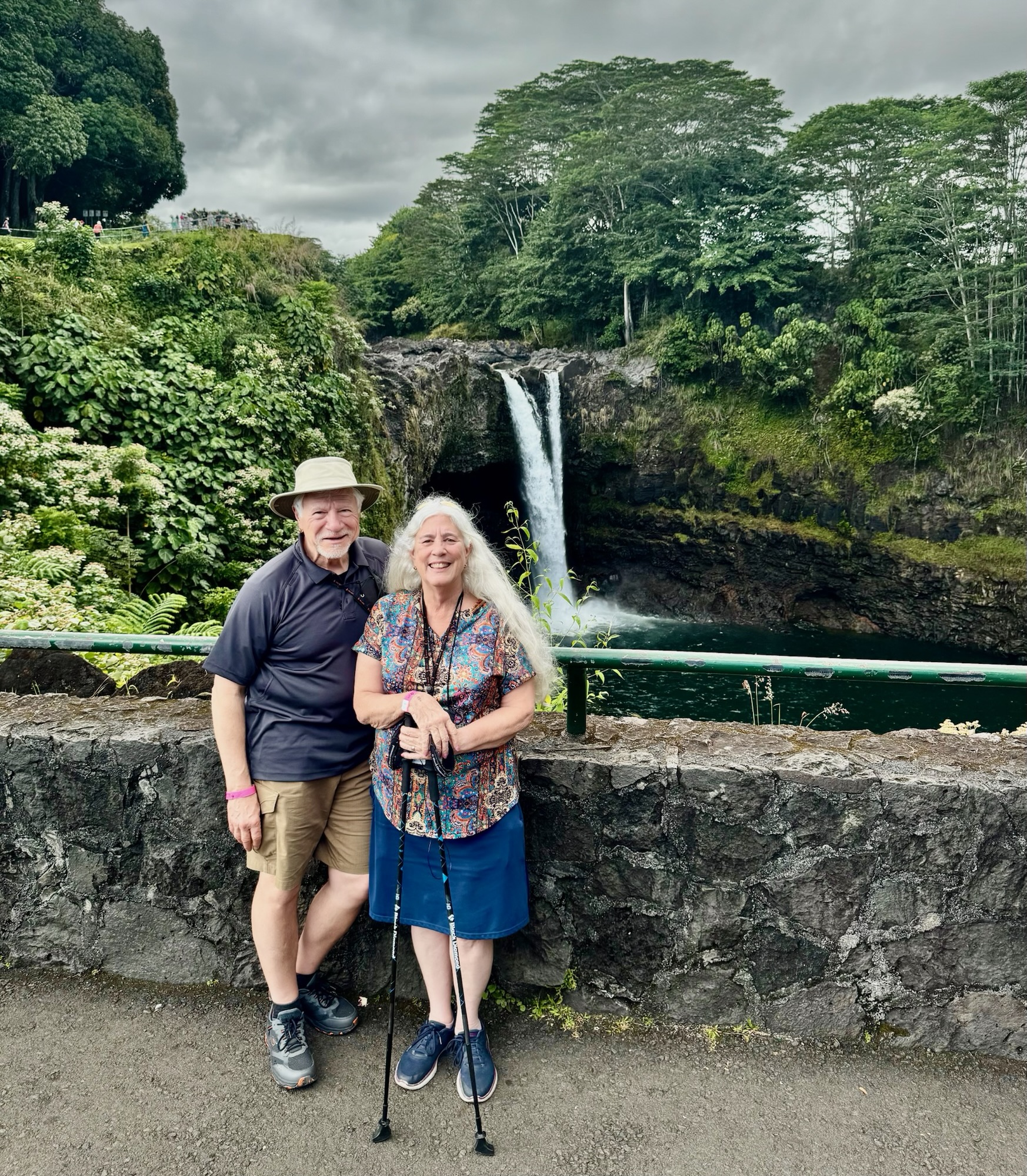
…after which we transported to the Rainbow Falls.

These falls formed at the convergence of two lava flows from the islands two largest volcanoes.


The water is a mixture of rainwater and snow melt from Mauna Kea, the largest volcano which is nearly 14,000 feet above sea level. If one considers the height of the mountain from its base on the ocean floor, Mauna Kia is the tallest mountain in the world, measuring 33,500 feet.
After Rainbow Falls we traveled to a statue honoring King Kamehameha I.

In 1795 he successfully consolidated all of the principle Hawaiian islands into The Kingdom of Hawaii. The statue is one of four in existence, three located in Hawaii and the fourth located in the rotunda of the United States Capital.
After a brief rest at the hotel we walked to a nearby restaurant popular with the locals. It had an intriguing fusion of breakfast, truck stop diner, and oriental cuisines. Excellent!

We thought today was a full itinerary, but we have been cautioned that tomorrow will include a lengthy motorcoach ride to the other end of the island with lectures and sites focused on Hawaiian vulcanology. The program tomorrow promises to be nonstop from breakfast until dinner.
As before, pictures follow below.
Peace Everyone. Pete.


Diana says:
I’ve never been to Big Island thanks for sharing
Pete Schloss says:
You are welcome!
Margaret says:
Great pics, as usual.
Pete Schloss says:
Thank you, Margaret!
Margaretha Finefrock says:
You will enjoy being on the other side of the island. Small villages and Waipio Valley and beauty, the power of volcanoes. Buen Camino.
Pete Schloss says:
Looking forward to it!
Bill says:
Thank you for taking the time to create these wonderful words and pictures. I’m very lucky to have a couple of world travelers to show me what I’ll never see in person. You guys are looking great. Living adventures every day. Thanks for taking Sue and I along.
Peace, Bill
Pete Schloss says:
I’m so glad that you appreciate it!
Anne Pyle says:
Ditto Bill’s written thoughts above!
Love reading about your trips and discoveries! Ditto the “Buen Hawaiian Camino” as well!
Pete Schloss says:
Thank you, Anne!
Nancy Antonette Wallingford says:
Ditto Bill
Pete Schloss says:
Ditto Nancy!
PAM ROBERTS says:
Steve and I had have been to Hilo twice and enjoyed each visit as well as the other 3 main islands. I remember the statue of the king and the Tsunami levels. Yes the waterfalls were impressive. I’m glad you are enjoying the island and the size of the group I would imagine is manageable. Continue to enjoy your trip. Looking forward as you continue your adventure.
Pete Schloss says:
Thank you, Pam!