Hilo, Hawaii, January 22, 2026
Another day, another excellent breakfast.
After breakfast, we assembled for a lecture on the Hawaiian language. It was fascinating! Among the islanders of the Pacific, languages have not yet diverged sufficiently to deny understanding from those in one island group to another. This, in spite of the fact that the islands span thousands of miles. For example, native speaking Hawaiians can understand islanders from Tonga, Tahiti, Micronesia… and vice versa.
Prior to the discovery of the Hawaiian Islands by Captain James Cook, the Islanders did not have a form of written language. They relied on oral tradition, dance, and art to carry their story forward. Written language was developed after the arrival of the Boston Missionaries in the 1920’s.
The written Hawaiian language consists of five vowels (A-E-I-O-U) and only seven consonants (H-K-L-M-P-W). There are two phonetic modifiers, the okina which is a backward facing apostrophe, and the kahako that is a straight line which may appear above a vowel and indicates that the vowel sound should be held longer.

I don’t think that the Hawaiian language would adapt well in the New York Times Wordle game.
An unlimited number of vowels may be linked together to form a word, but consonants are only used standing alone to separate vowels.
The English language may contain over 1 million words. Witness those huge dictionaries, 5000 pages and more, that are sometimes found at libraries. Susan advised that the Hawaiian language may not exceed 20,000 words. Of course, like English and other languages the island languages are expanding to include our evolving technologies, science, and culture.
The indigenous people of Alaska have scores of words to describe snow. With the Islanders there are over 600 words to describe rain. Simple words are sometimes combined to expand their meaning. Duplicated words are sometimes used as a form of plural.
We had a great deal of fun pronouncing words as the natives do. For example Hawaii is pronounced properly “Havaii”, with a V sound substituted for the W.
Our lesson concluded, we transported by motorcoach to downtown Hilo where we first visited the Papahānaumokuākea interpretive center for the Marine National Monument, a UNESCO World Heritage site.


The monument is dedicated to 582,578 mi.² of ocean waters that include 10 islands and atolls of the north western Hawaiian islands. It was created by President George Bush in 2006. President Barack Obama expanded it to its current size. It is considered one of the world‘s largest protected areas.

It is home to more than 7000 marine species with some only found within the monument itself. Only 5.8 square miles of land within the Monument are above sea level!
After the presentation, we experienced an unplanned treat. A group of women, “The Hulu Sisters“, regaled us with their dancing and music.

At points we were invited to join them which the uninhibited did (that would include Christine). I chose to film as it takes a couple of beers for me to loosen up enough to dance.
Christine had an intense emotional connection with one of the dancers. They embraced and the dancer told Christine, “Thank you for touching my life“.


We next proceeded to the Pacific Tsunami Museum, where we ate a boxed lunch prior to enjoying an engaging and informative presentation.


“Tidal Wave“ is a misnomer. These devastating phenomenon are not tidal but usually seismic. A tsunami is generated from a seismic event that occurs offshore and either suddenly lifts the ocean floor or collapses it. The energy is then transferred to the surrounding water with a shockwave of energy traveling at speeds approaching 500 miles an hour. In the middle of the ocean they may be virtually imperceptible but as they approach land, the rising ocean floor slows the wave and the energy builds into a high column of water. Usually this is not a breaking wave. The tsunami is not a single wave, but rather a series of waves that may occur over a span of over half an hour.

There is usually not a “protected side” to an island in the event of a tsunami. The energy literally surrounds the island and at the point where the energy waves converge on the alleged “protected side” the event can be even more devastating.
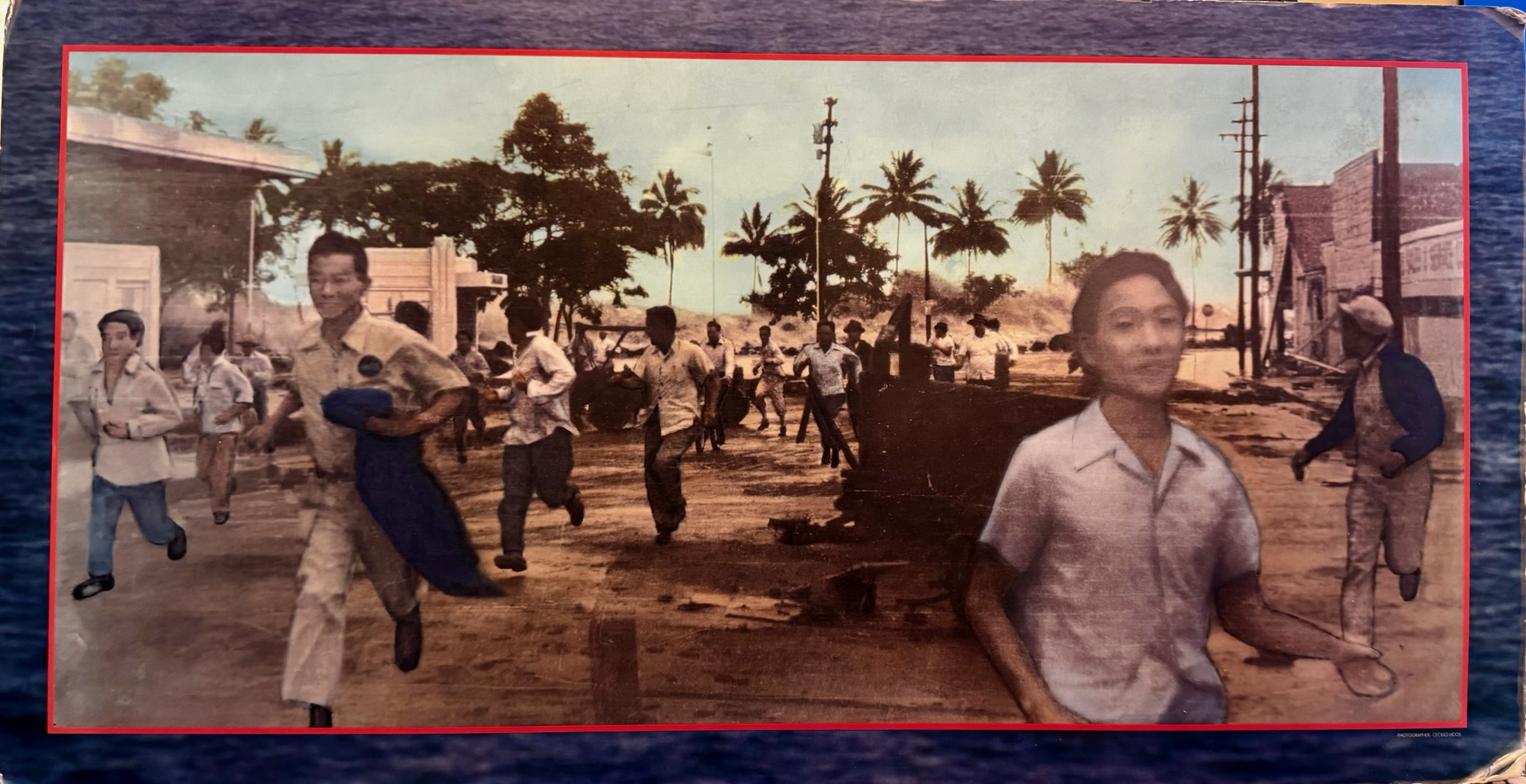
The 2004 Indian Ocean tsunami was among the deadliest natural disasters in human history. At least 230,000 people were killed or missing in 14 countries bordering the Indian ocean. Hilo has experienced a number of noteworthy tsunamis, the most devastating in terms of the human toll occurring on April 1, 1946 with 159 lives lost, including 25 children and their teacher at an elementary school. The 1960 tsunami was more significant in terms of property damage. The 1946 event occurred prior to the institution of an early warning system. The population benefited during the1960 event from an early warning. Hilo experienced a small tsunami in mid 2025.
There are three major tsunami alert centers, one in Alaska, one in Japan, and one in Hawaii. During the recent government shut down, the staff of 40 here in Hawaii was reduced to two volunteers. Japan provided assistance to us during the shutdown.
Two activities followed with the group. A visit to nearby gardens and a lecture on geology. I regret missing both, but I chose to spend the afternoon in my room trying to nurse myself through this miserable cold.
Our time on this side of the island concludes in the morning. We will be transporting to the other side and new lodgings. I look forward to our visit tomorrow to the Hawaii Volcanoes National Park. There is an interesting forecast for tomorrow!

Peace Everyone! Pete
PS. You are a three additional images that I thought to post. 


Bill says:
so you are moving closer to the volcano. Hope it is lucky. Thanks again for the island history lesson. But when do you get to just sit, drink and enjoy? It was 0 when I got up this morning and it warmed up to a balmy 3 degrees. Predicting 4 to 8 inches of snow. You better send lots of sunny, warm pictures.
Peace,
Bill
Pete Schloss says:
Volcanoes were today! I hope to get pictures into a post within the next day or two. It was pretty awesome!
Thanks Bill
Nancy Antonette Wallingford says:
Beautiful and interesting! Have fun! Thank you for sharing.
Pete Schloss says:
Thank you for following along!