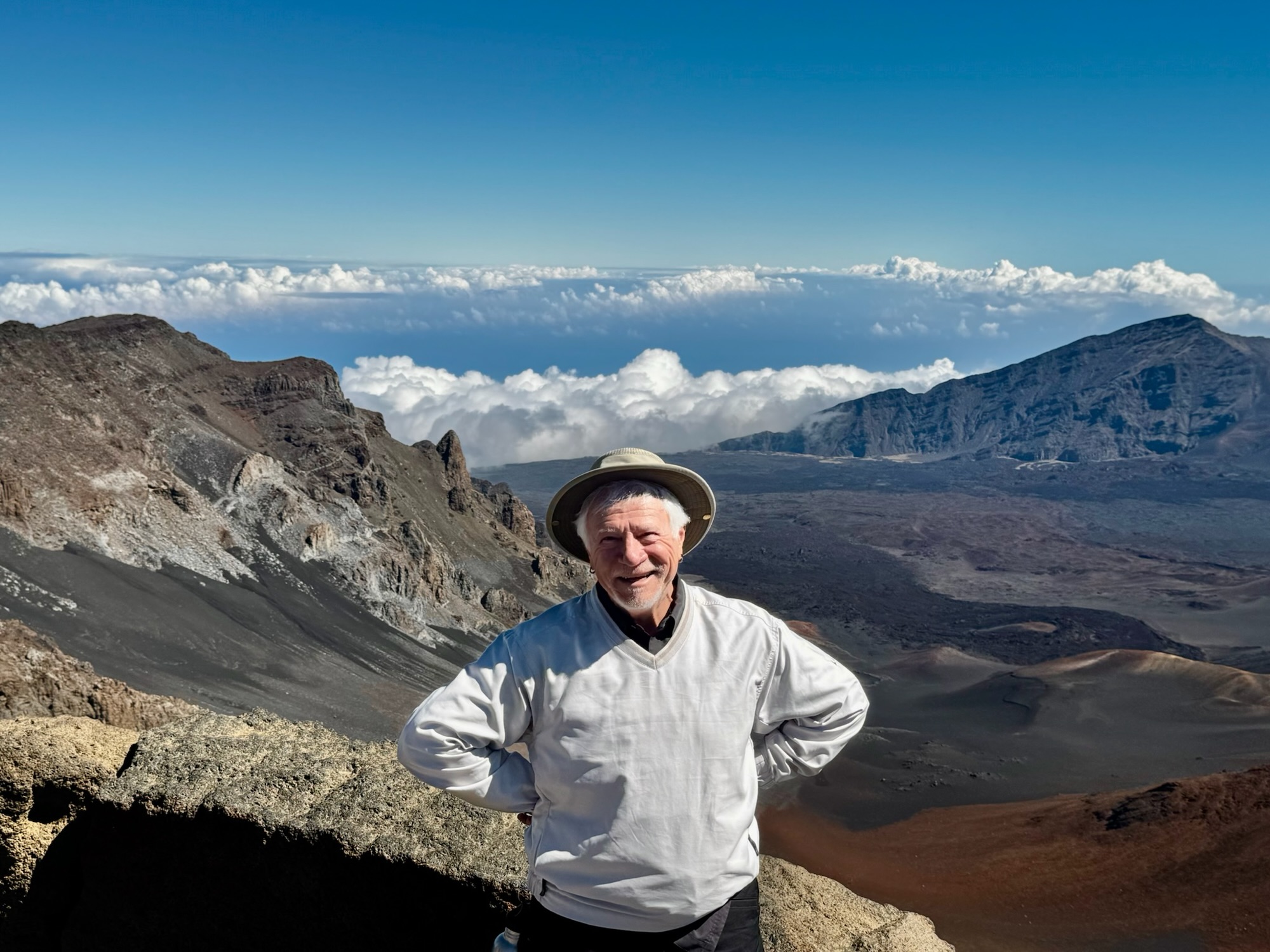
A Place Sacred for the Gods. January 30, 2026.


The name Haleakalā is Hawaiian for “house of the sun.” According to a local legend, the demigod Maui imprisoned the sun here in order to lengthen the day.

This is a sacred place and treasured by Hawaiians as a place of pilgrimage to witness the beginning and end of the day. The vistas are otherworldly.

Designed a National Park in 1976, the park covers over 50 square miles.

The rim of the volcano crater, nearly 2 miles above sea level, can be reached by car. The park is host to a network of over 40 miles of trails. Wilderness camping is available and 3 remote primitive cabins can be reserved for up to 3 nights.


The park features the dormant Haleakalā Volcano which last erupted sometime between 1480 and 1600 AD. The crater is 7 miles across, 20 miles in circumference, and 2,600 feet deep. The interior of the crater is dotted by numerous volcanic cinder cones.


Although located in the tropics, the summit has a desert alpine climate. Night temperatures can descend below freezing, and occasionally there is even snow.
A number of unique and endangered species are found here, including the Nēnē bird (a goose-like bird native to Hawaii and rescued from the brink of extinction) and the Silversword plant which is found nowhere else in the world.


The Haleakalā Observatory, operated by the University of Hawaii, is prized for the pristine viewing conditions. One of its primary functions is to track satellites and space debris.

Many in our group considered today a highlight of our trip, me included.

After the park we lunched in the unusual Hawaiian “cowboy town” of Makawao. It is famous for its paniolo (Hawaiian cowboy) history, arts scene, and cooler climate. It offers a blend of plantation past and modern creativity. It offered us a great pulled pork sandwich!


Tomorrow Is once again moving day with our next destination the Island of Kauaʻi.
LAURA L GUST says:
I was on that National Reserve with my brother Dan and family. We accessed our B&B via a one lane dirt road; maximum speed 5-10mph, except on curves which required honking and taking turns on entering the turn; in late evening. I’ll send a private picture. Beautiful area.
Pete Schloss says:
Thanks Laura!
Bill says:
What a beautiful, majestic place. Once again great pictures and history lesson. Thanks again for taking me along.
Peace, Bill
Pete Schloss says:
An honor and my pleasure! Thanks Bill.
Margaretha Finefrock says:
I want to be a paniolo when I grow up.
Pete Schloss says:
😉
Nancy Antonette Wallingford says:
Thank you!