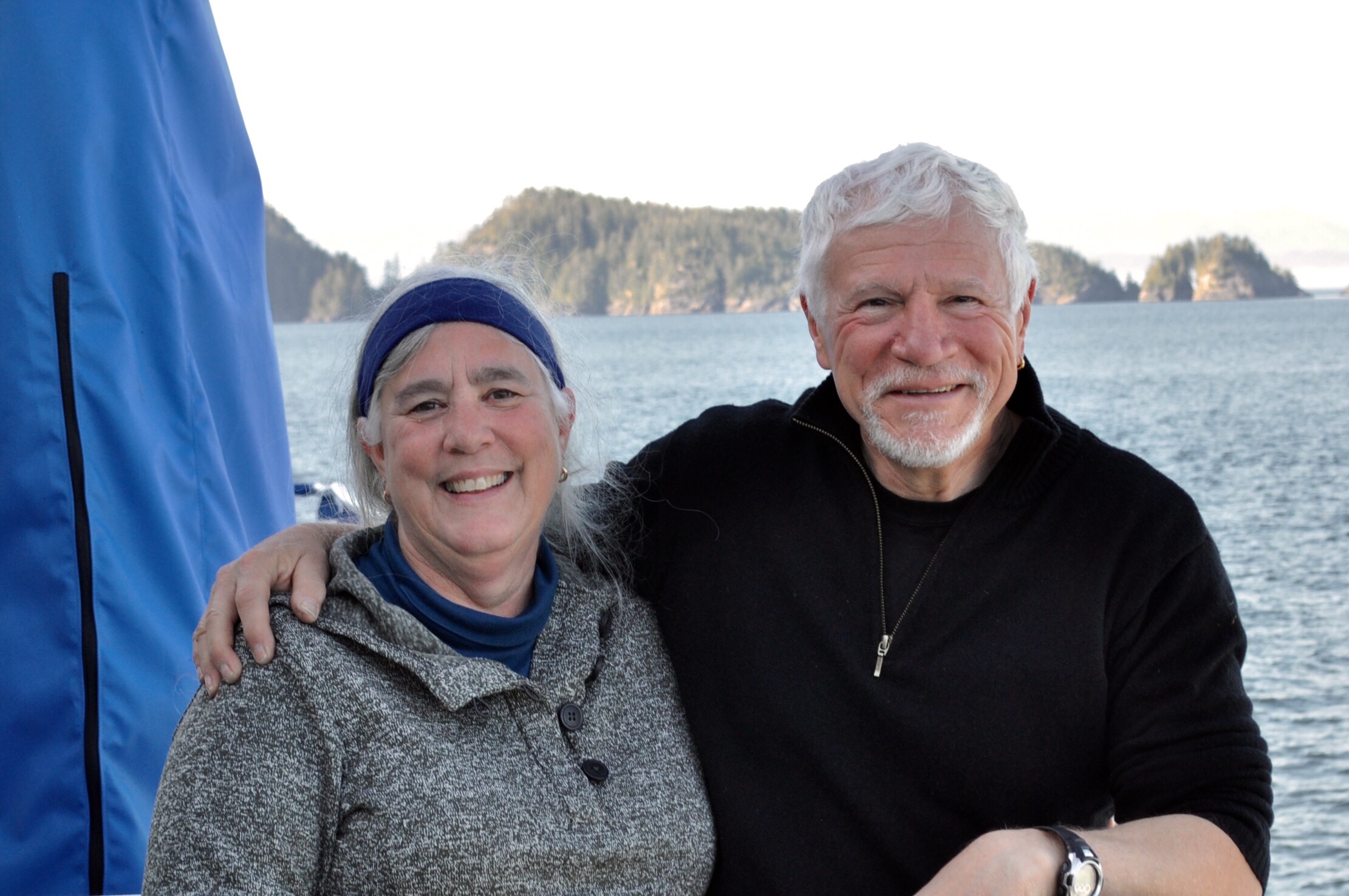
It has been a few days since I last “signed on”. We have enjoyed 4 wonderful days with long time friends, Hal and Jane Gilchrist on South Padre Island.

The days and evenings were full of island fun, which is a mix of good food, good drink, elegant entertainment and just plain hanging out. Our travels are typically low stress, and SPI just made it even more so.

On one excursion with Hal and Jane we drove to see the new SpaceX launch facility which is only a few miles by water from their condo, but about 45 minutes by car. The prior evening had seen the island and surrounding area buffeted by strong winds that gusted upward to 60mph. As we approached SpaceX I caught a news flash that the gale force winds had torn the top off of the “Hopper” Rocket.

We were among the first to see the rocket, half standing and half on the ground looking like a silver skinned beached whale. A perimeter guard approached our car as I was taking pictures. His presence politely “announced” that our presence was not welcome. I asked when the rocket would be repaired, to which he replied, “I’m not at liberty to discuss that Sir!” (Translation: “I don’t know because that’s information above my pay grade”)

The “Hopper” is a scale model of the rocket that SpaceX envisions someday transporting a large contingent of colonists to Mars.

It conjures up memories of the spaceships on the Flash Gordon programs that I watched zoom across my black and white television screen in the 1950’s.

I have to believe the similarity is intentional as Elon Musk is first and foremost a promotional genius.

The “Hopper” is designed to ascend to 16,000 feet and then vertically land at the SpaceX facility in California, demonstrating and perfecting the skills necessary for the Mars expeditions.

Our visit with the Gilchrists at an end, we traveled northeast along the Texas Gulf Coast. We enjoyed 2 nights on the shores of Texana Lake near Edna Texas. The park is in alligator country, but we didn’t see any on our 5 mile hike through the swampland located within the park.

Today brought us another 2 hours up the coast, nearing Galveston. Our leisurely drive was rewarded with the treat of camping on the hard-pack sands of the Brazoria County Free Beach. No electricity, no bathhouse, no showers, no drinking water… but priceless ambiance and the never ending sound of surf right outside the door of our camper. Did I say “priceless”?… yes, literally and figuratively since camping here is FREE!

Setting up camp was a breeze as all we had to do was park along the dune that parallels the surf. Christine and I set off on a long walk down the beach and were attracted to the site of large multi-colored kites flying in the distance.

Continuing on we found that they were aloft at the site of the town of Surfside’s annual chili cook-off competition. There was free music, free beer, and a lot of really good (free!) chili! Free seems to be the theme of the day.

Tomorrow we continue up the coast on old Texas Route 87, crossing the mouth of Galveston Bay by the Galveston-Port Bolivar Ferry. Of course, it’s free. We expect to make camp near Port Arthur, a stone’s throw from the Louisiana State line. Our destination for January 30th to February 2nd is “The Big Easy”, aka New Orleans.

Peace Everyone! Pete

We spent the last two nights camped in Seminole Canyon State Park, another excellent Texas facility.

The Park is situated along the rim of Seminole Canyon in the Seminole Canyon Archeological District.

The Canyon is known for its wealth of artifacts and cave art left by a very early indigenous people.

Little is known about them except that they were nomadic hunter gatherers who traveled in small bands.

They hunted using the atlatl and spear. They made creative use of the canyon cliffs by stampeding the now extinct species of bison over the edge and then harvesting the kill below.

The understory of the cliffs provided shelter and a place to prepare food in dugout pits. There were ritual burials, and magnificent cave paintings that have been carbon-dated to before 4,000 BCE.

Modern tribal Indians do not claim a connected heritage to these very early inhabitants.

At the entrance to the Visitors Center is The Maker of Peace, a 17-foot bronze statue created by Texas artist Bill Worrell in 1994.

Errata: we are on our way to South Padre Island (SPI) where we have reserved a campsite for 4 nights commencing Sunday. We will be hanging out with dear friends and former neighbors Hal and Jane Gilchrist. We will watch the Chief’s pursue their bid for the Super Bowl, dine, reminisce, and perhaps sip a wee dram or three of Eagle Rare Whiskey. The Gulf is offering us sunny skies and daytime temps in the 70’s.

From SPI we will make our way to New Orleans where we will camp 3 nights within walking distance of the French Quarter. Christine will then fly back to Kansas City while I solo on for another 10-14 days. Her 100 year old Father is doing reasonably well, but there are concerns sufficient for her to make an early exit from this journey.

It is likely that I won’t be posting during our stay on SPI. Where I go and what I do after New Orleans will be largely determined by whim and weather.

Peace Everyone. Pete

PS. While hiking in Davis Mountains State Park I encountered a delightful couple, Jim and Wilma. They are retirees who are traveling full time with their RV. On the trail we talked of travel and enjoying life as health allows, one day at a time.

I chanced to run into Jim and Wilma again on our first day at Seminole Canyon. They promised to stop by our campsite for a longer visit the following day. They never appeared, but I wasn’t concerned as plans do change…

Early this morning as I walked back to our trailer from my shower I saw Jim. He was breaking camp and there was an obvious sense of urgency in his actions. I greeted him and saw that there were tears in the eyes of the big retired trucker. He explained that Wilma suffered a sudden medical crisis the previous day and underwent emergency surgery. She is recovering in ICU and Jim expressed tenuous optimism for her.

Our thoughts are with Wilma and Jim. I am haunted by this reminder that life can take unexpected turns at any moment. Don’t put off until tomorrow the things you may find you are then no longer able to do…

Over a span of 48 hours I have had 2 vastly different experiences that were courtesy of both The Great and The Forgotten.

In 1938 a collaboration between the University of Texas and the University of Chicago established the McDonald Observatory in the Davis Mountains of Texas.

Named after its benefactor, William J. McDonald, who donated $800,000.00, the Observatory quickly became a preeminent research facility. The 82” Otto Struve Telescope was dedicated on May 5, 1939, and at that time was the second largest telescope in the world. The 107” Harlan J. Smith Telescope became operational in 1968 and at that time tanked as the third largest in the world. It now ranks 41st.

The Harlan telescope weighs 160 tons and is housed under a 220 ton dome. Both the scope and dome rotate to track celestial objects, remarkably power by only half horsepower motors. The most recent addition to the large telescopes at McDonald is the 390” Hobby-Eberly Telescope (HET), dedicated in late 1997.

It is composed of 91 separate 1 meter hexagonal mirrors. It currently ranks as the second largest optical telescope in the world and was constructed at the bargain basement price of 40 million dollars by using common construction materials available on the open market.

The Observatory is located atop 6,780 foot high Mount Locke and is in a prime “Dark Sky” region with little rain and predominantly clear skies. The Observatory includes dozens of smaller telescopes. We enjoyed both a daytime tour with solar observations and a nighttime “Star-Party” with observations of the moon, star clusters, and a the Orion Nebula.

The Observatory, its largest telescopes, and other noteworthy parts of the facility display the names of The Famous who have expanded our understanding of the cosmos. Perhaps among The Forgotten are the thousands of workers and technicians who built the facility and keep it running each day. The current on-site housing for the staff makes the Observatory the second largest “town” in Davis County.

Between 1933 and 1942 over 3 million economically destitute unmarried men between 17 and 28 years old enlisted in the Civilian Conservation Corps (CCC). The CCC was a huge government funded public works/relief program that was born of President Franklin D. Roosevelt’s New Deal. Nearly 90 years after its inception the hand of the CCC can be seen in forests and parks across America.

Construction of Davis Mountains State Park was begun by the CCC in 1933. The workers constructed roads, trails, pavilions, and the magnificent adobe Indian Lodge and restaurant which remain in operation today.

I hiked the trails and abandoned roads that These Forgotten built with their grit, sinews, and sweat.

There were no Famous among them to warrant the naming of these artifacts that remain, yet on this day I was the direct beneficiary of their efforts. I have no one person to whom I can direct my gratitude for a day well spent, so I give my thanks to The Forgotten.

Peace Everyone. Pete

PS. I have often heard the rhetorical question, “Why isn’t there a CCC today?”, followed by the questioner’s own answer that is a criticism of “the Younger Generation”. Here is my thought: The CCC was first and foremost a government funded relief program. There was little thought given to profit or benefit other than for the unemployed workers. The current political climate does not favor public relief or social welfare. Additionally, the workers were driven to enlist in the CCC (and WPA) out of their own economic necessity.

If circumstances were to repeat (and I pray that they don’t), I have every reason to believe that “the Younger Generation” would roll up its sleeves just like “the Greatest Generation” did.

We had stopped to gas-up, a frequent occurrence on the road. I stood at one side of pump #4 and a very large man, football player large, was filling his 4Runner up on the other side of the pump. I would soon learn he had played a year of college ball when he said, “There are better ways to pursue an education… that stuff hurts!”. In the breezy 40 temps he stood unaffected in shorts and sandals. “I’m a Florida beach bum at heart.” he would explain.

Most folks at the pumps seem to avoid human contact, preferring to focus on the task at hand and then be on their way. This big man had searching eyes, eyes that soaked up the details of his surroundings, seeking to know his environment and those who he shared it with. He drew eye contact like a magnet and once the attraction was established, “Hi, nice trailer… how does it pull with your SUV?”. My reply was barely past my lips as I found my hand engulfed by his firm, friendly, and warm handshake. “Marty, Marty Leake, I’m retired, a traveler and a writer”. (See: https://007pandas.com)

Thus it began. In the time that it took to fill up our cars I had learned he was single, had two sons, had enjoyed a long and successful career in law enforcement in Virginia, was college educated, was a compulsive traveler and blogger, was very well read… I learned more of this man in those few minutes than I know of some folks who have been coworkers and neighbors. I suspect that Marty’s take from his side of the gas pump mirrored mine. We capped our gas tanks and moved our vehicles to the parking area, continuing our fast friendship for another twenty minutes. We were looking at each other across the salad bar of life experiences, sampling from each other’s side but denied a full meal because the plates that time allowed were too small. A picture, exchanged contact information, invitations, “If you pass through Kansas City/Sanibel Island…”, a longer handshake, regret that travel called us in opposite directions, and the chance encounter ended.

Encounters such as this are unexpected treasures. I can plan my destinations, I can plan what we will see, but I can’t plan such a rewarding exchange between kindred souls.

This is the antithesis of the tribalism that divides us. We need more Marty Leakes in this world… we need to take the time to appreciate what we hold in common during the brief lifespans that mortality grants to each of us.

Peace Everyone. Pete

PS. We are camped in Davis Mountains State Park and are in a cell phone “dead zone”. Yesterday we spent the afternoon and evening at the University of Texas McDonald Observatory. I look forward to sharing the experience and images in a future post. Also, the weather and continuing Federal shutdown that is effecting National Parks has caused us to change our plans. We will be heading further south in Texas.

We are on the road traveling about 260 miles to Fort Davis Texas and Davis Mountains State Park. Midway along the journey we passed through the town of Big Lake.

In the late 19th and early 20th Centuries cattle sustained the economy of this region. Cattle drives were the traffic jams of the times, but the spreading reach of the rail system all but extinguished that way of life. Bust!

Then came the oil boom of the 1920’s and 30’s. “Black Gold, Texas Tea…” to recall an old TV favorite. In 1923 the Santa Rita #1 well near Big Lake was the first well to tap the Great Permian Basin oil field. The “Basin” covers 75,000 square miles and is up to 25,000 feet deep. It is the remnant of a huge inland sea that is hundreds of millions of years old. Towns sprang up along with the oil derricks, bringing gangs of riggers, and the collateral economy of food, drink, entertainment, and vice to feed off their wages. Big Boom!

Another long established “boom” of the Great Permian Basin was the Edwards-Trinity Aquifer. So Great was the freshwater discharge into the area creeks that in 1938 a pavilion was built on Comanche Creek for an annual celebration of the Fort Stockton Water Carnival. At that one location the Aquifer released 65 million gallons of fresh water a day… as it had for time immemorial. However, by 1961 agricultural overuse caused the springs to dry. Bust!

Eventually, cheaper oil found elsewhere and overseas caused a retraction in the demand for this local crude and most of the oilfield workers moved on to more promising “pastures”. Bust!

Big Lake survived in a diminished form, its downtown a typical array of small locally owned establishments.

As we approached Big Lake a cloud of dust could be seen in the distance. We were soon to learn it was the result of hundreds of huge trucks entering and leaving the resurrected oil fields and expansive new wind farms. These trucks are the lifeblood feeding the newest boom economy. The center of Big Lake, its old “Main Street”, is like the vacant hole of a donut. The “dough” of that donut now provides the dough (as in money) for the community and is found surrounding Big Lake. Equipment, trucks, energy company offices, and temporary housing for the workers abound. Gasoline prices were 80 cents a gallon higher than just an hour’s drive to the east.

We wondered if the new generation of migrant oil workers came solo or with families. What hardships were they and their families enduring for the draw of a bigger paycheck. What hardships were the local residents and their families enduring in the shadow of the newest boom economy. How long until the boom next yields to bust. Is evidence of that bust to be found in the parking lots of the filling stations the “boom” serves?

Time will tell as it always does.

Peace Everyone. Pete

PS. Our arrival at camp was too late for preparation of a proper meal. We drove a few miles to the town of Fort Davis and chanced upon the Limpia Hotel and Bistro. It was a wonderful find that capped off a wonderful day. BTW, our campground is out of reach of cell service so any silence on my part is imposed by circumstances beyond my control. Pete

I should add that there were some remarkable vistas provided unaided by human hands,