It has been nearly 10 years since I last held a sailboat’s tiller or adjusted a main sheet. Today Craig from the nearby town of Stockton took me out on the lake in his homemade 14 foot gaff-rigged catboat.

It was a dangerous passage, not in the sense of sailing conditions or personal risk, but because I felt perilously close to being once again bit by the urge to sail. My thoughts processed through the possibilities… we have an empty garage bay… a small sailboat would be easy to take out when the whim strikes… Christine’s Highlander has a hitch and tow package… is it legal to tow a camper that in turn is towing a boat? OK, that last one is a bit over the top, but I have actually seen it done… most recently while traveling from Kansas City to this campground.

The idea of another sailboat is appealing but not practical, especially with the evolving plans that we have for the rest of this year and 2019. There may come a day for another sailboat, but not right now.

Before I get to next year: Once the celebration of Christine’s father’s 100th Birthday is in the books we will be packing “Rigel” for a 5 week outing that will take us to Michigan and the shores of Lake Huron, Ottawa Canada, and then on to New England. Highlights will be a visit with my mother as we pass near Chicago, camping on Huron’s western shore, and then on to visit our Canadian friends Tom and Nanci who we met while walking from Porto Portugal to Santiago Spain last April. Of course, New England is its own special highlight. We camped there in 2016 and knew that return trips would be a must.

Later in 2019 we hope to travel back to Canada and camp in the remote Province of Labrador and Newfoundland. Nanci and Tom have expressed an interest in a one-week Fall cruise from Montreal to Les Îles de la Madeleine. It is an idea that intrigues us. The “cruise ship” is actually an ocean going ferry with spartan accommodations by typical cruise ship standard. The destination is an island archipelago located where the Atlantic Ocean meets the St. Lawrence seaway. These small islands sit upon an ancient salt dome. European explorer Jacques Cartier landed there in 1534, hundreds of years after the Mi’kmaq First Nation people had made the islands a seasonal hunting ground. Some modern inhabitants trace their ancestry to sailors marooned as the result of the hundreds of shipwrecks that have occurred on the islands shores.

Here is a link to the cruise company website:

https://www.croisieresctma.ca/en/

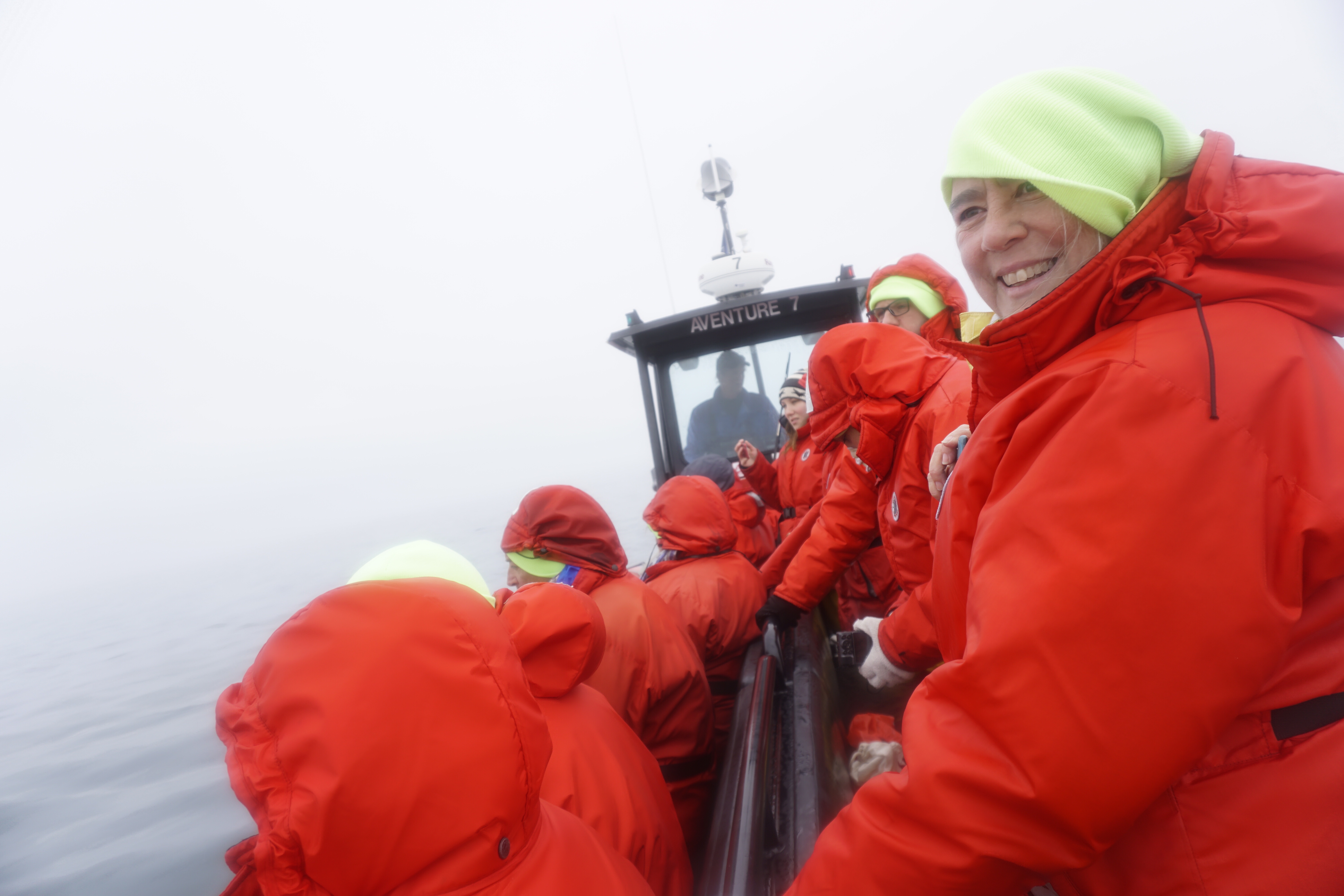
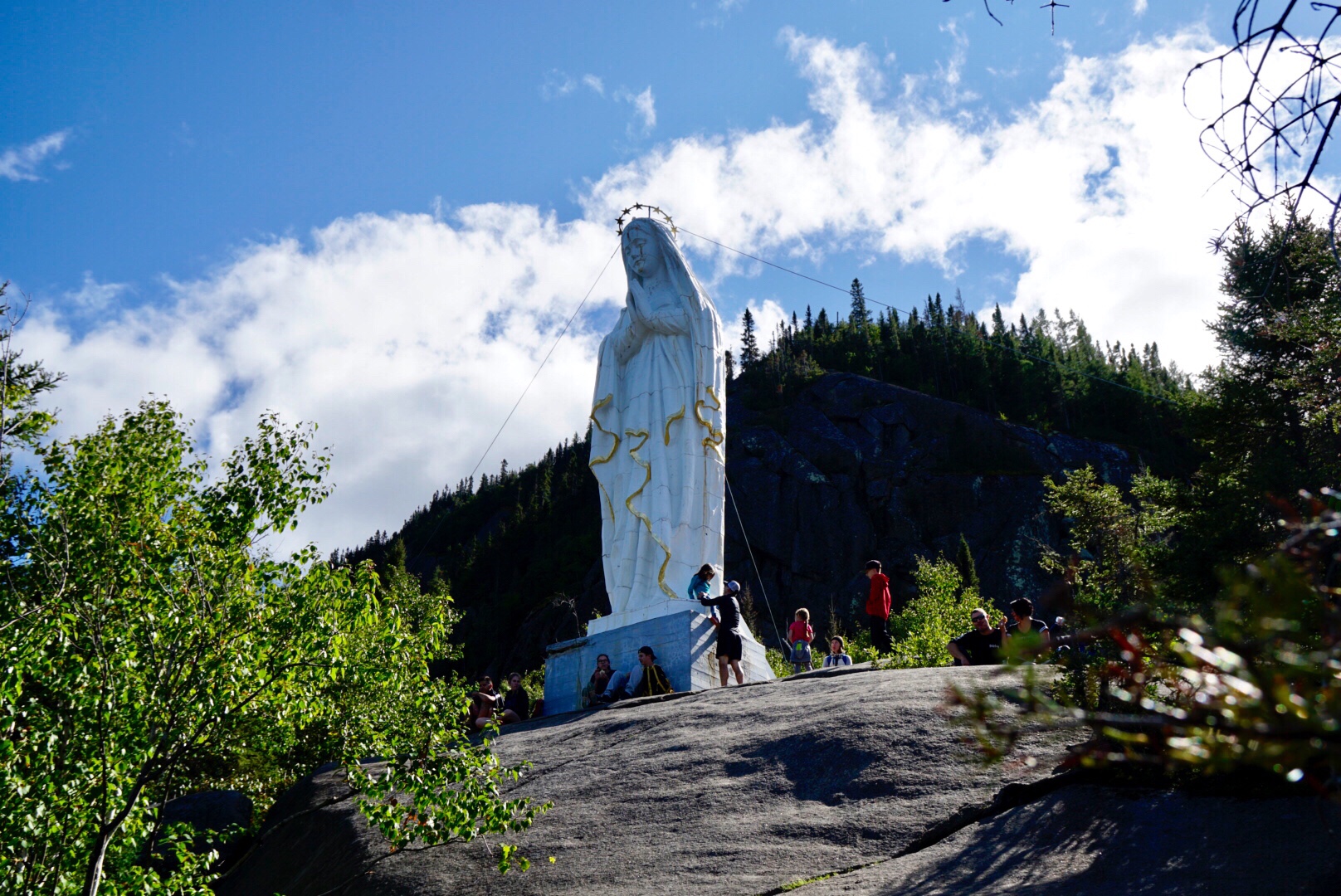
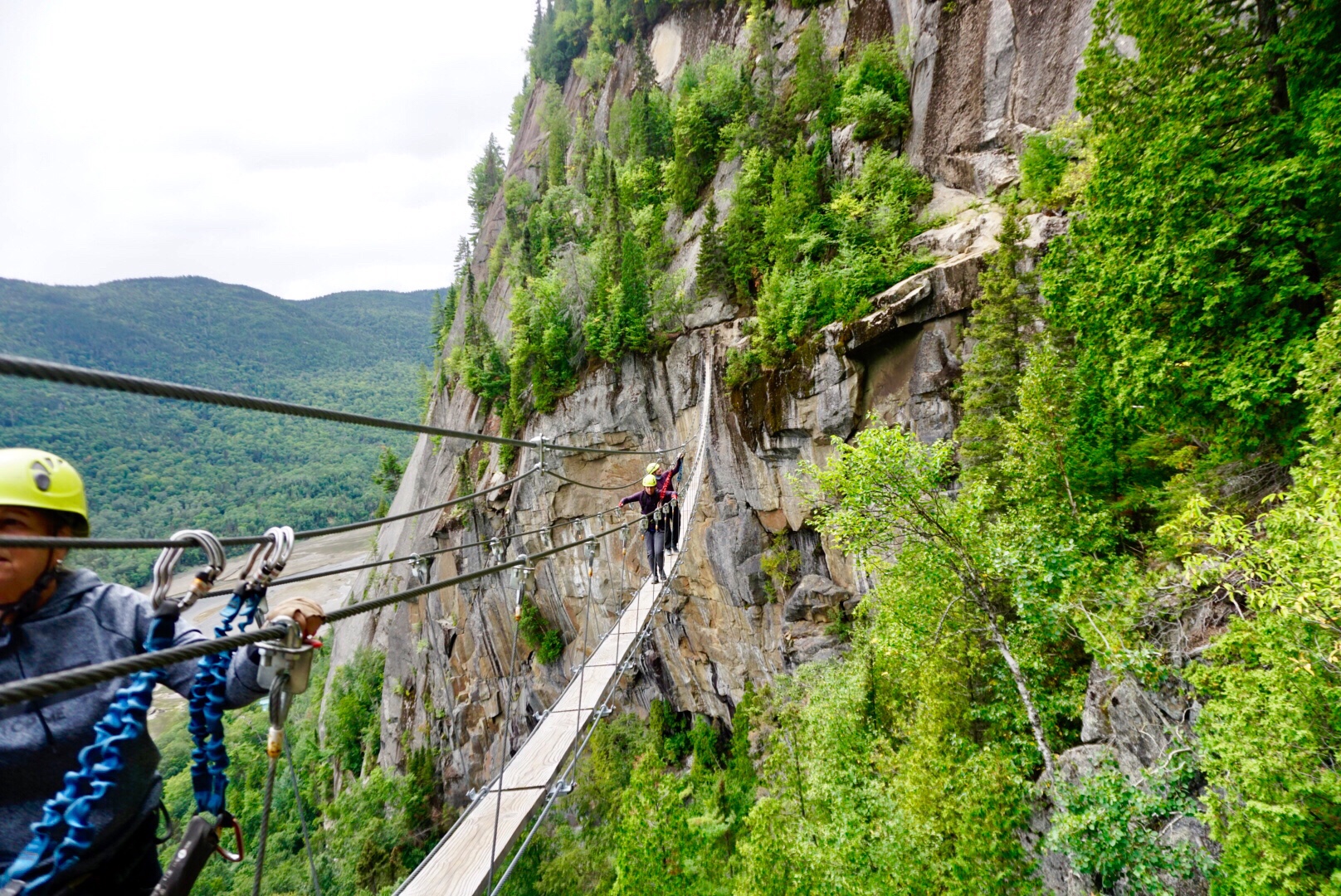
Well, I have danced around and thus avoided talking about what I consider the most captivating “Next Thing”. It will take place in April, 2019 and it deserves a separate post. However, I will leave off with a picture that more than hints at what is coming.

Peace Everyone! Pete

Yesterday I mentioned my challenges with relaxation and solitude. That remark drew thoughtful comments from good friends. Before I delve further into that… first about today.

Within a radius of 5 miles my bicycle carried me to a number of remarkable (and memorable) sights. The Stockton Dam, constructed in 1963, featured a state of the art hydroelectric turbine. The original turbine now stands on display. In 2009 one of its huge blades failed, breaking off from the unit and then discharged into the lake. It was retrieved, welded back in place, and the turbine was restored to service in 2010. However, the handwriting was on the wall and a new more efficient turbine was installed in 2013.

Near the sight of the turbine monument are huge rock cores that were excavated at the time of the dam’s construction. These cores provided engineers with valuable information regarding the stability of the underlying strata to support the dam structure. Moreover, the cores gave geologists a remarkable window into Earth’s past. The cores exposed layers of rock that date back 450 million years, a time before vascular plants and vertebrate life forms existed. The cores could not only be examined on the surface, but the holes that the cores left were large enough in diameter to allow geologists to descend the 200 foot depth and closely examine the strata in-situ.
Perhaps the most unexpected encounter on my exploration was a small out of the way cemetery founded by Issac Lyons Hembree (1796-1865). He had settled 1600 acres of Missouri wilderness in 1852 and determined to be buried in a place where he could watch over the work in his fields below. His gravestone is weather worn, but a bronze emblem gives testament to his service in the War of 1812. Other monuments to his descendants speak to service in the “Indian Wars”, and most poignantly to the service of Thomas Wilson Hembree, USN, who died on December 7th, 1941… “a date which will live in infamy”.

I had the good fortune at camp to meet Katherine, a retired educator originally from Kansas City. She and her partner moved to Stockton Lake, attracted to the natural beauty of the area and the favorable cost of living. Initially there was some concern whether they would find acceptance in the rural society. Those concerns were quickly forgotten as they not only were embraced by their neighbors, but Katherine’s partner was elected Mayor of their town.

Katherine introduced me to her neighbor Craig, a 59 year old retired hydrologist. Craig found a new passion in retirement, hand building wooden boats. He brought to camp a kayak and a gaff-rigged catboat. They are both sea-worthy works of art. Tomorrow, weather willing, Craig and I are going to sail the catboat together.

Back to my starting reflection: My friend of 50 years, Maxine, suggested that I sit beneath a large tree and with the aid of a magnifying glass (or bifocals) engross myself with the close examination of the wonders to be found in a square foot of the ground. She touts this as a meditative exercise to embrace both solitude and relaxation. I intend to take her up on this suggestion. However, my first impulse was the thought of what others might think of a 66 year old white haired guy playing detective with blades of grass. Mind you, as an adult I have hugged trees in order to “feel” the life of those stately creatures… I have laid upon the grass to contemplate the endless universe above and the 8,000 miles beneath that separates me from those on the other side of the world. In these and other similar actions I have found a tension between my proper “adult self”, and the childlike wonder that occasionally motivates me.

Childlike wonder reveals what adult propriety suppresses. We knowingly smile at a child’s play with imaginary friends. We gently discourage a child’s “overactive” imagination… and eventually we drive that free spirit into compliance with the norms that we ourselves were taught to observe as the price of our adulthood. What if the unfettered imaginations of a child or an adult nearing the end of life, are able to perceive what we have become blind to? “And those who were seen dancing were thought to be insane by those who could not hear the music.” (attributed to Friedrich Nietzsche among others)

Today was a journey not measured in distance but certainly as experienced in its depth.

Peace Everyone. Pete

PS. Perhaps tomorrow will be about “The Next Thing”.

My dear wife has released me to a week of solo camping. I am on the shores of Stockton Lake, an Army Corp of Engineers impoundment that covers over 39 square miles and features over 300 miles of shoreline. In spite of those numbers this lake ranks only 5th among the 7 largest Missouri lakes, all of which are man-made. The lake provides flood control, supplemental water for the city of Springfield, and generates up to 52 megawatts of hydroelectric power. All of these practical considerations are probably secondary (or absent) in the minds of the thousands of sportfishing enthusiasts, boaters, hikers, and campers (like me!).

Christine is busily preparing to host her father’s 100th birthday celebration at our home in two weekends. We are expecting 50+ guests. As a hostess she shines. No doubt I will be helpful nearing the event, but for the next week I would only have been in her way and suffering cabin fever. We have come to recognize that we are on slightly different wavelengths when it comes to travel and being away from home. Typically, it takes Christine a couple of weeks more than me to be “ready for the road”. Conversely, it takes me a couple of weeks longer than her to be ready to “head home from the road”. Last year we found that sending me off for an occasional solo week did much to synchronize our travel libidos.

I am ever looking to the future with visions of “the next thing”. We returned home on June 22nd from a 13 week journey that took in 16 countries and covered over 22,000 miles. On June 24th I began talking about Fall and Spring plans. Initially it drives Christine crazy, but it doesn’t take long for her to get caught up in my enthusiasm for our next “adventure”.

Over the next few days I will speak to those plans and whatever other random stuff come to mind. I will also focus on the pursuit of two things that I am not very good at, relaxation and embracing solitude.

Peace Everyone. Pete

Evelyn Evans taught high school English and more importantly she taught life. She took the time to give me and other of her students a glimpse into the potential that she saw within us. Another of my high school teachers once took me aside and expressed his opinion that I might be better served in pursuing a “technical education” … college was probably not a prudent option for me. Mrs. Evans looked beyond my struggles with spelling, penmanship, and adolescence to express a different opinion. There are only two assignment artifacts that I have retained from those days, not because of the content of my classwork but because of the content of Mrs. Evans’ written comments to me. Her words mattered and it is not hyperbole for me to express that they may have changed the course of my life.

Each of us has the potential to give the gift of “words that matter” to either encourage or discourage. Be mindful in the exercise of such an awesome responsibility.

Peace Everyone, Pete

PS: There was also Mr. Robert Dreher. He was a successful attorney in Carbondale Illinois who taught a “Survey of the Law” general education course at Southern Illinois University. On the first day of class he confidently strode to the front of the auditorium and announced to the assembly of over 100 students, “I’m Robert Dreher, I’m a LAWYER… you may call me Mr. Dreher or Professor Dreher. You may NOT call me Doctor Dreher… because I’m a LAWYER.” Mr. Dreher, though short and portly, wore his three-piece suit with the strength and dignity of a medieval knight in armor. The large cigars that protruded from his vest pocket were like a coat of arms.

At mid-term, we were required to submit an essay to him. The day that the papers were to be returned to us Mr. Dreher began his lecture by first asking, “Is Peter Schloss here?” (we had never spoken). I raised my hand and he then asked me to see him after class. My heart was in my throat for the next 50 minutes. After class I walked up to him and asked, “Professor, you wanted to see me?” He looked me in the eye for a moment longer than was comfortable and asked, “Have you ever thought about becoming a lawyer?” “No sir”, I replied… To which he responded, “You should”. That was the extent of the “conversation”. Words that matter.

IMG_0533

(Originally published December 5, 2016)


There are many great nations in the world today, but perhaps only one whose people are self burdened by the sobriquet of “Greatest Nation”. There are also a few nations whose people wish to have that burden. So it is and so it has always been.

That burden has been borne by Rome, Macedonia, Spain, Portugal, Great Britain, ancient China, and a host of other notables whose accomplishments are recorded in the annals of time and the ruins of tourist destinations. During their reign as “The Greatest” was there ever a time when their citizens imagined that they would not be the greatest? Could Romans imagine a world without Rome? Could Britains imagine a day when the sun did set on The Empire?… Spaniards and Portuguese contemplate a North or South America where they held no territory?

Humans have a wonderful instinct for the moment. We identify events and we memorialize them with monuments and sometimes holidays… we teach them to our children and they become part of our culture. The year 1066, December 25th, July 4 1776, December 7 1941, June 6 1944, and yes 9-11. Dates and events that remind a people of an important moment in time.

Humans are good at recognizing the crossroads of history, but poor at recognizing historical trends within the times that they live. There is typically no one day that marks the apex of greatness nor the moment of decline. With the benefit of telescopic hindsight those “events” can be identified, described, and written about… that is the purview of historians. Books that chronicle decline take hundreds of pages to describe the erosion from “greatest”, and notwithstanding that the decline occurred, the books often generate controversy among peers as to when and how.

It is perilous for a citizen to warn of decline or the loss of greatness during the time that the mantle of “greatest” is worn by fellow citizens. At best the cryer is marginalized, at worse vilified… sometimes even prosecuted. Yet their cautions to fellow citizens were proven in time. Warnings are threats to the status quo. Cautions threaten both the entrenched brokers of power and the population that is ever eager for the assurances that they remain “The Greatest”.

No doubt there were Romans, Britains, Spanish, Portuguese… who saw their leaders redefine “truth”… who recognized the concentration of power into the hands of a few whose agenda was the pursuit of personal goals and an abandonment of the nation’s interests… who saw their people equate military might as the sole measure of greatness, abandoning maintenance of infrastructure, and neglecting the care and education of their people… who recognized that fear mongering was merely a ploy to divert a peoples attention from the real ills of their time… who saw their one nation becoming a house divided.

The inertia of greatness may well be the ultimate cause of the decline of all great civilizations. When confronted with a peril to navigation a small boat can alter its direction with ease, but to change the course of a great ship much effort, distance, and time is required… if the peril is not recognized in time then disaster is inevitable.

Fortunately, all this is about history and boats. Nothing here is relevant to the place and times within which we now live.

Peace Everyone. Peter Schloss