This post is one in a series from my “Armchair Tour of Kansas City”. For context you may click on this link to be redirected to the series Introduction: “Armchair Tour Intro”

Our Home (where the “Tour” begins)

Christine is native to KC, having been raised only 3 blocks from where we now live. In 2009 she became aware of a home in her old neighborhood that had become derelict and was repossessed by the bank which held the mortgage.

01e931aae1b132053b7ef5ed0e1a7785e13384ff35

The home had been built in the early 1960’s, unusual because virtually all of the homes in the neighborhood date to the early 1900’s. We bought the home and “deconstructed” it, salvaging the construction materials, windows, cabinetry, etc. which we then donated to Habitat Restore.

01063e2cb1b6fb000fb24e1634287cb4f6de63c78a

We spent nearly 2 years planning the home design which we intended to pay homage to Frank Lloyd Wright yet fit the general architecture of the area. The “groundbreaking” ceremony was attended by our children and grandchildren.

0198e6fbba1ef9e58e1a29dde68e10f0e48dd26285

Each of the little ones had a garden trowel in hand to turn the first spades of dirt. The pictures and trowels from that event are a treasured memory that hang upon a wall in the foyer of our home.

01ef03f4554060eb458f6d70c67f9fbc0d74221bdb

The home was completed in 2012 and has become the center of our family celebrations and gatherings.

01a48c4a045e97e6695497481a795b7e461649813a

Loose Park

Jacob L. Loose Park, located just 3 blocks north of our home, is the third largest of Kansas City’s many green spaces.

016d71d33a5008bf65becb8c7d0250d9b5608d8ee7

01569f9b4bca0f5eb92d5b9029fbec2f2d613abd5e

It was once pastureland owned by pioneer Seth Ward (1820-1903) whose 1871 mansion still graces the neighborhood.

01f4db5fd7c9e77fcb880175f8a9c66e5c573273b6

Loose Park and the surrounding area were the site of the American Civil War Battle of Westport (October 23, 1864).

013aa2c827dc6fb42f4866618942380416d8702996

It was one of the largest battles west of the Mississippi River. Over 30,000 soldiers were engaged (among them “Buffalo Bill” Cody, “Wild Bill” Hickock, and mountain man Jeremiah Johnson). It ended with a Confederate retreat. The property was purchased in 1926 by the widow Ella Loose who made it into a park in honor of her husband Jacob. She donated it to Kansas City in 1927. The Park features a rose garden with over 4,000 plants in nearly 170 varieties. It is a favorite spot for proposals and weddings.

01e9cbde25d3c60c0c099aafe4aca7b7b03efd9ef4

John Wornall House

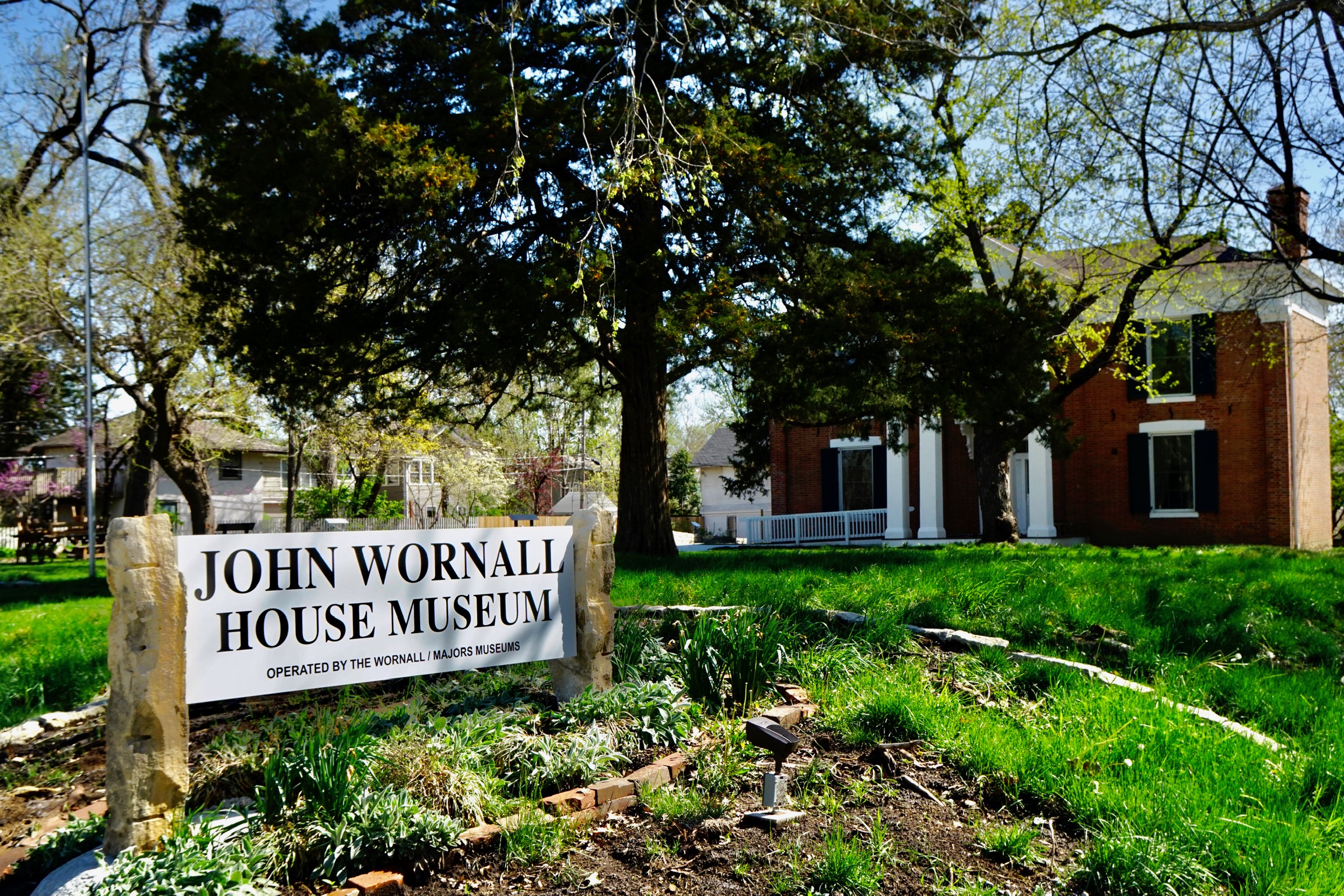
3 blocks south of our home stands the meticulously restored John Wornall House.

0112938d2a7701910cb7d675f83245aadf4e5d2514

Built in 1858, this Greek Revival mansion is one of 4 remaining Civil War era homes in Kansas City. During the Battle of Westport it served as a field hospital simultaneously for both Union and Confederate troops. The home is open to the public. A tour is highly recommended.

There is more that is a “short walk” from our home that will be presented in the posts that follow. For now…

Peace Everyone. Pete

Next: The Country Club District

Going to Kansas City:

018fba529c1fc0547f86a90a0b8618c715f259d4cb

Fresh out of college in 1974 I was offered a position as an officer with Missouri’s State Board of Probation and Parole. I was to be assigned to the urban cores of either St. Louis or Kansas City, my choice. Because I had never been there, I chose Kansas City. This has been the criterion for many of my choices in life. I soon learned that Kansas City is a hidden gem and an underappreciated tourist destination. For the inquisitive it can provide, albeit on a smaller scale, a visitor experience to rival New York City, LA, or Chicago.

018129a3c5468d62c8037cd1ab68888d8c580c5b1a

Here are some surprising facts: There is a Kansas City in the state of Kansas, but it has only 150,000 inhabitants. THE Kansas City is the largest city in Missouri both by population (492,000) and area (315 square miles). Its boundaries extend into 4 different Missouri counties, while the metropolitan area also includes 2 counties in Kansas. The metro population is over 2 million. KC is larger in area than New York City and Chicago.

Kansas City has over 200 working fountains, more than any city in the world, including Rome.

0181756af2764221229645f5be915dc58e457d73d0

012fa68bbd628410d16b0756cf3d21165f97eda898

If one counts non-working fountains, then Rome has over 2,000.

KC features more miles of boulevard than any city in the world except Paris. Indeed, it is called “The Paris of the Plains”.

015e6509615b3341c30e49fd85383bc20bc4ca96ab

KC has more Barbeque restaurants per capita than in any other city in the world.

01f1164d82c34d929d0bb74778357684cbd022d75e

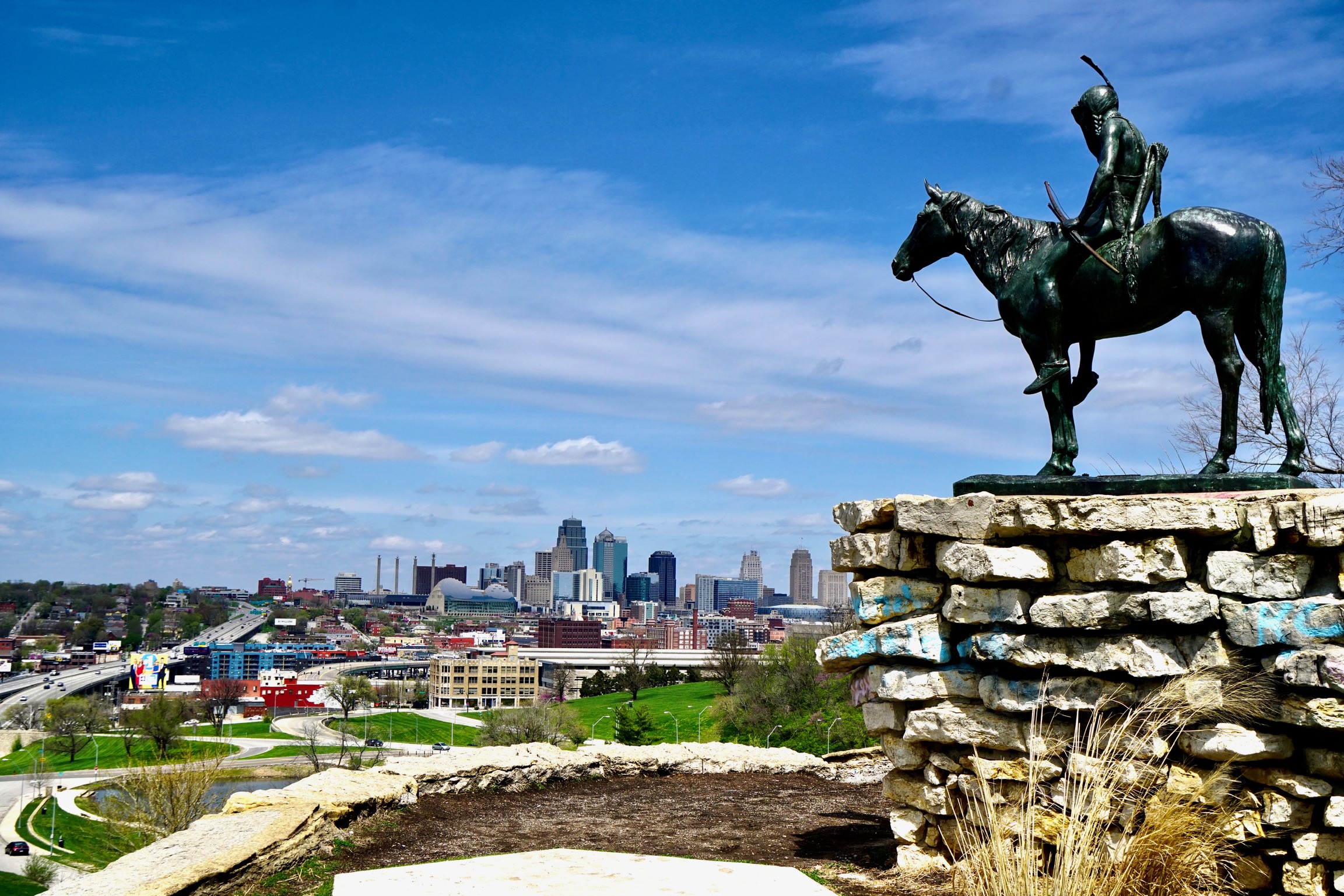
Kansas City abounds with statuary.

01e81614b896744513bf12582cf9f8a4b44f54e218

01549a2934674b7d2510b206b20109e676dd3c2578

At its founding, KC was almost named “Possum Trot”.

015438bdcc9e0f4bc12def894fa97c58de5eac485b

We have been visited by friends from many countries and all parts of the United States. Without exception all have left surprised and impressed with Kansas City’s beauty, and its dining, cultural, and entertainment offerings.

01261ab0b6f21a3c6a5a60113341eb95b3b2013d64

0117cd1e89081f1d2d9d44ba476e605fb13ef785d1

The “Armchair Tour of Kansas City” has been a multi-day project. I have driven over 100 miles throughout the metro area and taken hundreds of pictures. To these I have added some of my older images and just a few from the public domain when no other options were available to me. Hours were dedicating to research and writing. This has not been entirely altruistic as it has gotten me out of the house and focused on a positive endeavor. I encourage you to share these with your friends and family.

The “Tour” will be presented in approximately 10 posts that will follow. They will be uploaded every few days. Please sit back and enjoy the city that has been my beloved home for the last 45 years.
Peace Everyone. Pete

PS: If you have not already done so, consider subscribing to my “Thoughts”. You will receive an email link whenever a new post is launched. It is free, there is no-spam, and you can unsubscribe at any time.

011c64aff070b7ad19f6a29af9166e4ed254b3fff7

It has been a week since we returned to Kansas City and the time seems right to conclude the experience with some reflections.

First of all, it was not a “typical” trip for us. Since retirement 5 years ago the majority of our trips have been 4-6 weeks long, a few as long as 12 weeks, but none that I recall of just one week. VSecondly, we prefer to be “on the move” rather than stationary as we were in Cozumel.

Finally, we aren’t usually “beach people”, but find that the mountains and interior spaces are more to our liking. What was typical for us is the search for the unusual. We certainly found this over the course of our week on the island.

Ventanas al Mar, loosely described as our resort, was an exceptional experience but not for everyone. It is located 12 miles from town and is the only hotel on the east side of the island. There is virtually nothing but beach and waves washing the shore for miles to the north and south.

Electricity was furnished by a generator. The occasional flicker and “lights out” never lasted longer than a few seconds but gave a slight insecurity about continued reliability.
At most there were 40 guests which is near capacity for this small hotel. The staff of 4-6 was attentive and very friendly. They also cautioned us that the tap water was untreated and not fit for human consumption.

Our room was basic and pleasant. Glass doors opened to a sandy area above a cliff overlook.

This is the first place in Mexico that the morning sun illuminates.

The sound of the surf was constant and loud like a pulsing rocket engine. After 3 nights the roar was no longer a novelty and we began closing the glass doors at night. This had the unfortunate effect of denying us the pleasant breeze that made the night humidity more bearable. The hotel’s air conditioning system is turned off during this time of the year.

Breakfast (included in the price of the stay) was a pleasant fruit forward affair that included eggs and house made tortillas. Dinner was optional and we took advantage of it 5 of the 7 nights.

Our room cost $144.00 (US) a night. The dinners and drinks added another $450.00 to the cost of the week. Not unreasonable, but then hardly “cheap”.

The night before our return to the States was Valentine’s Day. The staff went out of their way to create a magical dinner experience with an excellent meal served under holiday lights, poolside, to the sound of a local music talent. We will remember that evening as the highlight of our stay in Cozumel.

The occasions that we dined in town were pleasant. One evening we enjoyed fine dining at a steak restaurant located at the farthest edge of the tourist area.
On another occasion the sought out a “locals’ favorite”. I doubt that it will ever make it on the list of cruise ship recommendations, but the mountain of roasted meats was astounding, excellent, and served at an incredible price. About $12.00 total for the two of us, beer included.

In an earlier post I chronicled the saga of our rental VW “Bug”.

There was a second rental car: A trusted local became aware of our experience and offered to secure a rental car for us for the last 3 days of our stay. He called a friend in the local car rental business. As intermediary using his cell phone he passed my questions on the friend and responded to me with the answers… “Is it a good car?”, “Si!”, “Do you take credit cards?, “Si!”, “Does the price include ALL insurance, taxes, and costs?”, again “Si!”.
The agreed price was 800 Pesos a day. For an additional 200 Pesos (cash) he would deliver the car to us at the hotel. Cool!
He arrived at the agreed time with the car, tailed by a young man on a scooter who would drive him back to town. From there things became a bit annoying and unsettling He wore a shirt with a rental car company insignia, different from the company name emblazoned on the side of the car. The paperwork bore the name and contact information for yet a third company. “That will be 2,400 Pesos, cash, plus 900 Pesos for insurance” said he as I immediately protested the price increase and change in the required method of payment. We finally settled on the 1,100 Pesos a day and agreed that I would pay for the rental in cash but at the time the car was returned. He did take an impression of my credit card “For security”.

But for a few dents and scrapes the car looked ok, certainly a huge improvement over the “Bug”. The rental worked out fine, but again there was an overriding sense of “What if…” that lingered until the car was returned. Incidentally, the return was not at a rental office but at the side of the road near the airport where we were instructed to wait for him. He would arrive by motor scooter piloted by his young friend. So much could have gone bad, but it ended well.

As a cruise destination Cozumel, like so many others, is packed with high end jewelry, perfume, and liquor stores. For each one of those there are another 25 souvenir and tee-shirt shops.

It seems that every local there is engaged in the art of separating tourists from their money. I quickly wearied of it and found little to recommend in the tourist district except for passible eating, a cold beer, and the occasional interesting street performance.


Mexicans that we encountered outside of that district, most notably Pedro at the San Gervasio Maya Ruins, were pleasant, kind, and helpful.

The traffic was brutal and unpredictable. There were motor scooters everywhere, often with as many as 4 people on board. Toddlers hung over the handlebars like hood ornaments.

We once saw a family of 5 traveling on a single scooter. toddler hanging on between dad and the handlebars, a young boy sandwiched between dad and mom, with an infant strapped to mom’s back.

Will we do it again? Possibly, but not the same way. I think that for a 1 week trip we would arrange 4 of the nights in a high-end “all inclusive” mainland resort and the remaining 3 would be on the island at Ventanas. I also think that we would explore the possibility of working in extra days for a side trip to one of the monumental Maya archaeological sites. For now we have our travel sights set on other destinations.

Later this year we plan a two month trip with our camper to Labrador and Newfoundland Canada which is the easternmost point of mainland North America.

I will probably work in a solo trip or two, and overshadowing everything will be the construction of our vacation home about 25 minutes south of Breckenridge Colorado.

Until later… Peace Everyone. Pete
It is Tuesday, February 18th and we have been home in Kansas City since Saturday. It is good to be home, and a few days of “down time” after our week in Cozumel feel good. I intend to post some summary thoughts about our week on the island, but for now I want to address a particular experience off the Yucatan Peninsula.

The island of Cozumel is located approximately 12 miles east of the mainland and 50 miles south of Cancun. The island is 30 miles long (north to south) and about 10 miles wide. It is highly developed on the west, but virtually undeveloped the length of its east shore. Its chief economic driver is tourism. The name Cozumel is derived from the Maya language “Ah Cuzamil Peten” which means Island of swallows. Which brings me to its Maya roots and history.

Central America and the Yucatan, the area that was eventually the heartland of the Mayas, was populated over 10,000 years ago. By 2,000 BC settlements were established and the people were cultivating crops, developing pottery, and producing art. Cities and large monumental structures were developed by 750 BC. A complex system of phonetic and hieroglyphic script, the most elaborate in the Americas, was in use by 400 BC. Around the 3rd Century BC the Maya City of El Mirador had grown to cover an area of well over 6 square miles. It was one of many Maya cities connected by a well-developed system of transportation and trade. A number of cities in Mesoamerica ranked among the largest in the world in both size and population. The Maya civilization was among the most advanced in the world in astronomy, math (perhaps the first in human history to employ the use of zero as a placeholder), and agriculture. It has been estimated that over half of all crops cultivated world-wide trace their origins to agricultural Mesoamerica where maize (corn), beans, squash, tomatoes and peppers were first developed.

On Thursday Christine and I visited the Maya archaeological site, San Gervasio, located in the center of Cozumel. Small by the standards of better known Chichen Itza or Tulum, it was nevertheless very important to Maya women. Here the sun rose first in the land of the Maya and women sought to make a once in a lifetime pilgrimage to the shrine of Ix Chel, a goddess of fertility, childbirth and arts of the home. It held this status for approximately 1,000 years until it was abandoned around 1550 AD, perhaps because of a smallpox epidemic of Spaniard origin that decimated the island. Archaeologists have identified 3 mass graves on the site that appear to contain the remains of disease victims.
The original site extends over several square miles, but the restored portion that is available to the public is much smaller. Restoration was conducted with the assistance of archaeologists from Harvard and the University of Arizona.
Here is a map of the site:

A virtual tour is available online.
( https://www.capafilms.com/360/chan4/ )

Admission to San Gervasio was a very reasonable 183 pesos (about $10.50 US). Visitors are free to wander the grounds on their own, but we had been encouraged to avail ourselves of the assistance of one of the guides.

My school derived notions that pre-Columbian America was a land of primitive savages had already been turned upside down and inside out.

(See https://mediationkc.com/2019/12/12/chile-before-chile-santiago-december-10-2019/ )

What was “new” to my understanding came in the form of our guide Pedro, a young Mexican who self-identified as Maya.

Through him we learned that a distinct Maya culture continues to this day. Pedro is a handsome young man with a winning smile and a baseball cap worn backwards. He spoke excellent English which we learned was largely self-taught. What is more, Pedro’s first language is Maya, his second Spanish, English is third, and he is currently working on learning Mandarin Chinese!
Pedro accompanied us for over an hour and provided a detailed explanation of the history of the site and his people. Pedro identifies as citizen of Mexico, but he speaks with great pride of his Maya language and heritage, much as I would of my own German and Lebanese roots. Over the course of our tour I often found myself doing a double-take that accompanying us was a bristling intellect disguised by loose slacks, backward cap, and a very relaxed bearing.

Among the buildings and structures that we visited were the small house shrine,

The altar platform,


The residence of an elite family,

The elite family shrine,

The archway and road to the coast,

The “Temple of Bats” (so named because when it was discovered it was full of them),

The celestial observatory,

The Palace and central plaza.

There was more, but our favorite part of the day was making the acquaintance of a delightful modern Maya gentleman.

Peace Everyone. Pete

PS. The Maya elite were highly literate. Their books were written on a form of paper that folded much like a map does. Only three examples exist today because of the efforts of conquistador bishops that resulted in the destruction of all of their literature.