As we rode south from Grand Teton National Park the vastness of Wyoming opened to us. In total, our passage through the state covered over 450 miles.

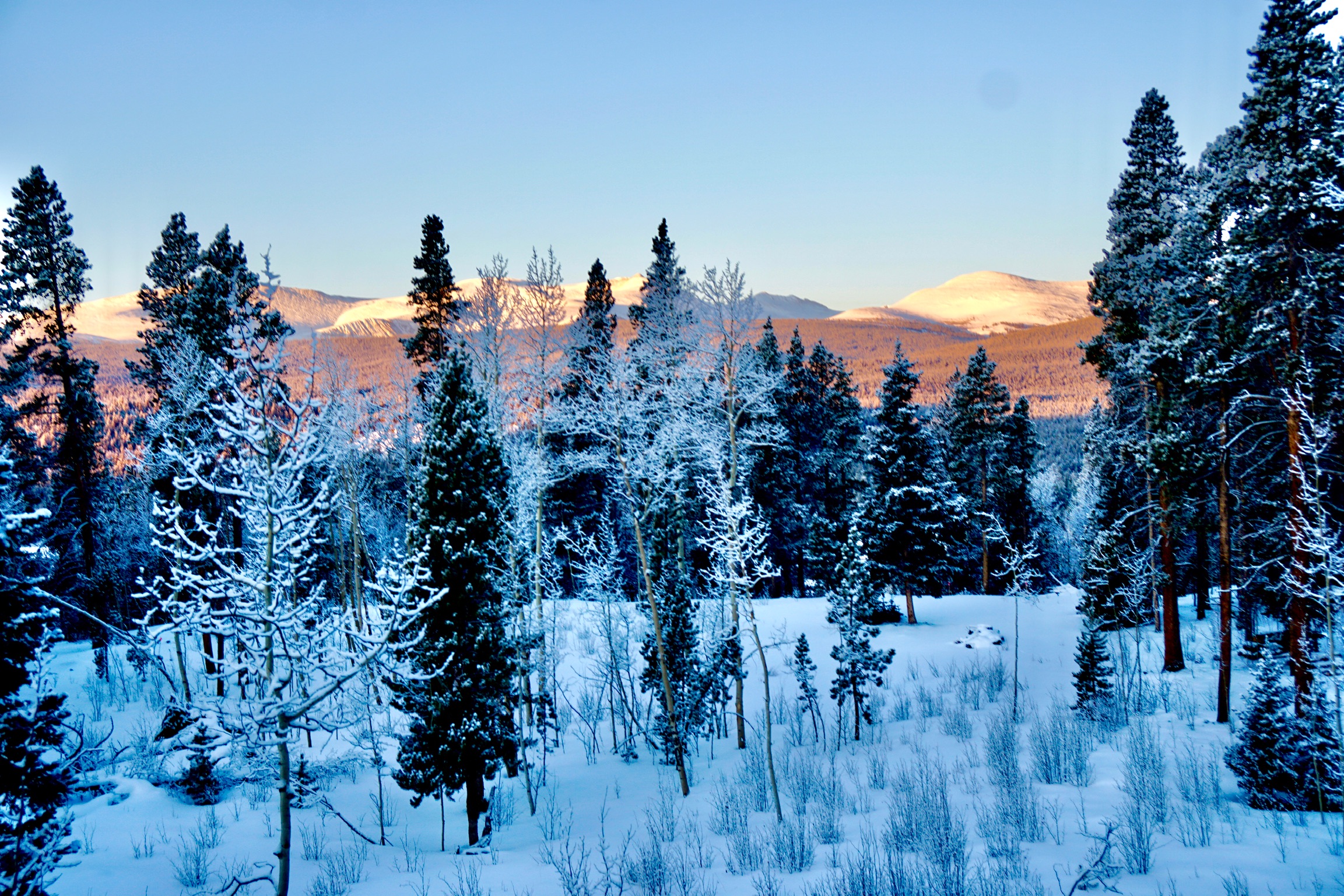
From elevations so high that ice still covered the lakes…

To near endless rolling steppes where the summer grasses bent to the winds in wave upon wave.

One afternoon we did battle with a thunderstorm that hammered us with lightning and gusting side-winds exceeding 50 mph. Sorry, no pictures as it was everything I could do just to keep my bicycle vertical and on the road.

We prided ourselves on riding our bikes every single mile, however there was one location of mountain road construction where non-motorized traffic was prohibited. Kindly, the construction crew accommodated us.

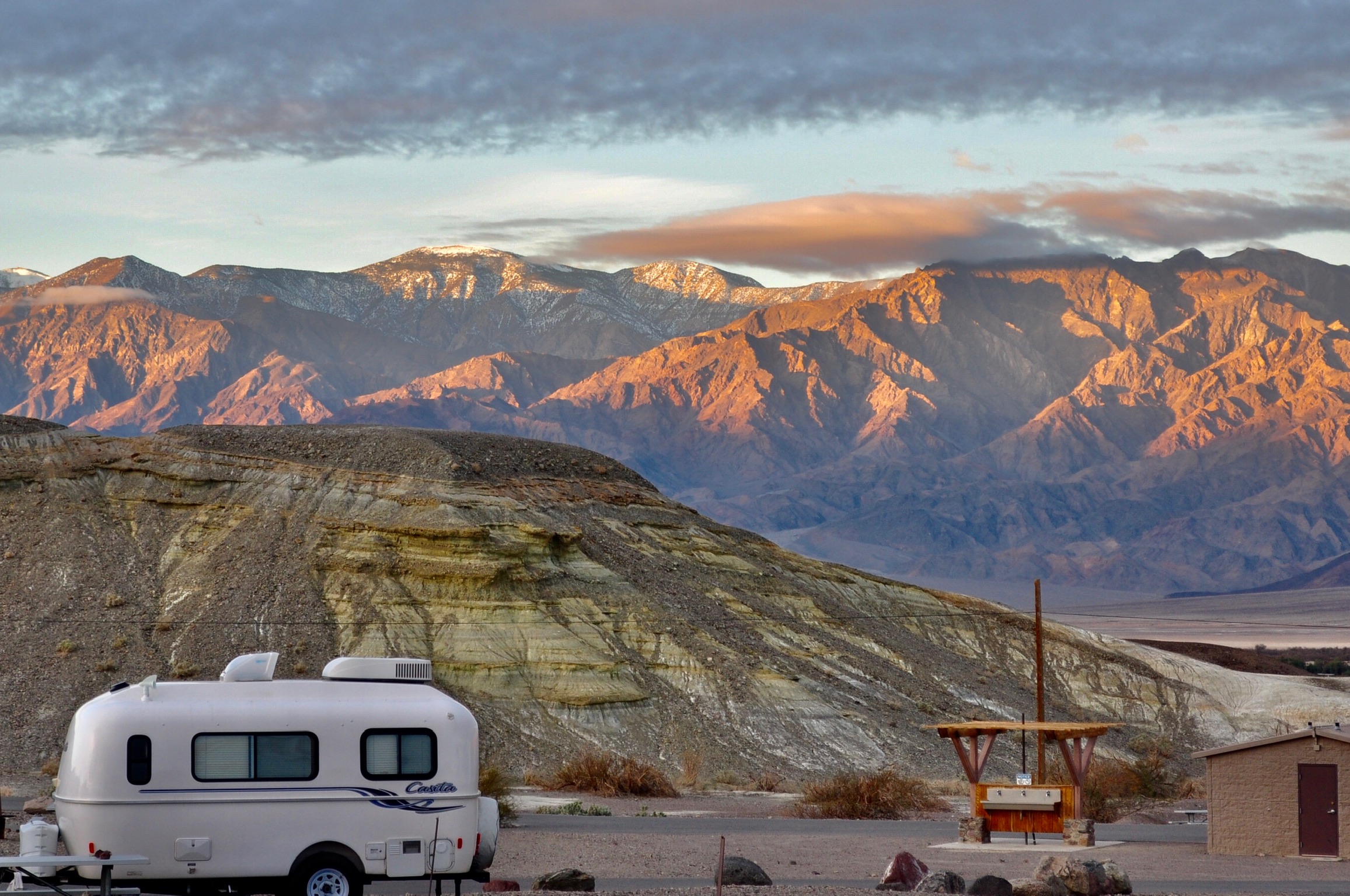
The variety of geology that surrounded us was an ever changing treat.

One morning we encountered a group of young cyclists on the road. They were “Push America”, another charity ride crossing the United States, west to east. Strong riders every one of them. Having “eaten her Wheaties” that morning our petite Lissa, aged well into her 50’s, decided to join their pace line. For miles she rode with them achieving for the day her fastest average speed of the entire Summer, nearly 20 mph.

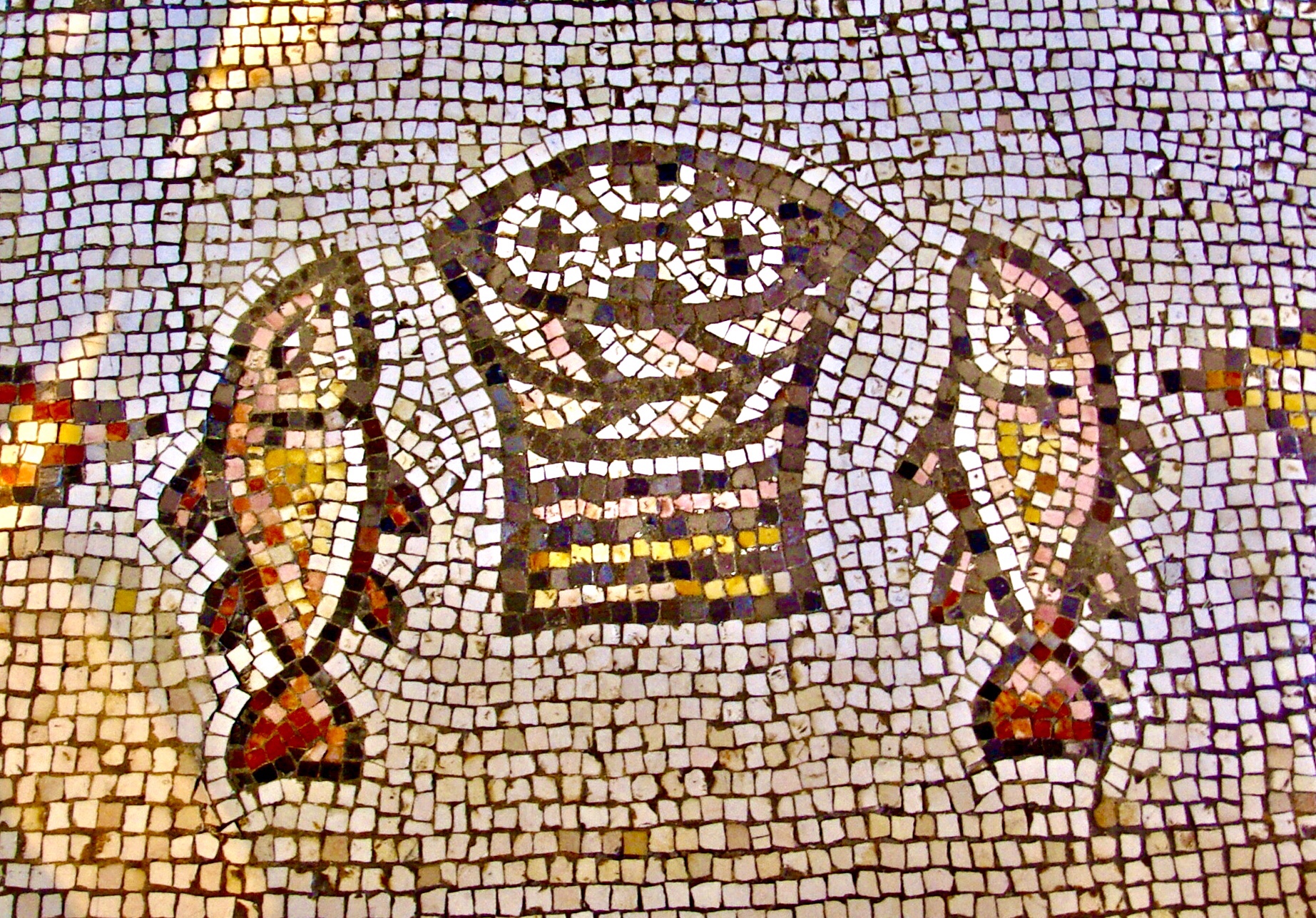
We crossed through the Wind River Indian Reservation where we were hosted at Mass at St. Stephens Mission Church. It was striking to see how familiar Christian images of worship had been ethnocentrically translated.

Upon reflection that is precisely what our European ancestors had done for millennia in creating images of a central European Christ, and blue eyed Mother Mary, and a Latin liturgy.

On July 1st (2010) we were hosted for Mass and dinner by St. Joseph  parish in Rawlins, Wyoming. Near the church we had encountered another cross-country cyclist who we called “Milwaukee Tom”.

Tom (of course from Milwaukee) had recently completed his service commitment in the US Navy. He had mustered out in San Diego California. Tom decided that he was not yet ready to return to the conventions and restraints of civilian life, so he took his discharge pay and bought a bicycle. Tom outfitted his bike for long distance touring and embarked upon a journey of no particular duration to no particular destination. At our invitation Tom enthusiastically joined us at St. Joseph parish for companionship and dinner.

On the evening of July 1st we were joined by a new segment rider, Tom Dillon from Kansas City. Tom’s first riding day with us was on the 2nd, a tough 66 miles to Riverside Wyoming (pop. 52), on the banks of the Encampment River. Our accommodations in Riverside were rustic log cottages that dated to the early 20th Century. The cabins bore such names as, “Sodbuster”, “Wildcatter”, “Mountainman”, and “Muleskinner”.

A welcome sight was the Bear Trap Saloon, situated across the street.

Needless to say…

Next: Into Colorado High Country.
Peace Everyone. Pete

PS: It occurred to me how difficult it must have been for Tom Dillon to join our group of cross-country cyclists, having long solidified into a “family”. Tom’s answer to this challenge was masterfully presented on the morning of July 3rd:

“The Coffee Pot”

I have pondered the inevitable times that we would be called upon to bring “others” into our fold. The “segment riders”… people who wholeheartedly embrace our undertaking, but because of work, family, or other considerations, are unable to assume the obligations of our entire coast to coast journey. What a challenge to suddenly appear, bags and bicycle in hand, among 16 people who have evolved their common experiences into understandings that need no words. We read the shrug of a shoulder, the furl of a brow, the shuffle of a step, as a melody in another member’s day. Sometimes our emotions sing the same song, sometimes another… but almost always with harmony… we are a chorus. Enter the “stranger”, the unknown voice.

Tom Dillon had not bicycled with any of us. He is from Kansas City, but he is a member of another parish. Tom faced the challenge I had pondered… how a “stranger” best enters the ecology of our emotional and physical environment.

Tom arrived in time to join us for the long and challenging ride from Rawlins to Riverside, Wyoming. That day’s ride on July 2nd had seen us persevere over rough narrow roads, through thunderstorms and hail, with headwinds and crosswinds gusting to over 50 miles per hours. There was no time for small talk, and no polite social graces were exchanged. At the end of the day no one was in the mood to “welcome” anyone or anything other than a cold beer, a hot shower, and a warm bed.

At 5:30 a.m. on July 3rd I reluctantly stuck my head out the warped doorway of my cabin and looked through the open and shredded screen. Like “Punxsutawney Phil” of Groundhog Day fame, I was looking to see if there were signs of another day of hell-weather. The sky was ambiguous but the scent was not. My nostrils were assailed by the rich pungent aroma of fresh roasted coffee. There was real caffeine in the air. Not the thin hint of the tepid dark imitation that is served up by most drip machines, but coffee with the raven darkness of abused motor oil. Tom, like the Pied Piper, was calling all of us coffee loving “rats” out of our lairs with the melody of his brew. He stood upon the dew sodden grass, illuminated by the early hint of dawn, with a large old style pewter espresso coffee pot in hand. I and the other “customers” lined up at his bidding, cups in hand. The tribulations of the prior day were forgotten and Tom was instantly “one of us”.

The next few days gave me pause to consider the genius of Tom’s foresight. It occurred to me that anyone entering into an established social order has a limited number of options. One may ignore the group and remain a non-person. One may choose to identify oneself to the group by emphasizing one’s distinctions and differences. And then there is the “coffee pot”. The foresight to think of the others, to strive to embrace what we have in common, what we share, what we understand.

In our cycling group, we are not lawyers, clergy, doctors, social workers, retirees… we are people and we are family. We strive to be “we”, “us”, “our” and never “them” or “they”. As it should be with the human family. It makes it so much easier to help and be helped, to accept and be accepted.

-Pete Schloss, July 7, 2010.

As mentioned in the previous post, in the lower 48 States there is none so sparsely populated as the state of Wyoming. The entire state has a population (580,000) that is approximately the same as Milwaukee, Wisconsin (585,000). There are 31 US cities whose populations are greater than the state of Wyoming. The largest city in Wyoming, Cheyenne its capital, has a population of only 64,000. Over half the state’s population reside in its  16 largest communities, the smallest of which has only 6,000 residents.

What Wyoming lacks in humanity it more than makes up in stark wilderness beauty. Nearly half of the state is owned by the federal government, most of which is administered by the Bureau of Land Management and the United States Forest Service. The “crown jewels” of these public lands are the famed Yellowstone and Grand Teton National Parks.

Founded in 1872 by an act of Congress, Yellowstone is the first national park in the world. The Park is nearly as large as the combined area of the states of Rhode Island and Delaware. Yellowstone sits atop the largest caldera (super-volcano) in North America. Half of the world’s geysers and hydro-thermal features are found in Yellowstone, the most famous of which is “Old Faithful”.

10 miles south of Yellowstone is Grand Teton National Park (est. 1929).

The two parks and the surrounding National Forests comprise one of the largest intact mid-latitude ecosystems in the world, home to thousands of species of flora and fauna, many of which are endangered or threatened.

It is little wonder that our four days spent bicycling through Yellowstone and Grand Teton (June 24-27, 2010) are among our fondest moments and memories.

In Yellowstone our Cycling for Change group cycled (cautiously!) past herds of Bison…

We hiked among the parks multi-colored thermal features…

Beheld amazing vistas…

And unashamedly embraced the role of tourists.

On the 26th, 50 miles of roads and a dedicated bicycle path transported us from Yellowstone to Grand Teton National Park. The Tetons are breathtaking. The Park’s majesty is only slightly diminished by being situated in the figurative shadow of more famous Yellowstone.


Over the course of the four days we had only one “event”, Mass at the 1937 log-built Chapel of the Sacred Heart on the shores of Jackson Lake in Grand Teton National Park.

Following Mass we were hosted by local Catholic groups at an outdoor pot-luck supper.

Under the influence of the blue sky, the panorama, full bellies, and maybe a beer or two, our spirits soared!

Next: The Rest of Wyoming!
Peace Everyone. Pete 

Montana is big, very big. At 147,000 square miles it is the fourth largest US State behind Alaska, Texas, and California. Yet it is the third least densely populated of the States, with only 7 residents per square mile. Only Wyoming (6 per sq. mile) and Alaska (1 per sq. mile) are more sparsely populated. Montana was the largest of the 15 States that C4C crossed. (I and a segment rider, Ben Harring, made an afternoon bicycle detour into Arkansas, thus making 16 States for the two of us.) Over the course of 7 days we rode from Missoula to Yellowstone National Park in Wyoming, covering nearly 350 miles. Remarkably, our transit of Florida was by far the longest at over just over 1,000 miles… a fifth of our entire journey. But I am getting ahead of myself.


On the morning of June 18th (2010) we assembled for our departure from Missoula. Father Matt offered his customary prayer which always included, “Let’s ride with peaceful minds and strong hearts…” and concluded with “God Bless C4C… Buns Up Everyone!” Another customary bell weather for the start of a day was Christine’s instructions to the group which included a summary of the route, lunch arrangements and special instructions. Her departing hug and kiss for me became a symbol of wishes for the safety of all of us.

Along our 51 mile route to Hamilton, Montana, we stopped at the National Historic site of the Flathead Indian Mission of St. Mary’s along the Bitterroot River.

The Mission, founded by Jesuit missionaries in 1841, was the first permanent settlement made by Europeans in what was to become Montana. The grave of Father Antonio Ravalli SJ (1812-1884) is prominent in the Mission’s cemetery.

Ravalli was posted to the Mission from 1845 to 1850 (when it was closed due to incursions by hostile Blackfoot Indians) and he returned in 1866 to head the Mission until his death in 1884. A native of Italy, Ravalli spent 40 of his 50 years as a Jesuit tending to the needs of Native Americans, never to return to his homeland. In addition to Ravalli’s grave monument there is one titled “Salish Kootenai” which honors tribal members whose homeland was the Bitterroot Valley.

The day’s ride featured good roads, some bicycle dedicated paths, and remarkable weather.

I had learned a “trick” that was to serve me throughout the ride: While riding, I could shoot pictures over my shoulder of the cyclists behind me.

A marquis greeting at the motel where we would spend the night was our welcome into Hamilton.

Hamilton’s St. Francis of Assisi Parish hosted us at Mass and dinner. A well-attended presentation about our mission and dialogue with the audience followed.

Except for making miles across an incredibly scenic land there were no public events for us to participate in. Matt had been scheduled on the 19th to make a phone address to a group gathering at Kansas City’s Browne’s Irish Market, but technical difficulties derailed those plans. There was, however, a private celebration that evening; We joined to honor not only the 33 years of marriage that Christine and I had enjoyed, but Lissa Whittaker’s ??th birthday.

The days that followed presented us with a variety of accommodations….


…and remarkable vistas.

There were also some iconic sights that harkened back to earlier times.

The remoteness meant that we traveled many miles without towns or mid-day meal options. The goodness of local volunteers who met us along the route provided us with food, beverages, and welcome rest.

On the 20th we rode under threatening skies. A snowstorm struck Chief Joseph Pass less than an hour after we had crossed…

It was sub-freezing on the morning of the 21st as we departed from Jackson Hot Springs, known to be one of the coldest places in the lower 48 states.

We were told that on average there are fewer than 35 days a year that the thermometer does not at least dip below freezing.

We crossed a number of mountain passes, ascending thousands of feet only to descend just as many into the river valleys below.


Coasting downhill my speed approached and occasionally exceeded 50 mph. At those speeds the utility of a bicycle helmet is likely limited to preserving an open casket option.

62 year old rider John Stigers is a very big man. One might have questioned his ability to sustain those climbs. However, his career as a US Postal Service mail carrier had provided him with the legs of Atlas.

John was not fast, but he was remarkably strong… stronger certainly than the mere mortal tires affixed to our bikes. All of us suffered flat tires over the course of 5,000 miles, I experienced only one. For John they seemed a near daily occurrence. The group stopped counting John’s flats at 20.

June 23rd was especially memorable for Christine and me. On that day, while we were all attending to the maintenance of our bicycles, grandson Peter Nikolaus Schloss was born to our son Peter William Schloss and daughter-in-law Nikola Smith. Little Peter is at least the 6th of my lineage to carry the name Peter since the start of the 19th Century.

Throughout our passage under Montana’s Big Sky we remained mindful that ahead of us lay a tour of famed Yellowstone National Park, experienced from the seats of our bicycles.


Next: Yellowstone and Teton National Parks.
Peace Everyone. Pete

The 61 miles that we covered on June 16th (2010) from Lochsa Lodge to Missoula was memorable for the thrill of ascending and topping 5,225 Lolo Pass, famed as the westbound crossing point of the Lewis and Clark Expedition in 1805.

LSeg 16 Lochsa Lodge to MissoulaLSeg 16 Lochsa Lodge to Missoula 1

This pass through the Bitterroot Mountains was also used in 1877 as an escape route by Chief Joseph during the Nez Perce Indian War. A tribute to the ruggedness of the area, Route 12 upon which we crossed the pass was not completed until 1962.

DSC_3922

DSC_3921

We enjoyed a brief celebration and hot coffee at the Lolo Pass Visitor’s Center and then what followed was our descent into the Bitterroot Valley of Montana.

DSC04381

DSC_3904

This was memorable for the stabbing chill of the miles that followed on the eastern side. It was the kind of damp bone freezing cold that worked its way through every piece of equipment that we wore. The long downhill coast deprived us of the muscle effort that might have generated body heat. Down, and down… fingers and feet lost feeling. Cheeks felt as if they were blistering. Tears streamed from the corners of our eyes and then added insult to injury as struck by the rushing wind they super cooled temples and hairline.

DSC_3906

Our arrival in Missoula could not have come too soon, and first stop was the headquarters of the appropriately named Adventure Cycling Association.

DSC04382

Founded in 1973, its mission has been to inspire, empower, and connect the community of bicycle travelers. Adventure Cycling produces and promotes resources for bicycle travel, including maps, tours, gear, and how-to-guides. The Association’s membership numbers over 50,000 cyclists. It has led in the development of the 50,000 mile U.S. Bicycle Route System. We were honored to be given a tour of Adventure Cycling by one of its four founders, Greg Siple.

DSC04386

DSC04388

The details of our cross-country ride, along with a photograph in which Greg joined us, were recorded in the archives of the Association.

DSC_3938

Departing Adventure Cycling we proceeded to the University of Montana where we were greeted with hot showers and warm beds for the night, courtesy of the Knowles Hall Dormitory.

DSC_3940

DSC04446

DSC04447

As we crossed the United States we were joined now and then by bicyclists who had pre-arranged to ride segments of the journey. The first of these to join us was Dr. Kristi Williams who arrived on the 16th in Missoula. Kristi was well known to all of us for her kind manner and bicycling prowess. She regularly joined the SFX “Flying Fish” riders and had ridden with us on the MS rides and the 2009 Colorado training ride.

DSC01039

The following day, a bicycle “rest day”, presented us with a full schedule of non-bicycle events, including:

A tour and lunch at the Poverello Center. Since 1974 the Poverello Center has  provided food, shelter, and outreach services to Missoula’s homeless and hungry.

DSC04401

DSC04403

DSC04407

DSC04416

We also visited Poverello’s Valor House. This modern facility provides housing and support services for up to 17 former armed services members seeking to transition from homelessness into a stable and healthy future. The Valor House program is a 2 year commitment that includes counseling and health care.

DSC04417

DSC04421

DSC04419

Early evening there was Mass at Missoula’s St. Francis Parish and a BBQ dinner hosted at the home of parishioners Don and Mary Gillespie.

DSC04432

DSC04397

Later, a few of us adjourned to a local brew pub. Mindful of the ride that would resume in the morning, our mascot Curtis wisely held to drinking coffee.

DSC04441

DSC04437

Missoula had embraced us with welcoming hospitality. Not surprising given its impressive community efforts to remember those that other communities often forget.

Next: Into Montana’s Big Sky Country.

Peace Everyone. Pete

DSC_3899-001


Leaving Walla Walla Washington on June 10th we began a slow ascent in elevation through verdant rolling hills.

DSC_3797

DSC04109

We had the road to ourselves and made good use of the bicycling solitude.

DSC04110

Our ride had begun at sea level. In Colorado we would achieve our highest elevations at over 10,000  feet. Our day-to-day acclimation to the increasing altitude was such that over the course of weeks we hardly noticed the air was becoming thinner.

Stephen ready for a very fast 5 mile downhill... 40+ mph!

Our transit across Idaho, measured from Walla Walla, Washington on June 10th to Missoula, Montana on June 16th covered 335 miles.

010043fafdc0d1b6f9fb50d7f558bbb3656748a1fc

I kept daily track of my bicycle statistics on a bicycle specific Garmin GPS. In addition to speed, distance, and time in the saddle, it tracked my heart rate, maximum and average speeds, pedal cadence, calories burned and of course provided turn-by-turn directions.

Stats!

The picture above is of one of the information screens on the Garmin at the end of the 64 mile ride to from Walla Walla to Pomeroy.

The motel in Pomeroy was “interesting”. The good thing about “interesting” is that it gives you something to laugh about 10 year later. The bad thing is that we stayed there. We made the best of it.

DSC04136

DSC04156

Also staying the night at the hotel were Lynne and Judy, 70’ish retired nurses from Canada.

DSC04160

They were also crossing the United States by bike. However, they were staying north and heading to New York while we were traveling a diagonal to Key West. Lynne and Judy were kind of a “Thelma and Louise” couple. They had business cards printed, “Lynne and Judy, Retired Nurses Behind Bars”. Their bikes were loaded to capacity and the ladies were getting up in years. I asked how they were handling the hills, “We’ve never met a hill that we couldn’t push our bikes up” was the impish reply.

DSC04162

DSC04163

We entered Idaho at Lewiston where we spent two nights in the dorms at Lewis and Clark State College.

Washington and Oregon are now behind us!

Matt co-celebrated Mass at Our Lady of Lourdes parish in Lewiston. The parish pastor, Father Les, had begun his ministry years earlier as an Anglican cleric.

DSC04189

I have attended Anglican Mass and one is hard pressed to distinguish the service from Roman Catholic. I have to wonder if there is a secret committee that keeps the two traditions aligned in lockstep. Anglican ministers are admitted to the Catholic priesthood through a sort of reciprocity, even if the cleric is married. Thus, Les who was married at the time of his conversion, had the unusual distinction of being a married Catholic Priest. Sadly, he was later widowed.

DSC04194

Most of us were either retired or we had been able to put our school/work lives on hold. There were exceptions: Lissa and Christine each burned some midnight oil by working remotely on the road.

DSC04034

DSC04368

Doctor Tom Whittaker had responsibilities that required his presence at the University of Kansas Medical Center. He flew back to Kansas City before we reached the Columbia River and rejoined us on June 13th when we arrived in Cottonwood, Idaho.

At Cottonwood we were guests of the Benedictine Sisters at the Monastery of St. Gertrude.

DSC04252

This remarkable Convent was founded in 1882 by three immigrant nuns from Switzerland. The 10 acre site became the motherhouse of the community in 1909 and the current edifice was completed in 1924. The complex includes a basilica chapel and convent, each with 2 foot thick brick and stone walls. Part of the construction occurred during the First World War, leaving the nuns to quarry and lay the stones and bricks themselves.

DSC04232

DSC04223

DSC04229

After a tour of the convent Matt gave a well-received presentation to the nuns, most of whom were well up in years.

DSC04239

DSC04241

At the end of the session one nun who appeared well into her 80’s approached us and asked, “Why do milk stools only have 3 legs?”… Without waiting for a reply she chortled, “Because the cow has the udder!” We couldn’t resist laughing outright even though the joke was a real groaner. She was so proud of herself in the telling and totally charmed us.

We bid farewell to the Sisters the morning of June 14th and were off to Lowell Idaho where we stayed at the Three Rivers Resort. Classic knotty pine cabins, a great open air café, and wonder of wonders a swimming pool!

DSC04254

DSC04262

DSC04275

DSC04278

DSC04287

DSC04282

We nearly doubled the population of Lowell, and the line of our bicycles at breakfast must have been an eye-opener for the locals.

DSC04311

DSC04310

From Lowell we followed the Lochsa River, enjoying lunch at roadside, with the scenic Lochsa Lodge our destination for the night.

DSC04317

DSC04334

DSC04328

DSC04367

DSC04359

We arrived in Missoula, Montana on the 16th.  More about that in the next post.

Next: Montana.

Peace Everyone. Pete

DSC04381