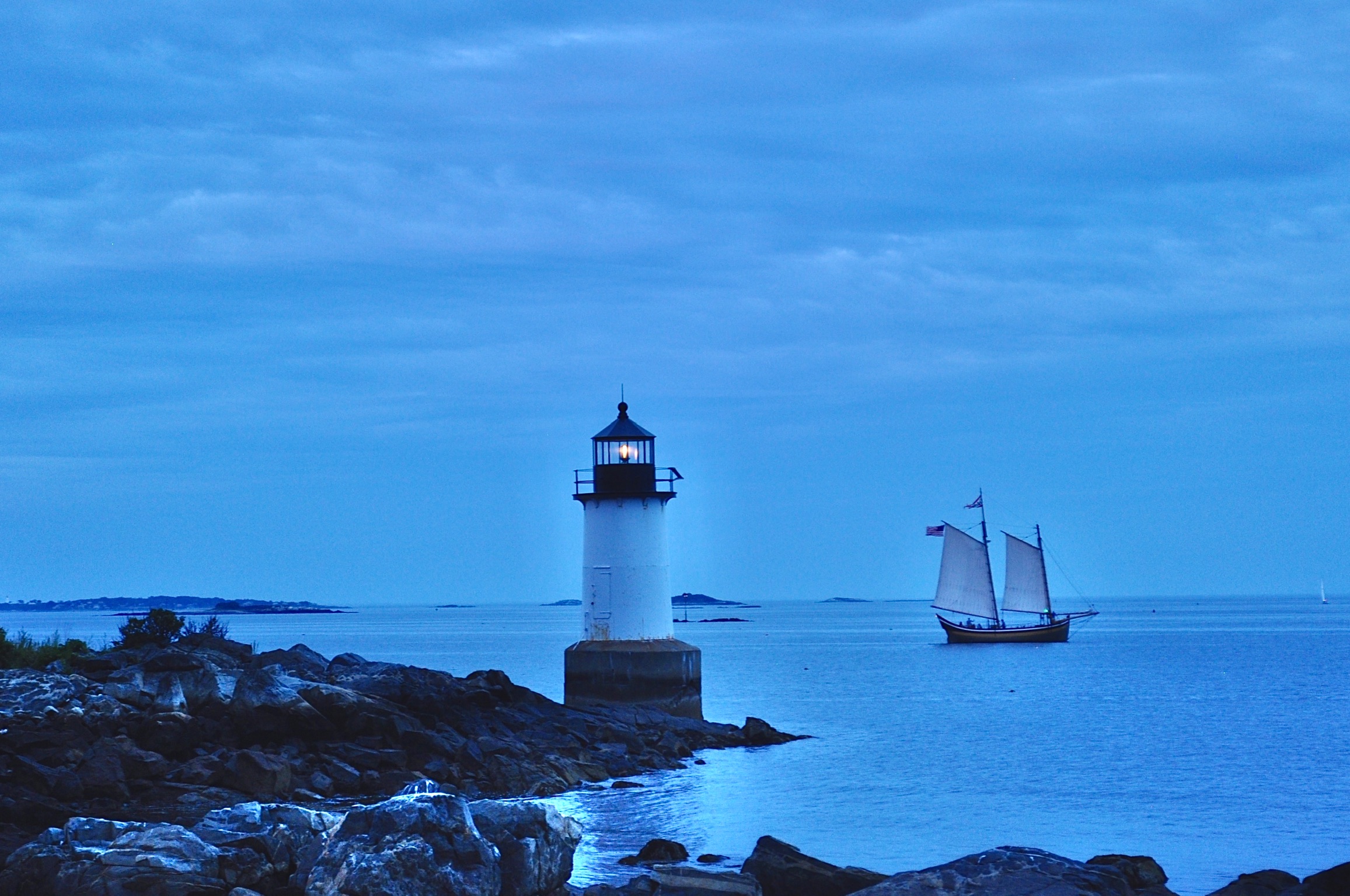
The Columbia River begins its 1,250 mile journey to Oregon and the Pacific Ocean in Canada’s British Columbia. It is the longest river in the northwestern United States, and the fourth largest in the US by volume of flow. Humans have inhabited this region for more than 15,000 years, sustained along the Columbia by the remarkable salmon spawning migrations from the Pacific Ocean.
Sadly, these have declined precipitously since the mid-19th Century. The mouth of the Columbia, where it reaches the Pacific Ocean, was the farthest extent reached by the Lewis and Clark expedition of 1803-05. In the mid-1800’s the 2,170 mile long Oregon Trail gave westward passage to over 400,000 pioneers venturing into this region.
For the Cycling for Change bicyclists, support drivers, and our mascot Curtis…
the days spent along the Columbia were some of the most beautiful of the entire Summer.
We cycled the river valley east from Portland to near Wallula where the Columbia turns north, but we continued east to Walla Walla Washington.
We tracked the course of the river for over 200 miles, the total distance to Walla Walla being nearly 260 miles.
This segment was divided into four parts with overnight stays in Hood River Oregon on June 6th (72 miles), Biggs Junction Oregon on June 7th (51 miles), Umatilla Oregon on June 8th (81 miles), arriving in Walla Walla Washington on June 9th (54 miles).
We enjoyed riding a closed segment of old US 30 Highway high on the south bluffs overlooking the Columbia and modern highway below. It is now limited to bicycles and pedestrians.
Summer blooms were an explosion of technicolor.
There were a number of memorable moments:
We stopped for an impromptu celebration upon reaching the 500 mile point of our journey, Mount Hood in the background.
Lissa Whittaker surprised us one morning, gifting each of us with a small stone figurine that she believed represented the spirit of the recipient. Mine was a bear and Christine’s an owl.
We housed in motels in Hood River and Biggs Junction…
but enjoyed the hospitality of private home stays in Umatilla (Chris and I with the Trevino family) and Walla Walla. 83 year old Rose McClellan, mother of 8 sons, provided Chris and me with a delightful evening. Her physician husband had died in 2002.
A rare routing “disconnect” occurred near the 1938 Oregon Trail monument east of The Dalles.
The map showed a paved secondary road. Too late to turn back, the “road” transitioned to gravel and at times dirt for nearly 20 miles.
Even the “good road” frequently lacked meaningful shoulders, weaving, bobbing, and presenting a real cycling challenge.
Exhausted, we concluded our 81 mile day on the 8th at Umatilla Oregon’s Our Lady of Angles Parish where we gratefully received dinner that evening and breakfast the following morning.
In Walla Walla, we were received with open arms at St. Patrick’s parish.
Father Matt was interviewed by both print and television media prior to giving a talk about our mission.
Dinner was festive and featured the most creative table decorations of the entire ride.
Of course even when there were no parishes to feed us, we somehow managed.
Next: Idaho
Peace Everyone. Pete
(June 10, 2010) 2 Emotional Encounters
While on the road today, we stopped at a service station/convenience store. We were resting and refreshing when a woman approached me from the gas pump where she was fueling her late model Subaru. She made eye contact with me as she drew near. When she was within speaking distance she asked me what I and the other riders were doing. I told her of our C4C mission on behalf of Catholic Charities. She smiled and told me that she had a 24 year old daughter who was severely disabled. Her daughter had the mental function of a 6 month old. Catholic Charities of Washington had provided services and assistance to her daughter for many years. She was profoundly grateful to the organization. We spoke for quite some time and she offered to put Christine and me up for the evening if we needed a place to stay. She also shared that she was an avid bicyclist and that she was proud of a 26 mile ride that she had completed early in the week. With tears she explained that her physicians had discouraged her from riding because her most recent course of chemo-therapy would not leave her with enough strength. At this point she was not the only person struggling with tears. She embraced Christine and me, saying “thank you”, and left us her phone number in case we needed anything. Please say a prayer for Kathy from Walla Walla, Washington. – Pete Schloss
(This from a Facebook post) “At a store in Skamania, WA today the riders were talking to a gentleman with his 10-year-old son. After hearing what we were doing the boy reached into his pocket, pulled out all of his money, and gave it to one of the riders as a donation for C4C. That 62 cents meant a lot to all of us. Thank you young man for your generosity. You brought a smile and a prayer of gratitude to all of us today. – Christine Schloss
In the wake of the George Floyd tragedy there have been voices persistent in the assertion that systemic racism no longer exists in America. Interview clips from a few high profile African Americans are featured in videos in order to give credence to the claim.
I have engaged in discussion with a few acquaintances who maintain that claims of systemic racism in America are a fiction fostered by the media of the liberal left.
I am left to wonder and ask myself the question, “When did systemic racism end in America?”
Certainly, racism was pervasive and well established in 1619 when the America Colonies first began participation in the international slave trade. How else could the Colonials justify buying and selling innocent human beings?
Racism remained in evidence during the drafting of the United States Constitution when in 1787 Article 1, Section 2, specified that enslaved persons would count as 3/5 of a free person in determining the number of Congressional Representatives that a state would be entitled to.
Perhaps one might point to America’s 1807 withdrawal from international slave trade as an end to racism except that slavery continued to flourish within many U.S. states. It remained accepted as manifest destiny that White Americans could buy and sell Black men, women, and children… permanently severing child from mother, and husband from wife.
The Civil War of 1860-65 which was “a House Divided” over the question of slavery, resulted in the deaths of 750,000 Union and Confederate combatants. That bloodbath and the defeat of the Southern insurrection must have fully and finally resolved racism, even if the liberation of the slaves under the 1863 passage of the 13th Amendment to the U.S. Constitution did not. It seems like such a long time ago, but then it was the time of my great-grandfather, only 3 generations removed from mine.
If the Civil War had eliminated racism then how was it that African American (men) were only extended the right to vote in the passage of the 1870 15th Amendment to the Constitution?
How then was it that the infamous “Jim Crow” (fn1) laws of the 19th and 20th Centuries could institutionalize racial segregation in such fundamental aspects of society as property ownership, education, freedom of association, suffrage… just to name a few. These were prominent in the time of my Grandfather, remained prevalent in my Father’s time, and enforced by various state and local governments until at least 1965.
In 1913 President Woodrow Wilson initiated segregation in the federal workforce. The U.S. military, already segregated, was not desegregated until 1948. Yet in the last week controversy reigns over whether U.S. military bases should retain the names of military leaders who led troops against the United States in the name of the preservation of slavery. (fn2)
Perhaps racial lynching was a matter extinguished in the era of the Civil War or at least by the 20th Century.
Unfortunately, that is not the case. Between 1882 and 1968 approximately 3,500 African Americans were murdered by extrajudicial “lynching”. Some authorities believe the number much larger as some events and the fates of those victims remain hidden.
Noteworthy was a 1909 public lynching of a Black man in Cairo Illinois which was attended by thousands. Still a historical artifact? As recently as 1998 James Byrd, Jr., a Black man, was murdered by three White men who “hanged” him by dragging him by the neck behind a pickup truck. Using the Tuskegee Institutes definition of “lynching” as a racially perpetrated murder in which three or more persons participated, the number of victims is certainly greater and includes the 2011 murder of James C. Anderson by a group of Whites.
Not systemic? In 1947 President Harry Truman was unsuccessful in his effort to enact a Federal Anti-Lynching law… an effort repeated unsuccessfully in the US Senate in 2005, and again just last week.
But the laws that abolished slavery must have also abolished racism, right?
In 1892 Homer Plessy, a man who was one-eighth Black, was prosecuted and convicted in Louisiana for riding in a “Whites only” train car. The US Supreme Court took the matter up in 1896 ruling against Homer in a 7-1 decision that declared that although the 14th Amendment granted legal equality to the races, it could not overcome or eliminate all social distinctions based on color. Thus, “separate but equal” was a sufficient protection of rights. That decision has never been expressly overturned…
…Yet in the 1954 decision of Brown v. Board of Education the US Supreme Court did declare that in the matter of education, separate is not equal. The law of the land? Not to then Governor George Wallace who in 1963 tried to block the integration of Alabama schools declaring, “segregation now, segregation tomorrow, segregation forever!”
Clay County Missouri, where I worked in the late 1970’s as a State Parole and Probation Officer and later as a practicing attorney maintained a “Whites only” drinking fountain in its Courthouse at least into the late 1950’s. In the 1970’s Clay County Prosecuting Attorney, William S. Brandom commonly referred to “NNR” (N—- North of the River) as sufficient probable cause for law enforcement to stop an African American in the county.
In matters of housing: I live in an area of Kansas City developed in the early 1900’s. Indelibly recorded into the chain of title of homes in this area are covenants that these properties cannot be owned by persons of the Negro race. It was not until 1968 that the federal Fair Housing Act declared such restrictions illegal. Many neighborhoods, mine included, remain de facto segregated as the result of the inertia of history, and resistance of certain sellers, realtors, and lenders (“red-lining”) to change.
In matters of marriage: It was not until 1967 that the US Supreme Court (Loving v Virginia) struck down state anti-miscegenation laws that made “race mixing” criminally punishable. It remained unusual to see mixed race relationships in public and in the media well into the 21st century. I have been told by couples in mixed relationships that it remains “uncomfortable” in certain areas and among certain groups. (fn3)
Sports? Jackie Robinson broke the “color barrier” in 1947. What is less well known is that collegiate sports remained segregated in the South into the 1970’s. In the 1950’s and early 1960’s Louisiana and Mississippi each enacted laws that prohibited integrated sports competitions. It was not until 1971-72 that all SEC conference teams became integrated. It was not until 4 decades later that the SEC saw its first Black head coach and Black athletic director. Today, African American coaches, referees, and athletic administrators remain an underrepresented curiosity in the United States, especially in light of the proportion of Black to White athletes.
Health Care: I intended to skip this topic because it could justify a stand-alone post. However, today (June 12, 2020) State Senator from Ohio and ER physician, Steve Huffman, implied by question in a senate hearing that the higher rates of COVID-19 infections in the “…colored population” are because they “…do not wash their hands as well as other groups…” He has since been fired from his position as an ER doctor.
Voting: One need only look to the history of “poll taxes”, “literacy tests”, and other “legal” impediments designed to disenfranchise Black voters to understand the purpose of the 1965 Voting Rights Act. Portions of that Act authorizing federal oversight of election procedures in certain states were struck down in 2013 by the US Supreme Court in Shelby County v Holder. The results and controversies remain a matter of current events, just one example being the disparity in the number of polling places to registered voters in predominantly White and Black race Georgia precincts this last week.
Our History: In the absence of systemic racism then surely two very similar massacres would have been equally reported in the annals of history and given equal voice in our schools’ American History textbooks.
In 1867 General George A. Custer and 267 of his officers and enlisted men were massacred at the hands of thousands of “savages” at the Battle of the Little Bighorn, more commonly known as “Custer’s Last Stand”. Who has not heard of the “valor, daring, and sacrifice” of the noble Custer and his men as mythically portrayed in books, movies, and television.
Yet, between May 31 and June 1, 1921, a mob of Tulsa Oklahoma’s White residents looted and burned Black owned homes and businesses. Over 35 square blocks in the Black citizen owned Greenwood District were virtually leveled. Over 800 Black residents were injured, and approximately 300 were murdered. The precise numbers will never be known as Oklahoma did not conduct an investigation into the events until 75 years later. Non-invasive archaeological research disclosed probable mass gravesites. The Greenwood District, then the most prosperous Black community in the nation ceased to exist and over 10,000 residents were rendered homeless. The 100 year silence that has surrounded the 1921 “Tulsa Massacre” is deafening.
Perhaps systemic racism is under attack and continues to erode. Ended?… I think not. As for those who believe otherwise, I will loosely borrow with apologies from Friedrich Nietzsche: “Perhaps those who were seen dancing were thought insane by those who refusedto hear the music.”
Peace Everyone. Pete
Footnotes:
fn1: The phrase “Jim Crow Law” was coined by the New York Times in an 1892 article about Louisiana’s passage of a law criminalizing the mixing of races in rail car accommodations. “Jump Jim Crow” was an 1830’s song and dance caricature of Negros performed by Thomas Rice in blackface which became synonymous with the negative depiction of the Black race.
fn2: For example, Fort Bragg, North Carolina, is named in the honor of General Braxton Bragg (1817-1876) who lead Confederate troops against the Union Army in at least 8 engagements. He was successful in only one and was relieved of command by CSA President Davis. Bragg is considered by historians to be one of the most inept commanders in the Civil War.
CSA General Braxton Bragg
fn3: Today, June 12, 2020, is “Loving Day”, the day that it became universally legal in the United States for members of one race to marry members of another race.
June 4th presented us with a challenging 70 mile day that would eventually see us arriving in Portland Oregon where we would be guests of the University of Portland.
However, before reaching Portland we were scheduled for lunch in Woodland Washington and a tour of La Casa de San Juan Diego, a Catholic Charities’ farm worker housing complex.
Later that afternoon in Portland we attended 5 p.m. Mass at St. Ignatius Parish, followed by a “Blessing of the Bicycles”, and a Tamale Dinner catered by an immigrant women’s group. Father Matt addressed the gathering on the topic of our mission and Social Justice.
I had begun to favor college dorms over other forms of housing. The dorm/college atmosphere seemed to encourage a greater sense of community within our group.
College towns also have pubs that are upbeat and celebratory. For our mascot, Curtis, perhaps a bit too celebratory.
With over 360 miles behind us we enjoyed our first rest day on June 5th. On June 6th there would again be rain as we entered the Columbia River Valley where we beheld some of the most spectacular scenery of the entire Summer.
The ride south into Portland on the 4th gave me pause to consider the contrast in the roads that we navigated,…
(June 7, 2010) The Roads Now Less Traveled.
A few days ago as we proceeded on our bicycles from Castle Rock Washington to Portland Oregon, our course paralleled that of Interstate 5. Our route passed through the towns of Kelso, Carrolls, Kalama, and Woodland (where we ate lunch), crossing near, under, and over the superhighway, but never upon it. For the most part I ignored the Interstate and it ignored me. Once as I peddled an overpass I could see the next town that we were to enter in the distance. With some envy I eyed the onramp and the two messages that the Interstate posted for me: “Kalama 2 miles”, and “Non-Motorized Vehicles and Pedestrians Prohibited”. One message was a temptation and the other a firm rejection. As cyclists on human powered vehicles we were orphaned by the well-traveled Interstates. I might argue that my bike was “fossil fueled” and that I was the 58 year old fossil that fueled it. However, I knew that such a petition would fall on deaf ears if I were stopped by one of the highway’s police guardians. Continuing across the overpass another sign appeared, “South Old Pacific Coast Highway”. This was the path that we were obliged to follow, a road now less traveled.
Turning my back on the Interstate I saw the contrast with the road that lay before me. The Interstate, a beast of concrete and steel, was a creature of post-World War 2 prosperity and expansion in America. It is a monument to the ability of mankind to wrestle nature’s boundaries and obstructions into submission. It stood as a byway without passion or soul, a road known only by a number and a direction. The Interstate is blunt force that catapults the traveler from one place to another as a bow shoots and arrow.
The Old Pacific Coast Highway, lying in the shadow of South I-5, is a highway in name only. This road now less traveled was born in the distant past. Some of her course was determined by nature, some portions by pre-Columbian peoples, and other sections by early European explorers. Her path made compromises with the lay of the land. There are only gentle modifications to grade and course. Unlike the Interstate which blasts through a hill in order to maintain direction and grade, The Old Pacific Coast Highway meanders on and around the rise and fall of the land, like a ribbon uncoiling from its spool.
This living road has a personality. It has a soul. I was captive to her course and her emotions. As I peddled, the road would smile seductively with her long slow descending curves. At times I was embraced by the safety of a wide flat shoulder. With caprice her mood would change. The shoulder would become a sliver of pavement forcing me uncomfortably close to the onslaught of thundering lumber trucks. Her gentle slope would suddenly turn skyward to challenge my legs and my lungs. She could be calm with the smoothness of new laid asphalt, or she would thunder anger through my thin tires, shaking me bodily as I rolled over rough and damaged pavement. A change in the wind’s speed, direction, or temperature would either brush my cheek like a gentle kiss or smack me in the face with force.
The Interstate is a wasteland. In some parts of the country, a place which is available to serve travelers with food and fuel is appropriately called an Oasis. People are only permitted within an Interstate’s boundaries if encased in a motor vehicle. It separates us from the natural environment and creates its own. There are no sounds, no smells. Sights are relegated to the distance in favor of declarations of speed, distance, and destination.
On the Pacific Coast Highway there were dogs to chase us and children to cheer us. Schools, churches, and stores extended their parking lots to us. Cemeteries presented the memories of those who passed before us. The roadside was picketed as far as the eye could see with the mailboxes of the homes which bordered her lanes. I could not only read the names of the residents but actually exchange greetings with them. A man weeding his garden, a boy seated on his swing set. A woman in a wheelchair called “hello” to me. Perhaps she considered our wheeled conveyances were a connection that erased the differences that otherwise separated us. Bridges nearly touched the water. I could peer over the low railings to see the wildlife that the river sustained. A silver metal silo reflecting the sun by day would do the same for the lights of cars at night. I counted the rivets in one of its seams as I passed. This road served up sights, smells, and sounds as a banquet for the senses.
For 75 miles I had a relationship with this road. With sadness I knew there would be a parting with her at Portland. As I neared the Columbia River a huge bridge loomed in the distance. This would be my crossing and on the other side I would leave The Old Pacific Coast Highway. Riding toward the north end of the bridge I saw where the road channeled bicycles across. I also saw with some concern the shape of a white rectangular sign, the kind that stood to prohibit my entry to the Interstate Highway. But this time the sign was at the start of a narrow lane leading up and over the bridge. This sign declared: “Motorized Traffic Prohibited”. I smiled as I knew I was not an orphan of this road. I had been adopted and was now one of her children.
There is an annual Summer bicycle event, “The STP”, Seattle to Portland. It covers over 200 miles and limits participation to the first 8,000 who sign up. Some riders cover the distance in a single day, others in two.
We covered the distance, departing Seattle on June 2nd and arriving 3 riding days later in Portland on June 4th. Unlike the STP riders we had duties other than bicycling.
Lunch on the June 2nd included a tour of the Tahoma Family Center, housed in the former St. Leo’s High School. The facility provides meals and services to thousands of unfortunates each week.
More about this Catholic Community Services Center appears at the end of this post.
Lunch and Mass followed…
…and then we were back on the road to complete a 66 mile ride for the day.
Our housing was furnished in the dormitories of Evergreen State College, home of “Speedy the Geoduck”, a species of clam that in real life is the largest in the world. Some say it resembles a… well, I will let you draw your own conclusions.
Stock photos of a live geoduck harvested in Washington State photographed in studio on Fri., Aug. 1, 2014. Hand model is Emily Dunn-Wilder of the Evergreen Shellfish Club. **NOTE** please credit: geoduck courtesy of Taylor Shellfish Farms
In the world of strange college mascots, it’s a toss-up between “Speedy” and Mississippi’s Delta State U mascot (where we also stayed) “The Fighting Okra”.
The Evergreen State dorms were delightful. With the exception of drying wet gear and sharing our room with a bicycle it brought back memories of an earlier time in my life.
A short walk into town brought us to a favorite college hangout for dinner and carb-loaded beverages… important for sustaining thirsty cyclists.
June 3rd, 65 miles to Castle Rock included some pleasant miles of “rails to trails” riding, enhanced by music from a mini-speaker attached to my bike.
We concluding the day with dinner hosted by the Knights of Columbus chapter in Kelso Washington. Our spirits were high. We had not yet begun to hate pasta.
My experience the prior day at the Tahoma Family Center still weighed heavily on my mind:
(June 3, 2010) “Dignity Dies Last”
Many of us have heard this speech: “In the unlikely event that there is a loss of cabin pressure, a mask will fall from a compartment above you, and provide you with oxygen…”.
We take for granted that on a journey we will be provided with our basic necessities. Air, water, food, safety. Most of us never consider two other “necessities” that we also take for granted… hope and dignity.
Wednesday (June 2, 2010), the Cycling for Change Team was provided lunch at St. Leo’s Church soup kitchen in Seattle, Washington. St. Leo’s provides breakfast and lunch meals for between 800 and 1,100 people every day, 5 days a week. As one of the staff people explained, the numbers tend to go up at the end of the month when people find that they have run out of money.
Our visit was at the start of the month, but the lunchroom set in a large and old repurposed school appeared filled to capacity. As I walked through the door I experienced an emotional version of a “sudden loss of cabin pressure”. Before me was a post-apocalypse vision that we have all seen in science fiction movies. A crush of vacant eyed people, soiled, many wearing what amounted to tatters. We were to dine shoulder to shoulder with the people that Seattle had forgotten.
Before I took my place in the food line, I visited the men’s room to take care of another “necessity”. As I turned the corner I beheld that there were no doors on the line of stalls. The one that was available to serve my “needs” was mere feet from a line of men waiting to use the urinals. I was faced with the decision to either wait in discomfort and go elsewhere, or just sit down and “go” in discomfort. I considered that I was there to (briefly) experience what others live daily. Swallowing my pride I lowered my cycling shorts along with my expectations for privacy. In a matter of minutes a man took his place in front of me at the nearest urinal and without a moment’s hesitation struck up the most ordinary conversation with me about the weather. He was followed by another person who commented upon my bicycling attire and asked what I was doing. This continued,, one man after another, to the point that I felt that I was in the receiving line at a wedding.
Business done, and hands washed, I proceeded to the food line. I was handed a brightly colored compartmented tray, the kind that you would expect to see in a grade school. There was a bowl for the soup, but no plates. My meal consisted of a slice of lunchmeat between two pieces of white bread, a bowl of chili-like soup, and a single chocolate chip cookie. A soup kitchen that serves a thousand people a day from donations does well to make do with what it gets. The same applies to those who are served. There was coffee, hot and excellent by any standard.
I moved to one of the long cafeteria tables and found a vacant folding chair between two of the center’s customers. I ate and visited with my “companions”. I was beginning to feel a sense of accomplishment in embracing the experience when my eye was drawn to a man seated across and a few chairs to the left of me. I was wrenched back into the reality that for everyone at table but me this was not a diversion, not just “an experience”… this was reality, this was life. Again, there was a loss of “cabin pressure”.
The “oxygen” that was rarified in the room’s atmosphere was the loss of hope. Most of us have experienced a momentary loss of hope, but few who read this know what it means to be without hope, and without prospect of finding hope… true hopelessness. In the soup kitchen I could scan the tables and see a face here and there that bore the signs of a life yet with hope. A father with his young son, the boy looking up to dad with the kind of hero worship that any father lives for. A man and a woman looking deeply into each other’s eyes, sharing gap toothed smiles between words and bites of their meals. But the man who had caught my attention was not one of these. With him there was no sign of hope.
He visited with no one. He sat ramrod straight, eyes forward. His hair was as neatly combed as hair could be that had not seen shampoo for some time. His stained and worn clothing would not have been suitable for donation to a second-hand store but was arranged with care. From his weather worn complexion, he looked to be in his 50’s, but I suspect the ravages of a life without shelter had aged him prematurely. He might have been 40, or younger. He ate slowly, with deliberation… with dignity. Everything about him screamed his dignity. He wore dignity like it was armor. The man grew in my sight and became larger than life. Whatever the cause of his condition, whatever the story behind a life rendered hopeless, by example he taught that dignity may be given, dignity may be cast aside, but it is never taken from one who chooses to keep it. For some, dignity dies last.
I have recently had occasion in discussions with a few folks to be confronted with the topic of George Floyd’s “history”. As both a retired prosecuting attorney and retired defense lawyer I am familiar with the defense tactic of raising the conduct and reputation of the victim as a means of drawing attention away from the defendant’s conduct and the issues at trial.
George Floyd may have had a checkered past. It’s not relevant.
The United States Constitution guarantees all of us the presumption of innocence, the right to have our guilt decided by a jury of our peers, the right to an attorney, the right to due process of law, and most of all the right under the 8th Amendment not to suffer excessive, cruel and unusual punishment.
I have worked with scores of police, representing them in court in the prosecution of defendants that they arrested. Human and with faults as each of us are, all but a very few of those officers were dedicated to “serve and protect”. It is just as wrong to paint all of law enforcement with the broad brush of misconduct committed by a few bad cops, as it is to ascribe to an entire segment of our population the conduct of a few miscreants.
It is proper that George Floyd be honored and remembered, certainly by the family and friends who knew and loved him. It is also proper that the rest of us honor and remember him for the stark example that we witnessed of one human being suffering the ultimate price not for what he did but for the color of his skin… at the hands of another who acted as an agent of the people gone bad.
George Floyd was not presumed innocent. George Floyd was denied the right to have his guilt (for whatever he may have been accused of) determined by a jury of his peers. George Floyd did not have the benefit of an attorney. He was not provided with due process of law… and whatever he may have been accused of, the imposition of a summary execution certainly qualifies as both excessive and cruel.
The point that the voices in protest are rightly making is that what happened to George Floyd is not unusual… if one is black.