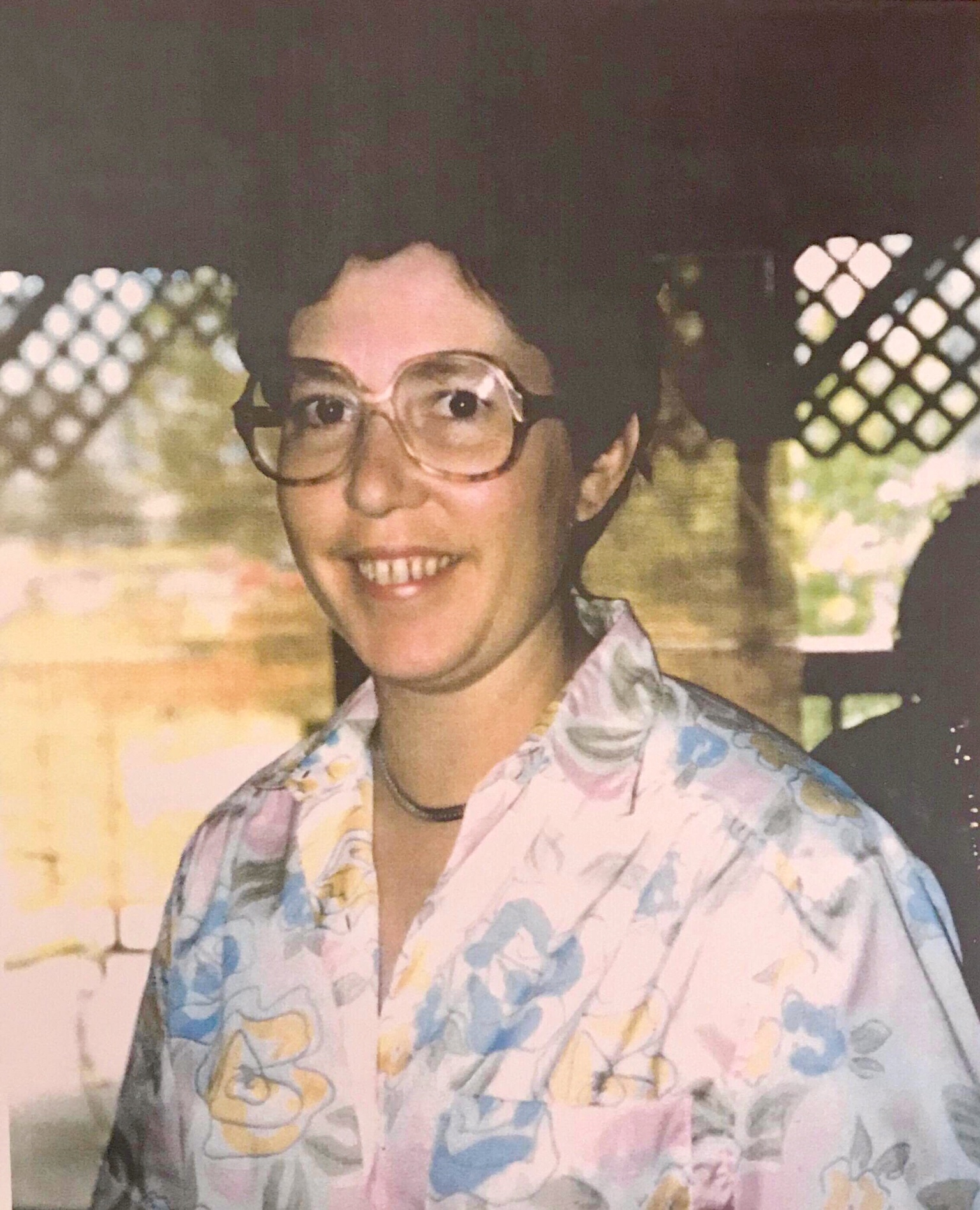
In 1977, on my first day of law school in Kansas City, Missouri, (my first class no less), in walked Jeff Hiles. We had been high school classmates 500 miles away in far south suburban Chicago, graduating together in 1970. I’m not sure which of us was more shocked to see the other. Jeff went on to graduate and become a member of the Missouri Bar. He was a well-regarded and respected lawyer, known for his dedication to those in need, without regard to their socio-economic status, a man of solid ethics and deeply spiritual.
In looking through some old archive documents I came upon this piece written by Jeff that became a part of his memorial service. Jeff died March 24, 1998. -Pete Schloss
Simple Truths, by Jeffrey Hiles
My sister held my hand in the waiting room at the University of Kansas Medical Center. We sat silently as any attempt of reassuring conversation seemed stilted and artificial. The year was 1987. We both were afraid.
I was grateful for her presence which bolstered my not-too-resolute courage as I was about to confront a possible life-threatening diagnosis. A prolonged respiratory infection coupled with my gay sexual orientation had resulted in tests for both HIV status and AIDS-related pneumonia. I now awaited the results.
After a period of time which seemed like a small piece of eternity, we were ushered to a room to await the doctors. The infectious disease specialist entered accompanied by two interns who mimicked their mentor’s demeanor. I inhaled a large gasp of air. No, I didn’t have pneumonia. I had bronchitis. But I was HIV positive.
My mortality and the prospect of a painful demise were frightening and a constant vision during those initial few months. I felt betrayed by my own body and I was depressed. Those people and activities that had traditionally brought joy and meaning to my life now appeared unimportant, and I was mired in self-pity.
I knew I needed to find something that would lift me out of the “shadows” I found myself in. A transition from self-absorption to engagement in the world about me was mandated. I found solace in the scriptural reference, heard repeated throughout my childhood, that it is our calling to help those in need. Jesus said, “In as much ye have done it unto one of the least of these my brethren, ye have done it unto me.” I believe this admonition teaches us that when we care for the most vulnerable in our world we move closer to God.
I heard of a new fledgling organization whose sole purpose was to help people with HIV/AIDS. I applied and was accepted to its Board of Directors. Its name – Good Samaritan Project. I experienced at Good Samaritan Project intense sorrow and rapturous joy. I remember the faces of dying individuals whose hands I held seeking both to give and receive solace. And saddest of all I remember desperate young men coming to Good Samaritan Project who were alone, abandoned by companions, friends and family, and who were sick and unable to work, without any means of help for financial resources for their physical needs and for their spiritual/emotional well- being.
It was painful as I felt great empathy for these people and as I could not help but wonder whether a painful future awaited me. Yet, I knew I was doing God’s work. Allowing myself to experience and attempting to help with the suffering of others, paradoxically, lead me from my sadness, and I began to experience, as if a child, the wonders of joy and love.
I felt rather like the young seminarian in the play Mass Appeal when he expresses the following: “I had a tank of tropical fish. Someone turned up the tank heater and they all boiled. I woke up on a Friday morning – went to feed them – and there they were – all of my beautiful fish floating on the top. Most of them split in two. Others with their eyes hanging out. It looked like violence, but it was such a quiet night. And I remember wishing I had the kind of ears that could hear fish screams because they looked as if they suffered and I wanted so badly to save them. That Sunday in church, I heard that Christ told his apostles to be fishers of men. From then on, I looked at all the people in the church as fish. I was young so I saw them as beautiful tropical fish and so I knew they were all quiet screamers. Church was so quiet. And I thought everyone was boiling. And I wanted the kind of ears that could hear what they were screaming about, because I wanted to save them. A few years later, the people in the church lost the stained glass look of tropical fish, and they were only catfish to me – overdressed scavengers. So, I drowned out whatever I might be able to hear. I made my world – my tank – so hot that I almost split. So now I’m back – listening – listening for the screams of angels.”
Too soon, complications from AIDS rendered me unable to engage in my profession of law. Other activities such as speaking on behalf of AIDS service organizations and tutoring at DeSalle [Education Center] became difficult if not impossible.
I experienced many hardships including AIDS related pneumonia triggering an acute asthmatic response, I experienced an inability to eat and hiccupping and belching lasting months caused by the opportunistic disease MAC (I was kept alive by first an 18 hour intravenous feeding of total protein nutriment, then a 12 hour drip.), and I experienced loss of vision caused by the CMV retinas.
Suddenly I was not the individual who I had been but rather a frail, needy shadow of my former self. Who was I now? It was a difficult time.
But, I remember the kindness and love given to me: Nancy Ditch who has caused and continues to cause me to exercise weekly by sharing stretching and yoga techniques; Merril Proudfoot who calls and visits despite his own battle with prostate cancer; my friend Larry who despite some reluctance due to a fear of hurting me gave me injections of pain medication when I suffered almost daily nausea; my older sister Barbara who, during a visit, allowed both of us to cry releasing much of our anguish; my sister Nancy who insisting in a kind firm way that the nursing assistants at St. Luke’s take better care of her older brother; My younger brother Tom who in an attempt to share his feelings called me “sweetheart” – an expression I never expected Tom to direct to me; my father who spent nights with me in the hospital so I would not have to be alone; my mother who long after fatigue had set in wiped my brow unceasingly and into the early morning hours to relieve my 104 degree temperature, and most of all my companion Bob, who always loved me and took care of me during long days of illness – hours spent preparing and giving me the intravenous food and medicine I needed to avoid death. All the time willing me to stay alive, supporting me, caring and loving me. And so many other acts of kindness – prayers, cards and letters, telephone calls, food and visits.
I would not choose to have AIDS, but it has taught me to try to be in the moment and to give to others. Medical ethicist at Kansas University Medical Center, William Bartolome who is dying of cancer states:
“I am . . . unwilling to allow my life to revert to the common pattern of living primarily in the future, and, to a lesser extent in the past. I had spent precious little of my life living in the present; living in the almost overwhelming intensity and richness of the world around us. This means not only doing things like “stopping to smell the roses,” but allowing oneself to be radically open to what is going on in the world. I find myself stopping over and over again to see or hear or feel something that before my illness would have been lost in the rush of experiences that seem to constitute our lives. I’ve grown increasingly intolerant of living on fast forward; of never having time for what makes life so precious and intensely satisfying; the incredible people who constitute our web of being.”
Jesus challenges us to feed and house the needy, clothe the naked, visit the sick and come unto those in prison if we are to inherit the kingdom of God. Jesus also tells us to love one another. As the poet E. E. Cumming articulates: “Unless you love someone, nothing else makes sense.” My life prior to AIDS was filled with work and play often forgetting these simple truths. I have learned what truly is important is the love received from and given to others. This is our calling; this is my challenge to you.
IN REMEMBRANCE
Jeffrey Paul Hiles died in March, 1998 at his home in Kansas City, Missouri. He preached the above sermon at Central Presbyterian Church in Kansas City in October of 1997. Hiles was a member of the Walnut Gardens, RLDS congregation in Independence, Missouri, and he authored the article, “Journey into the Light,” which addressed HIV/AIDS and homosexuality and appeared in the July, 1994 issue of the Saints Herald.
Jeff was a partner at the law firm of Ramsey & Ford, a member of the Clay County and Missouri Bar Associations, a Member Emeritus of the Board of Directors of the Good Samaritan Project (an HIV/AIDS service organization), and was the recipient of the Ribbon of Hope Community Service Award. He graduated from Graceland College in 1974, entered law school at the University of Missouri, Kansas City in 1977, and passed the Missouri Bar in 1980.