It was a good day for a hike. Breakfast eaten, dishes done, and camp made “ship shape” I drove to the Second Creek trailhead.

With my camera, Camelback (water), and trekking poles I began my ascent. 10,600 feet to about 11,600 feet. For a local this would not qualify as much of a climb. As a non-acclimated flatlander I found this to be challenging enough. Snow banks became plentiful as I reached and then continued above tree line.

The sapphire blue sky was pierced by a full sun that baked the skin and pained the eyes.

Step into a shadow and the temperature seemed to plummet. Amidst the trees, sweatshirt on… in the open, sweatshirt off.

The vistas did not disappoint and my 3 hours spent hiking provided ample opportunity for pictures and thoughtful rumination.

There are populations that make their homes above 12,000 feet, principally in the South American Andes Mountains and the Asian highlands of Tibet. However, over one-third of the world’s population lives less than 300 feet above sea-level. Far less than 1 percent live above 10,000 feet. This is the study of hypsographic demography.

As I periodically stopped to catch my breath I began to consider how quickly the air thins as elevation increases. Humans are not well designed to flourish above the clouds… there is a reason that the salinity of our blood closely matches the salinity of the oceans. We are physically happiest at the altitude of the seas from whence we emerged eons ago.

So here I am loving the mountains, the dry air, the smell of pine, the big brown bear that wandered through my campsite… yet I will never achieve the full aerobic capacity that I enjoy at 900 feet back in Kansas City.

The world is approximately 8,000 miles in diameter. Depending on the scientific discipline, the Earth’s atmosphere may be deemed to extend upwards to about 60 miles. Of course no human can survive at that altitude. Mount Everest (29,029 feet) is the highest point on Earth, not even 4 miles in elevation, and yet the fittest human can only briefly survive at that extreme.

Our inclination to be species-centric burdens us with the illusion that we are masters of vast (near endless?) realms and inexhaustible resources. However, if the Earth were reduced to the size of a 3 foot diameter ball, then the corresponding atmospheric equivalent of 10,560 feet (2 miles) above sea-level would be 9 thousandths of an inch (0.009”)! To put that into perspective, that is roughly the thickness of two pieces of ordinary copy paper.

The reality is that we are fragile creatures living within an incredibly thin envelope of breathable air. Borrowing upon an ancient proverb, “It’s an ill bird that fouls its own nest”… or perhaps more to the point, it is an ill fated humanity that chooses to break the wind that it breaths.

Peace Everyone.

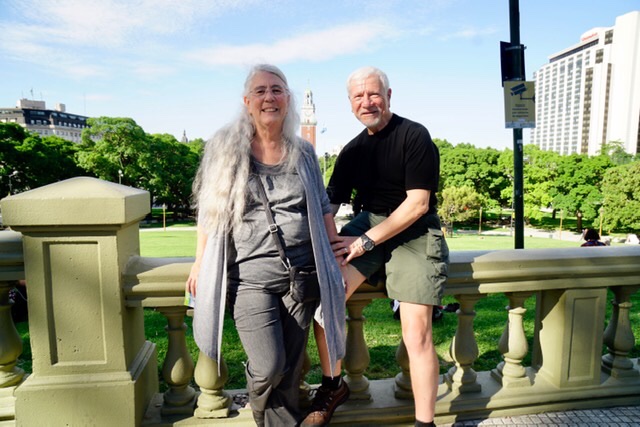
After two days spent with our dear friend Kris Ashton I am back on the road. Followers of these posts will recall that we first met Kris in 2013 while walking the Camino in Spain. She also joined us earlier this year aboard the narrowboat, Salten Fjord, on the canals of England. It was a good call to spend the Independence Day holiday in Denver. In Kris’ company I had the opportunity to attend a party on the 16th floor of a high-rise condominium that commanded an uninterrupted view of Denver, the front range, and scores of public and private fireworks displays.

It turned out that I knew the hosts, Gene and Rosanne, and a number of their guests through my association with the organization, American Pilgrims on the Camino. One of the attendees (another woman named Chris!) is also a frequent reader of these posts.

The company was welcoming, the tapas delicious, and the view from the hosts’ balcony was nothing short of spectacular. Here are a few images and a link to a one minute video.

Denver 4th of July Fireworks

It is not in my nature to seek out or feel comfortable at parties…alcohol helps. I am a closet introvert and always have been. My wife and children have know this about me and likely find some irony and humor in the fact that I am presumed by most to be an extrovert. I admit that I am driven to connect with people, but on a one-on-one basis. Individuals interest me, groups intimidate me. Another irony is that I enjoy connecting people and creating groups. For some reason I do this best when Christine is around. Perhaps she is something of a social life line for me.

Which brings me to the “Different kind of Adventure”. I am traveling alone and the plan is for this to extend for 30 days. I have never traveled solo (as in no companions) that long before. Before Christine and I were married I took off for a 2 week solo camping trip. I lasted (barely) 10 days before the solitude got to me. I returned to Kansas City unannounced (no cell phones then) and like Juliet’s Romeo I stood below her apartment balcony in the darkness of night. I climbed the balcony and entered her bedroom… scared the crap out of her and in retrospect what I thought was romantic could have easily gotten me shot. Again, I have never done solo well and on that occasion it may have effected my common sense.

As I write this post I have the fiction of being in the company of those who read my “Thoughts”. I sense that the posts about this journey will not only pertain to what I see and do, but how I process the “adventure of solitude”.

Now as to what I am doing: I lucked into a vacant campsite just north of the Berthoud Pass along US 40 highway in Colorado. It is a small Forest Service campground at 9,600 feet above sea level that features only primitive outhouses.

Vestiges of snow are still visible in the trees. There is no electricity and no running water. My trailer is self contained and usually good for 4-5 days when there are two of us. Since it is just me I should be good for at least a week before I have to dump the black and gray water tanks. There is fresh water available a few miles down the road and I have a 5 gallon container to transport it back to camp. Wonder of wonder, I have strong cell service here. Not wanting to test my luck I plan to stay here through the end of the weekend.

Tomorrow I look forward to a hike above tree-line and some stunning vistas from 12,000 feet in elevation… of course, weather permitting.

Peace Everyone. Pete

PS: Thanks for keeping me company!!

PPS: Berthoud Pass is 11,314 feet above sea level. It was discovered in May 1861 by Captain E. L. Berthoud. Of course that’s not exactly true since the indigenous population had been using it for travel across the Continental Divide for thousands of years. Berthoud and Jim Bridger of mountain man fame surveyed the Pass in July of 1861, and a toll road was opened over the pass in 1874. An “improved highway” was opened over the Pass in 1923.

Today began a solo camping trip that will extend through the end of July. Day one was a hot 400 mile slog west down the non-inspiring lanes of I-70. My first real destination is Denver, 600+ miles from home. An overnight in Goodland is a prudent alternative to a 12+ hour marathon drive while towing a trailer.

These days most folks only see a hint of Goodland as they zoom past the outskirts on the Interstate. Not much there except that a sharp eye might catch a glimpse of a very curious piece of art that towers in the distance.

I am camped at the Goodland KOA, located on the east side of Goodland, along less traveled US-24.

One might say that this is the backyard of Goodland. One might also incorrectly assume that there is not much to see here. Back to that piece of art…

In 2000, Canadian artist Cameron Cross approached the trade group, Sunflowers USA, with the idea of recreating VanGogh’s painting, “3 Sunflowers in a Vase” in Goodland. The proportions would be breathtaking; the painting would be 24 feet by 32 feet (VanGogh’s original was not even 2’ x 3’), and it would sit upon an 80 foot tall easel, the largest in the world. $150,000.00 was raised and the completed work was dedicated in 2001.

Continuing my 2+ hour sojourn I came upon a number of other notable finds:

In the 1950’s and early 1960’s Studebaker Motors of South Bend Indiana produced the “Hawk” in a number of variant forms. It was a design ahead of its time and from a styling and engineering standpoint it rivaled Chevrolet’s Corvette and Ford’s Thunderbird of that era. This lonely (1956?) model sits waiting for a tender heart and deep pocket to restore it’s former glory. Price unknown.

A few blocks later I encountered the equally forlorn (1951?) Hudson Hornet.

This was a low slung beast of a car weighing in at nearly 2 tons, and featuring what was then the largest 6 cylinder engine in the world. Capable of speeds in excess of 100 mph and featuring excellent handling, the Hornet was perhaps America’s first muscle car.

Known for it’s sturdy strength, if not its speed, was the depression era McCormick-Deering 10-20. This example likely dates to around 1928.

There was more…

How about a 28hp 1948-53 Allis-Chalmers WD in tricycle configuration parked next to a 1955 Ford Sedan Delivery Wagon…

Finally, central Kansas is known for its ability to produce food. Signs along the highway tout that each Kansas farmer feeds over 155 people.

Walking down a dusty road I found evidence that production (in this case corn) far exceeds the ability to market or deliver that commodity.

Literal mountains of grain lay near concrete silos already filled to capacity. Some of the grain was covered against the elements, but some was not.

Tariffs? Over-production? Distribution problems? I do not claim to know, but over 40 million Americans live in poverty… 1 in 8 Americans are deemed “food insecure”. There is something wrong with this picture.

Peace everyone. Pete

This last week Christine and I celebrated 42 years of marriage. I still recall the gathering for my parents’ 40th anniversary in 1989, marveling “Damn that’s a long time”! Now I can only wonder at the speed with which my years with Christine have passed. We have known each other 45 years, sharing both the exciting and the difficult.

IMG_0000

When we returned from England in late May there seemed a vacuum. We lacked for future travel plans, a rarity in our life. That quickly changed. First on the calendar is a wedding in South Carolina. This promises a pleasant September week with friends in Charleston. More planning fell into place…
We discussed taking an extended camping trip to Canada’s Labrador and Newfoundland later in the year but having just returned from 6 weeks abroad Christine wasn’t fully engaged in the idea. Her father, who lives a few miles from us in an assisted living community, turns 101 in August. He continues to do very well and is energized by Christine’s near daily visits, but at his age a bad cold could spell a precipitous decline.

dscn9970

We think that north eastern Canada will be on the agenda for next year. In the meantime Christine encouraged me to undertake a 30 day solo camping trip. I leave around July 1st for Colorado, to be followed by Wyoming, Montana, Idaho, and then perhaps Utah before winding back home through Colorado. In our earlier post retirement travels I took mental notes of some places that I would like to revisit. High on that list is the 70 mile long Beartooth Highway (US 212) that links Red Lodge Montana to the north east entrance of Yellowstone National park.

DSC_0556

The highway is appropriately named since bear sightings are commonplace, and the way is indeed “high”. Most of the roadway is located above 8,000 feet, its summit climbing over Beartooth pass at 10,947 feet. The Beartooth was constructed in 1936 and retains much of its Depression Era ruggedness. The late CBS correspondent Charles Kuralt once declared it to be the most beautiful drive in America. Rustic National Forest campsites abound, many with warnings posted for tent campers to beware of bear activity.

DSC_0607

I hope to continue on from Montana to Coeur d’Alene, Idaho in the north panhandle of that state. What awaits are two adjoining “rails to trail” routes; the 72 paved miles of the “Trail of the Coeur d’Alenes” and a 15 mile gravel portion of the “Route of the Hiawatha”. These trails wind through the Bitterroot Mountains and are a part of the former route of The Milwaukee Railroad “Hiawatha” Line. I hope to bicycle through 8 train tunnels, including the 8,771 foot long (1.6 mile) Taft Tunnel, and cross 7 high train trestles.

Trestle

Hiawatha

But that’s not all…
Twice in the last 2 weeks I have been asked if I have a “bucket list”. I have typically resisted the idea of a “list”, favoring instead my notion of always having a “Next Thing” in the works. I was pressed by the questioners on each occasion and confessed that I have all but abandoned a long held dream of sailing around Cape Horn, the southernmost tip of South America.

MapCapeHorn

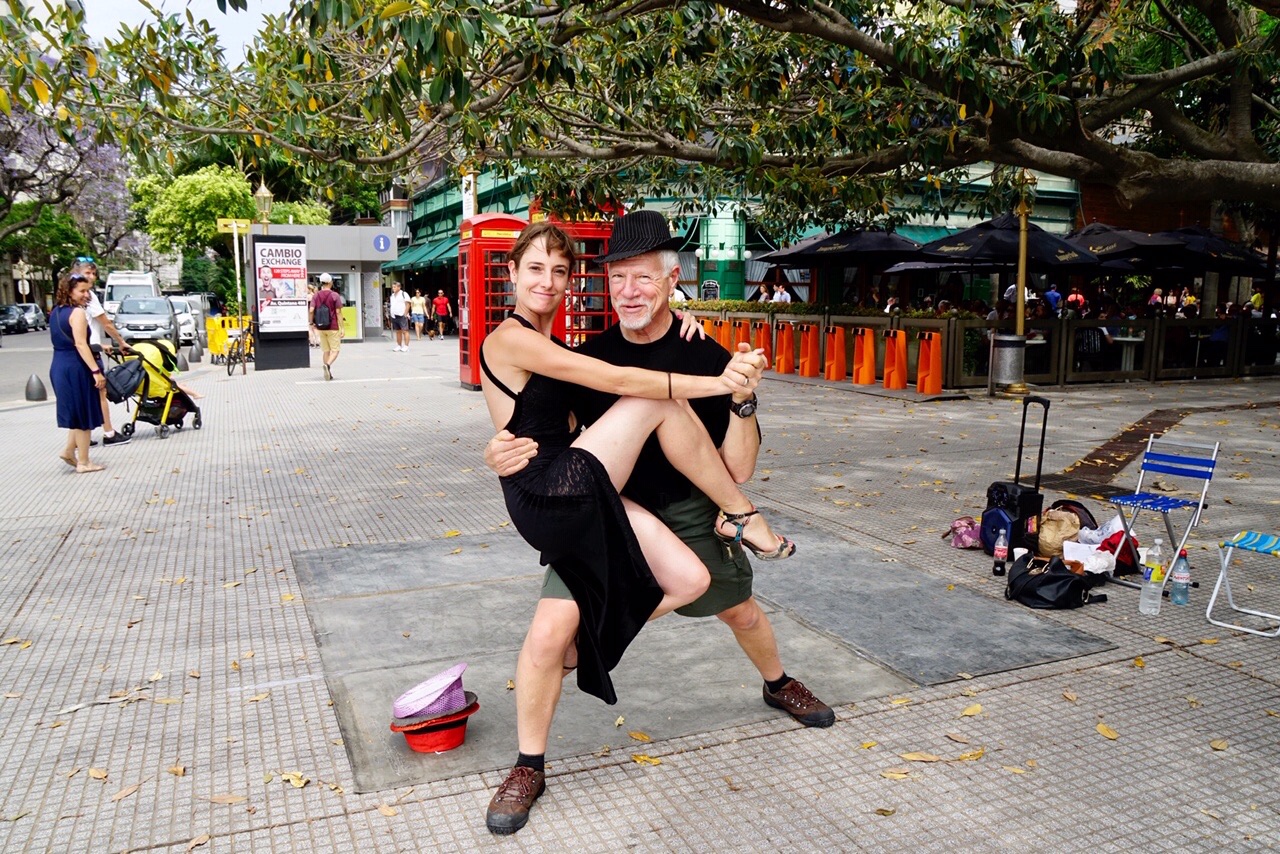
Attention then turned to Christine. She would love to visit South America but holds no fascination for sailing a small boat in those treacherous southern waters. A few days later we received an ad from Viking Ocean Cruises. As travelers who had crossed the Atlantic with Viking in 2018, we were offered a special rate, airfare included, on a 22 day November sailing from Buenos Aires Argentina, around Cape Horn to Santiago Chile.

It seemed that a “Next Thing” had chosen us! It’s not exactly the experience either of us imagined, but it is a compromise that we will share and remember.

Viking Sun

The Viking ships are considered small cruise ships, 900 passengers instead of 5,000. They approach travel by highlighting that less is more and proudly feature:
· No Photographers
· No art auctions
· No charge for beer and wine at meals
· Complimentary in-suite mini-bar, stocked daily
· No charge for the upscale dining
· Free unlimited Wi-Fi
· Free laundry
· Free Spa admission
· All cabins are exterior with balcony
· No formal nights
· No smoking
· No casino
· No children under 18
· Included room service, 24/7
We pulled the trigger and booked a Penthouse Veranda.

LRG__DSC0667

penthouse_veranda

The 2019 travel calendar has now been filled. I look forward to sharing.
Peace Everyone! Pete

LRG__DSC1138


We landed back in Kansas City the evening of May 21st. Our daughter Alexis and her children were at the airport to greet us and drag our weary bones home. The flight home began with our arrival at Manchester England’s airport at 4:00 a.m. with a 6 a.m. international departure for Brussels Belgium, a layover, an 8 hour cross-Atlantic flight to Washington Dulles, another layover, and finally a flight of nearly 3 hours to Kansas City. The marvel of it all is that we arrived home by 8:30 p.m. on the same day that we departed. However, the effect of crossing 7 time zones meant that our bodies had been without any meaningful sleep for over 24 hours.

The cross-Atlantic segment was made a bit more pleasant as we secured a class upgrade. Bigger seats, two meals and a snack (with real plates and cutlery!), an “open bar”, and expanded entertainment options. I binged two movies, “Glass”, and “Arctic”, both of which I recommend. I started to watch “Aquaman” but soon found the premise and the acting to be all wet.

It didn’t take long for me to fall into the old routine. Up early the next day and mowed the lawn. Sifted through the pile of mail, sorting the “junk” from the important… I find it remarkable that even after 6 weeks the stack of “real” mail is pretty small, yet a few days of junk mail probably required the killing of a tree.
Our first priority was to glory in time with the grandchildren. Over the next few day we unpacked, did laundry, stocked the refrigerator, visited the barber, did some landscaping, enjoyed time with friends, took in a movie, and took our grandson Kane to a Kansas City Royals baseball game which was his birthday present that had been delayed by our travels.

On the road my possessions are contained within a backpack. It takes a house to contain them when we are not traveling. On the road the scope of our experience expands to cross states, countries, and continents.

Here in Kansas City most of what matters occurs within a few miles of our home. We miss our family and friends when we travel yet find and embrace new friendships as we wander. Paradoxically, I tend to be silent and a bit introverted here at home yet compelled to reach out with my “Thoughts” on a near daily basis during our journeys.

We were gone six weeks. Our 2018 Europe trip took 13 weeks, and our 2017 trip to Alaska and the Yukon was 12 weeks long. We have come to the conclusion that 6 weeks is long enough for any single journey. On the road I don’t eat or exercise as well as I should. The scale tells the disappointing tale upon my return. The grandchildren miss us, and we miss them. Nevertheless, before we landed my thoughts had already turned to considerations of our “Next Thing”.

Late last year I found a company in the Netherlands that provides on-line tools for converting a blog into a book. I spent about a week rearranging and modifying content from the posts I had written during our 13 week journey. The result was a 202 page full color coffee-table book that reads like a personal diary. We bought 6 copies, one for each of our children’s homes, one for my Mother, one for Christine’s Dad, and one for our home. I was very pleased with the results and will likely do the same thing with content from this most recent journey. The cost is not insignificant, but in the case of our children and grandchildren I consider the books to be an investment. I hold a special hope that our pursuits in retirement may become a model for our children as they journey through life, and a spark to ignite the imaginations of our grandchildren.


Since childhood I have embraced the notion of a “Next Thing”. Initially this was a product of daydreaming and an active imagination, but as I matured, the pursuit of the “Next Thing” became conscious and directed. “Next Things” excite the imagination and engage the spirit.

My life has been a series of these “Next Things”, some relatively minor and lost to a memory that fades with the passage of time. Others have been monumental. It has been my good fortune that fate gifted me a partner who embraces these things. Christine’s encouragement and participation have been a priceless part of the planning and execution of our “Next Things”.

We retired in the Spring of 2015. Retirement came easier for Christine as she naturally fell into the cadence of being the matriarch and grandmother extraordinaire to our family in Kansas City. For me, finding a new purpose was a bit more challenging. “Next Things” became central to my new purpose. “On the road” I find joy in sharing the sights, experiences, and my thoughts with others.

Don’t put off until tomorrow the things you may find you are then unable to do, and whatever you do in life may you always Have Fun, Do Good, and for the sake of those who love you, Be Safe!

-Peace Everyone. Pete

PS. We gratefully acknowledge the following: The many people who provided for our needs in the restaurants, hotels, and Bed & Breakfasts that hosted us. The brief encounters that became friendships were like the blossom of a flower, enjoyed in the beauty of the moment but soon to be a memory when the paths of life took us in different directions.

Our thanks to the staff of Andersen Boats and the many volunteers of the Canal and River Trust who as a labor of love maintain the remarkable canal system of the United Kingdom.

Our special thanks to Kris Ashton, Tom Shillington, Nanci Burns, and Huw and Nina Thomas who were each a treasured part of this adventure.

Thank you to those who follow us. You continue to give me a venue for expression that I would not otherwise have.

Lastly, we thank the ancient hands that created the towns, churches, castles, and monuments that are found throughout the United Kingdom and the Channel Islands. What they raised for either war or the glory of God has become a treasured heritage.