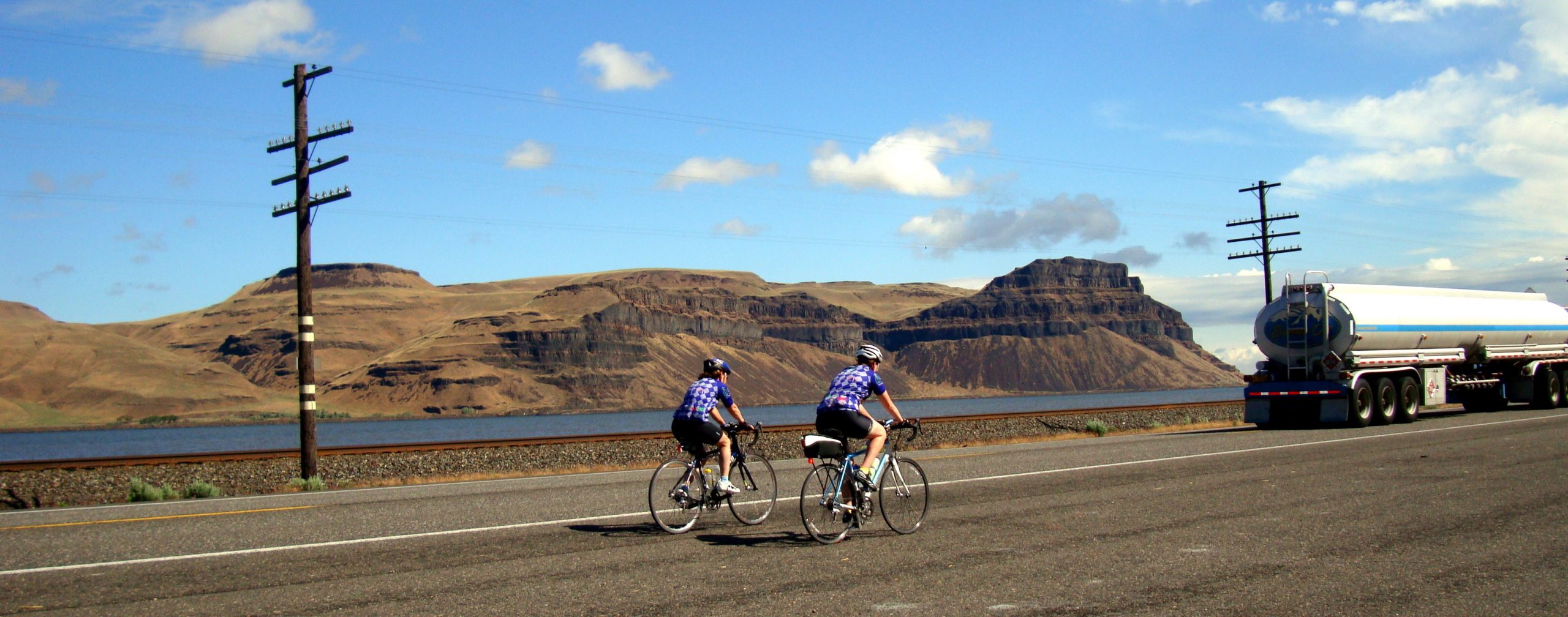
The Columbia River begins its 1,250 mile journey to Oregon and the Pacific Ocean in Canada’s British Columbia. It is the longest river in the northwestern United States, and the fourth largest in the US by volume of flow. Humans have inhabited this region for more than 15,000 years, sustained along the Columbia by the remarkable salmon spawning migrations from the Pacific Ocean.

DSC_3658-001

DSC03949

Sadly, these have declined precipitously since the mid-19th Century. The mouth of the Columbia, where it reaches the Pacific Ocean, was the farthest extent reached by the Lewis and Clark expedition of 1803-05. In the mid-1800’s the 2,170 mile long Oregon Trail gave westward passage to over 400,000 pioneers venturing into this region.

For the Cycling for Change bicyclists, support drivers, and our mascot Curtis…

Curtis prefers the warm and dry interior of the van on those cold rainy days.

the days spent along the Columbia were some of the most beautiful of the entire Summer.

DSC03915

Fog and rain descending upon us in the Columbia river valley

We cycled the river valley east from Portland to near Wallula where the Columbia turns north, but we continued east to Walla Walla Washington.

DSC04097

We tracked the course of the river for over 200 miles, the total distance to Walla Walla being nearly 260 miles.

DSC03917

This segment was divided into four parts with overnight stays in Hood River Oregon on June 6th (72 miles), Biggs Junction Oregon on June 7th (51 miles), Umatilla Oregon on June 8th (81 miles), arriving in Walla Walla Washington on June 9th (54 miles).

We enjoyed riding a closed segment of old US 30 Highway high on the south bluffs overlooking the Columbia and modern highway below. It is now limited to bicycles and pedestrians.

The side of old US 30 Highway. This portion is pedestrian and bicycle only.

The side of old US 30 Highway. This portion is pedestrian and bicycle only.

DSC03934

Summer blooms were an explosion of technicolor.

Karl, enjoying the flowers.

There were a number of memorable moments:

We stopped for an impromptu celebration upon reaching the 500 mile point of our journey, Mount Hood in the background.

C4C at the 500 mile point.

Mt. Hood behind us in the distance

Lissa Whittaker surprised us one morning, gifting each of us with a small stone figurine that she believed represented the spirit of the recipient. Mine was a bear and Christine’s an owl.

DSC04035

0144dacb987fbe8047f4fe5aeebd5e892798ae1bb4

We housed in motels in Hood River and Biggs Junction…

DSC_3683

DSC_3686

but enjoyed the hospitality of private home stays in Umatilla (Chris and I with the Trevino family) and Walla Walla. 83 year old Rose McClellan, mother of 8 sons, provided Chris and me with a delightful evening. Her physician husband had died in 2002.

Our host

A rare routing “disconnect” occurred near the 1938 Oregon Trail monument east of The Dalles.

DSC04001

The map showed a paved secondary road. Too late to turn back, the “road” transitioned to gravel and at times dirt for nearly 20 miles.

DSC04009

8 miles of gravel road. The map said it was paved!

Fr. Matt, Deb, Me, Sarah, and Jason on the road to Hermiston

Even the “good road” frequently lacked meaningful shoulders, weaving, bobbing, and presenting a real cycling challenge.

The picture says it all!

Exhausted, we concluded our 81 mile day on the 8th at Umatilla Oregon’s Our Lady of Angles Parish where we gratefully received dinner that evening and breakfast the following morning.

In Hermiston, after 82 hot grueling miles on a rough chat road.

DSC_3716

DSC_3723

In Walla Walla, we were received with open arms at St. Patrick’s parish.

St. Patrick's Church

DSC_3778

Father Matt was interviewed by both print and television media prior to giving a talk about our mission.

The news in Walla Walla preparing for an interview of Father Matt

DSC_3786

Dinner was festive and featured the most creative table decorations of the entire ride.

The table decorations that St. Patrick's parish prepared for our dinner!

Of course even when there were no parishes to feed us, we somehow managed.

DSC_3640

Next: Idaho

Peace Everyone. Pete

(June 10, 2010) 2 Emotional Encounters

While on the road today, we stopped at a service station/convenience store. We were resting and refreshing when a woman approached me from the gas pump where she was fueling her late model Subaru. She made eye contact with me as she drew near. When she was within speaking distance she asked me what I and the other riders were doing. I told her of our C4C mission on behalf of Catholic Charities. She smiled and told me that she had a 24 year old daughter who was severely disabled. Her daughter had the mental function of a 6 month old. Catholic Charities of Washington had provided services and assistance to her daughter for many years. She was profoundly grateful to the organization. We spoke for quite some time and she offered to put Christine and me up for the evening if we needed a place to stay. She also shared that she was an avid bicyclist and that she was proud of a 26 mile ride that she had completed early in the week. With tears she explained that her physicians had discouraged her from riding because her most recent course of chemo-therapy would not leave her with enough strength. At this point she was not the only person struggling with tears. She embraced Christine and me, saying “thank you”, and left us her phone number in case we needed anything. Please say a prayer for Kathy from Walla Walla, Washington. – Pete Schloss

(This from a Facebook post) “At a store in Skamania, WA today the riders were talking to a gentleman with his 10-year-old son. After hearing what we were doing the boy reached into his pocket, pulled out all of his money, and gave it to one of the riders as a donation for C4C. That 62 cents meant a lot to all of us. Thank you young man for your generosity. You brought a smile and a prayer of gratitude to all of us today. – Christine Schloss
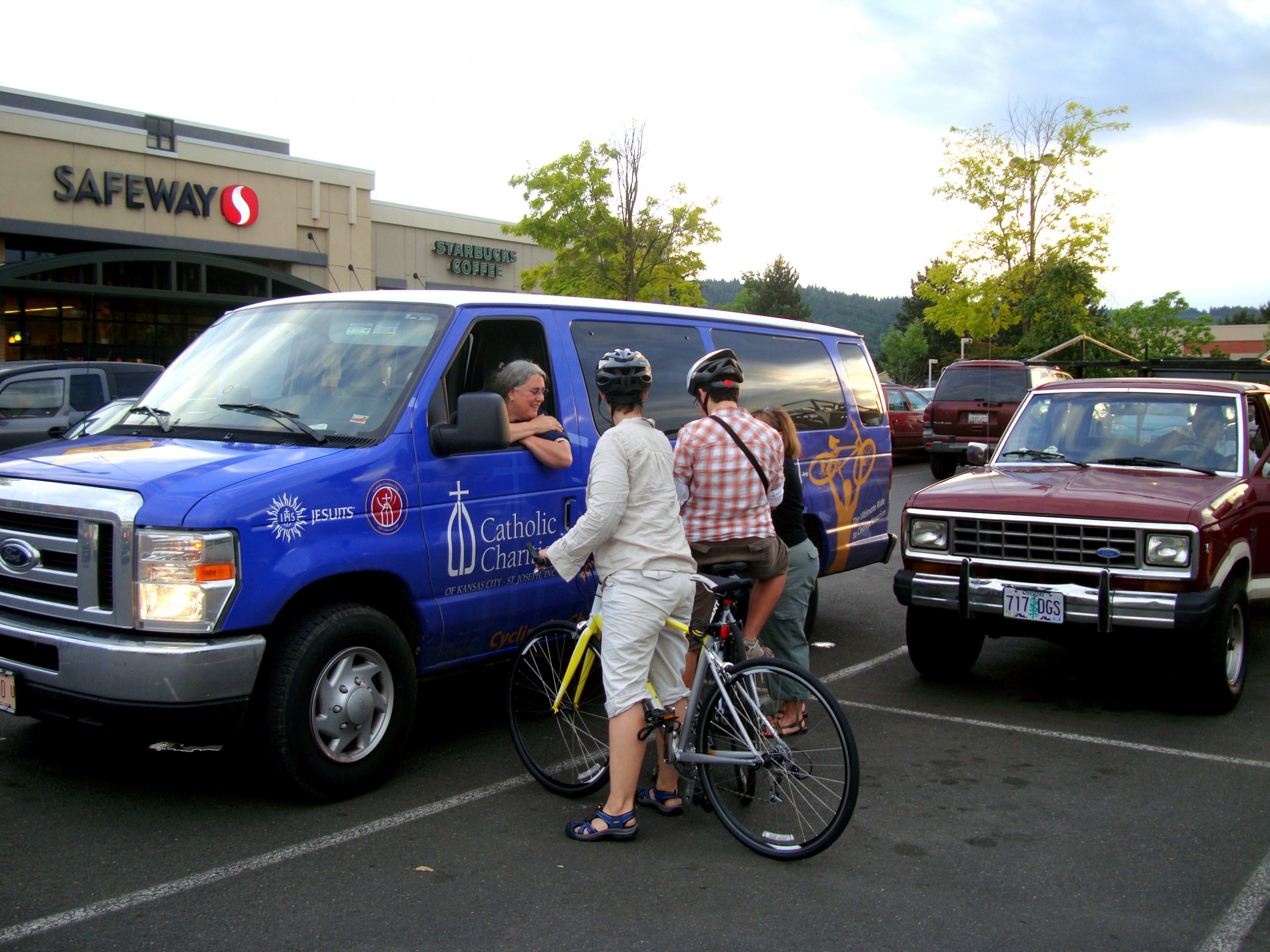
June 4th presented us with a challenging 70 mile day that would eventually see us arriving in Portland Oregon where we would be guests of the University of Portland.

Portland Oregon

DSC_3623

DSC_3621

However, before reaching Portland we were scheduled for lunch in Woodland Washington and a tour of La Casa de San Juan Diego, a Catholic Charities’ farm worker housing complex.

DSC_3615

DSC_3611

Later that afternoon in Portland we attended 5 p.m. Mass at St. Ignatius Parish, followed by a “Blessing of the Bicycles”, and a Tamale Dinner catered by an immigrant women’s group. Father Matt addressed the gathering on the topic of our mission and Social Justice.

DSC03856

DSC03865

DSC03877

I had begun to favor college dorms over other forms of housing. The dorm/college atmosphere seemed to encourage a greater sense of community within our group.

DSC03850

C4C gathers in the dorm hallway.

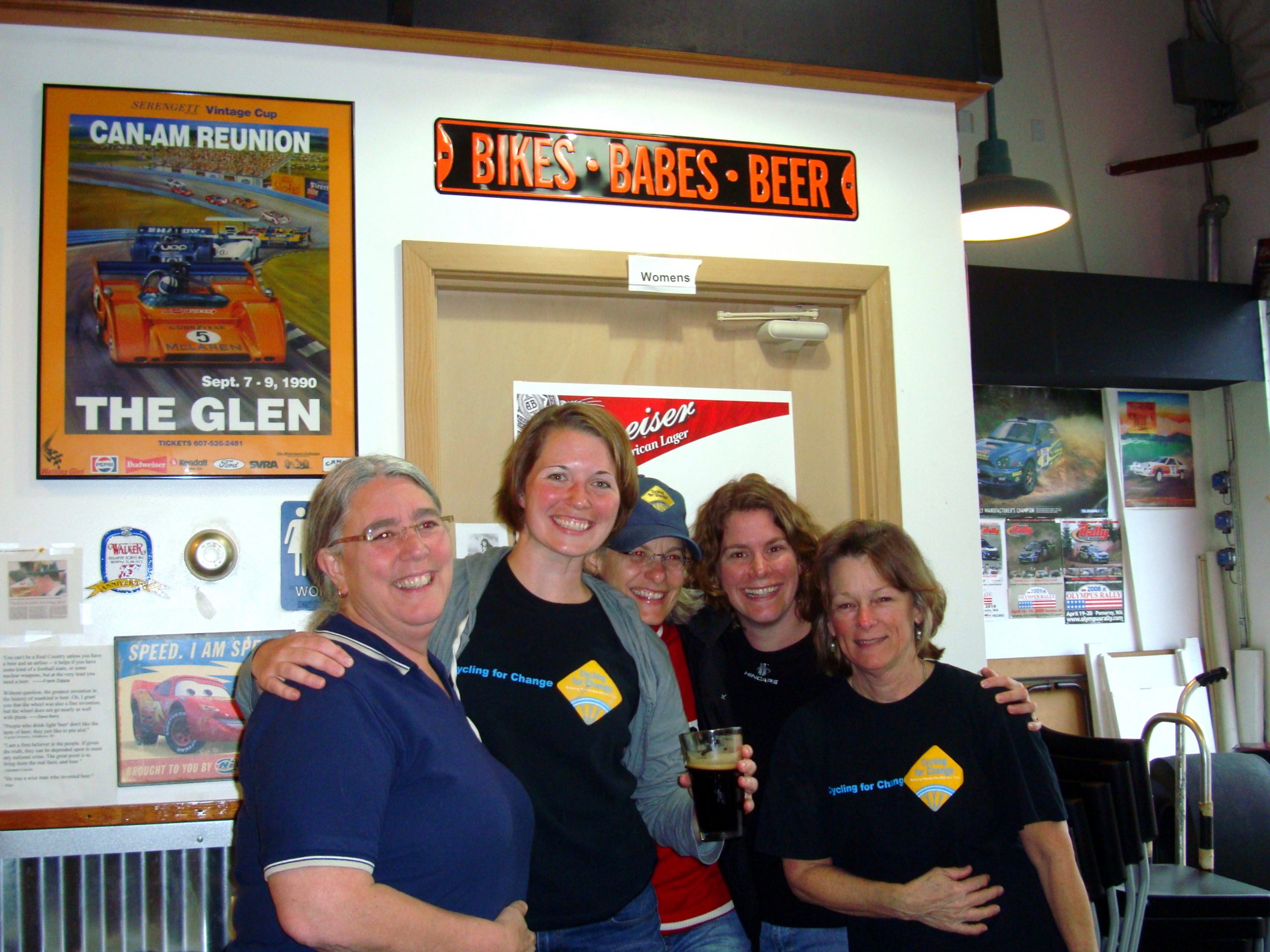
College towns also have pubs that are upbeat and celebratory. For our mascot, Curtis, perhaps a bit too celebratory.

DSC03844

DSC03845

With over 360 miles behind us we enjoyed our first rest day on June 5th. On June 6th there would again be rain as we entered the Columbia River Valley where we  beheld some of the most spectacular scenery of the entire Summer.

DSC03902

Cape Horn, overlooking the Columbia River

The ride south into Portland on the 4th gave me pause to consider the contrast in the roads that we navigated,…

(June 7, 2010) The Roads Now Less Traveled.

A few days ago as we proceeded on our bicycles from Castle Rock Washington to Portland Oregon, our course paralleled that of Interstate 5. Our route passed through the towns of Kelso, Carrolls, Kalama, and Woodland (where we ate lunch), crossing near, under, and over the superhighway, but never upon it. For the most part I ignored the Interstate and it ignored me. Once as I peddled an overpass I could see the next town that we were to enter in the distance. With some envy I eyed the onramp and the two messages that the Interstate posted for me: “Kalama 2 miles”, and “Non-Motorized Vehicles and Pedestrians Prohibited”. One message was a temptation and the other a firm rejection. As cyclists on human powered vehicles we were orphaned by the well-traveled Interstates. I might argue that my bike was “fossil fueled” and that I was the 58 year old fossil that fueled it. However, I knew that such a petition would fall on deaf ears if I were stopped by one of the highway’s police guardians. Continuing across the overpass another sign appeared, “South Old Pacific Coast Highway”. This was the path that we were obliged to follow, a road now less traveled.

Turning my back on the Interstate I saw the contrast with the road that lay before me. The Interstate, a beast of concrete and steel, was a creature of post-World War 2 prosperity and expansion in America. It is a monument to the ability of mankind to wrestle nature’s boundaries and obstructions into submission. It stood as a byway without passion or soul, a road known only by a number and a direction. The Interstate is blunt force that catapults the traveler from one place to another as a bow shoots and arrow.

The Old Pacific Coast Highway, lying in the shadow of South I-5, is a highway in name only. This road now less traveled was born in the distant past. Some of her course was determined by nature, some portions by pre-Columbian peoples, and other sections by early European explorers. Her path made compromises with the lay of the land. There are only gentle modifications to grade and course. Unlike the Interstate which blasts through a hill in order to maintain direction and grade, The Old Pacific Coast Highway meanders on and around the rise and fall of the land, like a ribbon uncoiling from its spool.

This living road has a personality. It has a soul. I was captive to her course and her emotions. As I peddled, the road would smile seductively with her long slow descending curves. At times I was embraced by the safety of a wide flat shoulder. With caprice her mood would change. The shoulder would become a sliver of pavement forcing me uncomfortably close to the onslaught of thundering lumber trucks. Her gentle slope would suddenly turn skyward to challenge my legs and my lungs. She could be calm with the smoothness of new laid asphalt, or she would thunder anger through my thin tires, shaking me bodily as I rolled over rough and damaged pavement. A change in the wind’s speed, direction, or temperature would either brush my cheek like a gentle kiss or smack me in the face with force.

The Interstate is a wasteland. In some parts of the country, a place which is available to serve travelers with food and fuel is appropriately called an Oasis. People are only permitted within an Interstate’s boundaries if encased in a motor vehicle. It separates us from the natural environment and creates its own. There are no sounds, no smells. Sights are relegated to the distance in favor of declarations of speed, distance, and destination.

On the Pacific Coast Highway there were dogs to chase us and children to cheer us. Schools, churches, and stores extended their parking lots to us. Cemeteries presented the memories of those who passed before us. The roadside was picketed as far as the eye could see with the mailboxes of the homes which bordered her lanes. I could not only read the names of the residents but actually exchange greetings with them. A man weeding his garden, a boy seated on his swing set. A woman in a wheelchair called “hello” to me. Perhaps she considered our wheeled conveyances were a connection that erased the differences that otherwise separated us. Bridges nearly touched the water. I could peer over the low railings to see the wildlife that the river sustained. A silver metal silo reflecting the sun by day would do the same for the lights of cars at night. I counted the rivets in one of its seams as I passed. This road served up sights, smells, and sounds as a banquet for the senses.

For 75 miles I had a relationship with this road. With sadness I knew there would be a parting with her at Portland. As I neared the Columbia River a huge bridge loomed in the distance. This would be my crossing and on the other side I would leave The Old Pacific Coast Highway. Riding toward the north end of the bridge I saw where the road channeled bicycles across. I also saw with some concern the shape of a white rectangular sign, the kind that stood to prohibit my entry to the Interstate Highway. But this time the sign was at the start of a narrow lane leading up and over the bridge. This sign declared: “Motorized Traffic Prohibited”. I smiled as I knew I was not an orphan of this road. I had been adopted and was now one of her children.

Peace Everyone. Pete

Next: The Columbia River Valley

There is an annual Summer bicycle event, “The STP”, Seattle to Portland. It covers over 200 miles and limits participation to the first 8,000 who sign up. Some riders cover the distance in a single day, others in two.

seattle to portland bike ride

We covered the distance, departing Seattle on June 2nd and arriving 3 riding days later in Portland on June 4th. Unlike the STP riders we had duties other than bicycling.

Lunch on the June 2nd included a tour of the Tahoma Family Center, housed in the former St. Leo’s High School. The facility provides meals and services to thousands of unfortunates each week.

DSC_3555

DSC_3553

DSC_3557

More about this Catholic Community Services Center appears at the end of this post.

Lunch and Mass followed…

DSC_3563

…and then we were back on the road to complete a 66 mile ride for the day.

DSC_3577

DSC_3584

DSC_3568

Our housing was furnished in the dormitories of Evergreen State College, home of “Speedy the Geoduck”, a species of clam that in real life is the largest in the world. Some say it resembles a… well, I will let you draw your own conclusions.


In the world of strange college mascots, it’s a toss-up between “Speedy” and Mississippi’s Delta State U mascot (where we also stayed) “The Fighting Okra”.

Fighting Okra

The Evergreen State dorms were delightful. With the exception of drying wet gear and sharing our room with a bicycle it brought back memories of an earlier time in my life.

DSC03797

DSC03784

A short walk into town brought us to a favorite college hangout for dinner and carb-loaded beverages… important for sustaining thirsty cyclists.

DSC03800

DSC03803

June 3rd, 65 miles to Castle Rock included some pleasant miles of “rails to trails” riding, enhanced by music from a mini-speaker attached to my bike.

DSC03812

DSC03814

DSC03818

DSC_3596

We concluding the day with dinner hosted by the Knights of Columbus chapter in Kelso Washington. Our spirits were high. We had not yet begun to hate pasta.

DSC03824

DSC03826

DSC03829

DSC03832

My experience the prior day at the Tahoma Family Center still weighed heavily on my mind:

(June 3, 2010) “Dignity Dies Last”

Many of us have heard this speech: “In the unlikely event that there is a loss of cabin pressure, a mask will fall from a compartment above you, and provide you with oxygen…”.

We take for granted that on a journey we will be provided with our basic necessities. Air, water, food, safety. Most of us never consider two other “necessities” that we also take for granted… hope and dignity.

Wednesday (June 2, 2010), the Cycling for Change Team was provided lunch at St. Leo’s Church soup kitchen in Seattle, Washington. St. Leo’s provides breakfast and lunch meals for between 800 and 1,100 people every day, 5 days a week. As one of the staff people explained, the numbers tend to go up at the end of the month when people find that they have run out of money.

Our visit was at the start of the month, but the lunchroom set in a large and old repurposed school appeared filled to capacity. As I walked through the door I experienced an emotional version of a “sudden loss of cabin pressure”. Before me was a post-apocalypse vision that we have all seen in science fiction movies. A crush of vacant eyed people, soiled, many wearing what amounted to tatters. We were to dine shoulder to shoulder with the people that Seattle had forgotten.

Before I took my place in the food line, I visited the men’s room to take care of another “necessity”. As I turned the corner I beheld that there were no doors on the line of stalls. The one that was available to serve my “needs” was mere feet from a line of men waiting to use the urinals. I was faced with the decision to either wait in discomfort and go elsewhere, or just sit down and “go” in discomfort. I considered that I was there to (briefly) experience what others live daily. Swallowing my pride I lowered my cycling shorts along with my expectations for privacy. In a matter of minutes a man took his place in front of me at the nearest urinal and without a moment’s hesitation struck up the most ordinary conversation with me about the weather. He was followed by another person who commented upon my bicycling attire and asked what I was doing. This continued,, one man after another, to the point that I felt that I was in the receiving line at a wedding.

Business done, and hands washed, I proceeded to the food line. I was handed a brightly colored compartmented tray, the kind that you would expect to see in a grade school. There was a bowl for the soup, but no plates. My meal consisted of a slice of lunchmeat between two pieces of white bread, a bowl of chili-like soup, and a single chocolate chip cookie. A soup kitchen that serves a thousand people a day from donations does well to make do with what it gets. The same applies to those who are served. There was coffee, hot and excellent by any standard.

I moved to one of the long cafeteria tables and found a vacant folding chair between two of the center’s customers. I ate and visited with my “companions”. I was beginning to feel a sense of accomplishment in embracing the experience when my eye was drawn to a man seated across and a few chairs to the left of me. I was wrenched back into the reality that for everyone at table but me this was not a diversion, not just “an experience”… this was reality, this was life. Again, there was a loss of “cabin pressure”.

The “oxygen” that was rarified in the room’s atmosphere was the loss of hope. Most of us have experienced a momentary loss of hope, but few who read this know what it means to be without hope, and without prospect of finding hope… true hopelessness. In the soup kitchen I could scan the tables and see a face here and there that bore the signs of a life yet with hope. A father with his young son, the boy looking up to dad with the kind of hero worship that any father lives for. A man and a woman looking deeply into each other’s eyes, sharing gap toothed smiles between words and bites of their meals. But the man who had caught my attention was not one of these. With him there was no sign of hope.

He visited with no one. He sat ramrod straight, eyes forward. His hair was as neatly combed as hair could be that had not seen shampoo for some time. His stained and worn clothing would not have been suitable for donation to a second-hand store but was arranged with care. From his weather worn complexion, he looked to be in his 50’s, but I suspect the ravages of a life without shelter had aged him prematurely. He might have been 40, or younger. He ate slowly, with deliberation… with dignity. Everything about him screamed his dignity. He wore dignity like it was armor. The man grew in my sight and became larger than life. Whatever the cause of his condition, whatever the story behind a life rendered hopeless, by example he taught that dignity may be given, dignity may be cast aside, but it is never taken from one who chooses to keep it. For some, dignity dies last.

Peace Everyone. Pete

Next: Portland Oregon and the Columbia River

The weather on the morning of May 30th, our second riding day, was a carbon copy of the first day, cold and rain.

DSC_3519

DSC_3513

Over the course of the Summer we never had the option to defer a day’s ride due to the weather. Sub-freezing cold (Wyoming) or sweltering heat (107 degrees in Mississippi), driving rain or gale force winds… it didn’t matter. We had a schedule of reserved accommodations and hosted events to attend. Skipping even one day would throw the entire schedule into chaos.

DSC_3511

Seattle lay 135 miles ahead of us, too far for a single day. We would arrive in Seattle on June 1st after overnights in Port Angeles and Edmonds Washington.

The ride to Port Angeles was 50 miles. Our accommodations were at a Day’s Inn.

DSC_3515

Dinner was hosted by the St. Joseph’s Parish Knights of Columbus Ladies Auxiliary in the town of Sequim. This was the first of many dinners provided to us on our bicycle “pilgrimage” by parish churches. Pun intended, I quietly referred to our hosts as “Ladies of the Knights”.

DSC03722

As fate would have it this was the home church for the daughter of my grandfather’s brother. Kathi Hagstrom and I had connected by phone and email, but never met in person. After dinner we visited at her home and would return for a visit 7 years later. Sadly, she passed away in 2019 a victim of cancer.

DSC03725

From Port Angeles we rode 63 miles to Kingston/Edmonds, a day that included the new experience of a ferry crossing. We waited in line for the ferry, bikes in hand, along with the more traditional transportation.

DSC03739

DSC03736

DSC03747

DSC_3530

DSC03750

In Edmonds we dined courtesy of Catholic Charities of Seattle and spent the night of the 31st at the Convent/Rectory of Christ the King Parish.

June 1st was a short 13 mile day as we were scheduled to be guests for a lunch and afternoon presentation and tour of The Aloha Inn Transitional Housing facility.

DSC_3538

DSC_3547

Aloha Inn is a Catholic Charities sponsored resident-managed emergency shelter with supportive services for up to sixty-six homeless adults and couples without children. Aloha provides these folks with the opportunity to obtain work and save money to secure a home and get back on their feet. Residents are required to contribute 15 hours of work each week for the program in return for their room and board.

DSC_3544

The residents have a direct role in the management of the facility. Services include: Housing counseling, Employment assistance, Individual counseling, Drug and Alcohol recovery support, a medical clinic, and monthly legal clinic.

We older riders did not mind a short day now and then. The younger ones had to find ways to creatively burn off their excess energy.

DSC03779

DSC03783

…and of course there was Mass. I have very few regrets from the ride, but one of them is that I did not keep notes on Matt’s thought provoking daily sermons.

DSC03719

Next: Seattle to Castle Rock.

Peace Everyone. Pete


True to our expectations our rain gear was needed on the morning of May 29th. The air was also thick with adrenaline driven excitement and anxiety. Our bikes and gear were loaded for the 26 mile drive to the Makah Indian Reservation and Cape Flattery.

DSC_3471

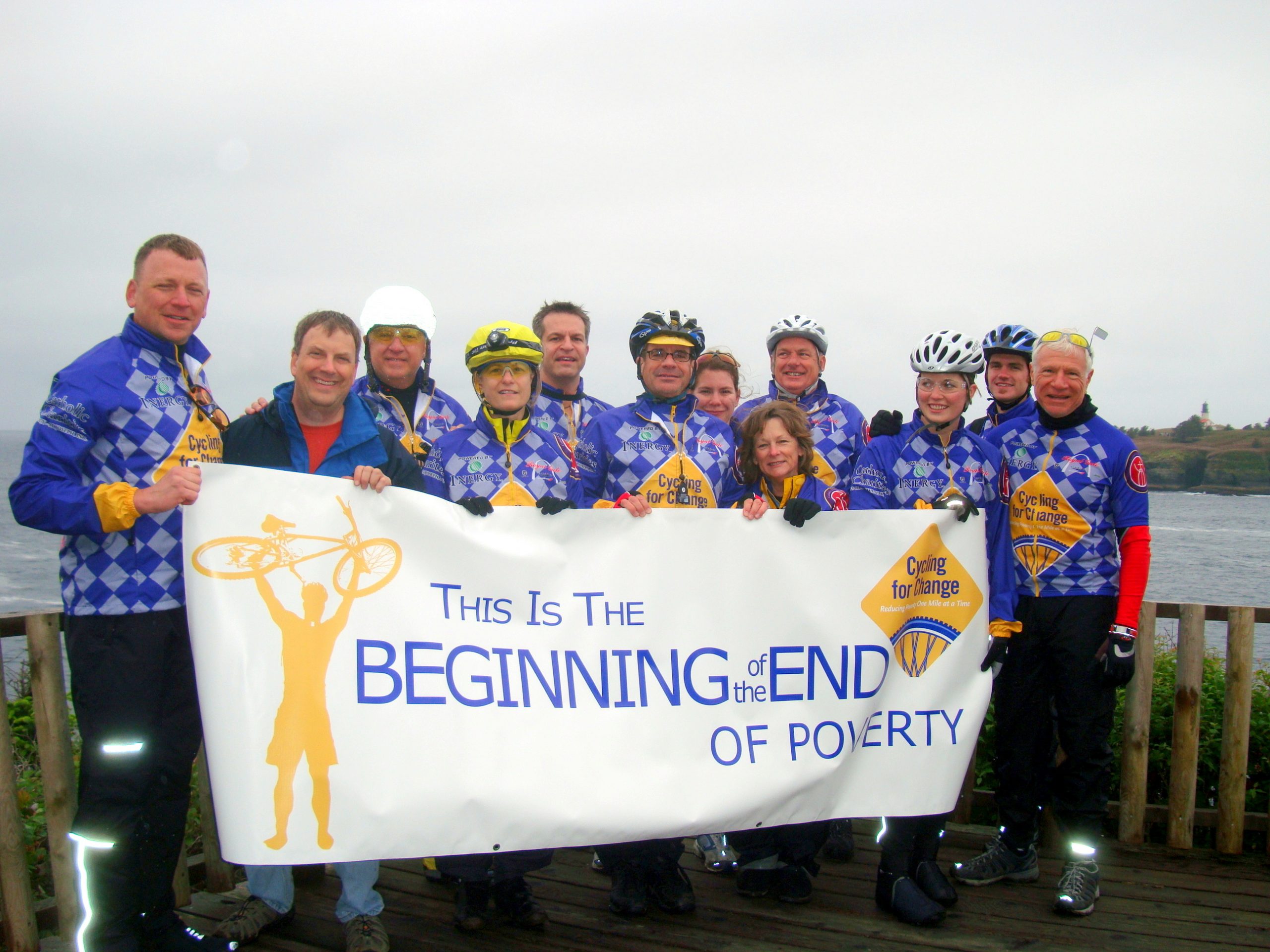
We had with us a large banner that would be prominently displayed at the events we attended over the summer across the county.

DSC_3465

The sixteen of us assembled for a group picture before we walked the half mile trail that would lead us to the platform overlooking the Cape.

DSC03698

DSC03699

The view, enhanced by the sound of waves crashing upon the rocks, was exhilarating. More pictures and it was time to return to the vans, unload the bikes, and ride.

DSC03693

DSC03690

DSC_3480

DSC_3476

The ride across northwest Washington featured narrow roads and no shoulders. Huge logging trucks often blasted past us at speeds exceeding 60 miles per hour.

DSC_3502

The margin between us and a disastrous encounter with one of those trucks measured in inches. We got used to it. Our Guardian Angeles developed ulcers.

LSeg 1 Cape Flattery to Port Angeles_page2_image1LSeg 1 Cape Flattery to Port Angeles_page2_image2

26 miles qualified as a very short day, but no one was complaining. We regrouped at the trailer park in Clallam Bay where a shed had been made available to us for overnight storage of the bikes.

DSC_3507

DSC03706

DSC_3509

Whether the ride of the day was a short couple of hours or a butt numbing 100 miles, the afternoon always included Mass. We would gather in whatever space was convenient and Father Matt would unpack his mobile alter “kit”.

DSC03708

He would spend some quiet time pondering the events of the day and craft a 5 minute homily that was relevant to our mission and our experiences. These were among the most treasured of moments.

DSC03711

Day one was in the books with everyone safe. It was a good start.

Next: Part 7, Back to Seattle.

Peace Everyone. Pete

-The message of our mission was always on our minds. In my own effort to quantify poverty in America I drew an analogy from the bicycling that lay ahead of us:

May, 2010. “The Circle of Lives”

A bicycle wheel is 700 millimeters in diameter. That works out to 27.56 inches. The circumference of that wheel is 86.58 inches, or in other words, approximately 7.25 feet. There are 5,280 feet in a mile, so a bicycle wheel rotates 728 times each mile. Our across the United States journey to raise funds and awareness for the cause of ending poverty is 5,000 miles. Therefore, the wheels on each bicycle will rotate 3,640,000 times over the course of this mission. As there are 12 of us riders intending to complete the entire crossing… our combined effort is approximately 43,680,000 revolutions. That is approximately how many people in the United States now live below the “poverty line”. If the thought of the number of times these bicycle wheels will spin as we cross the North American Continent is mind-boggling, then imagine that every one of those revolutions is a hungry child, a homeless father, a destitute mother… a life on the margins of despair.