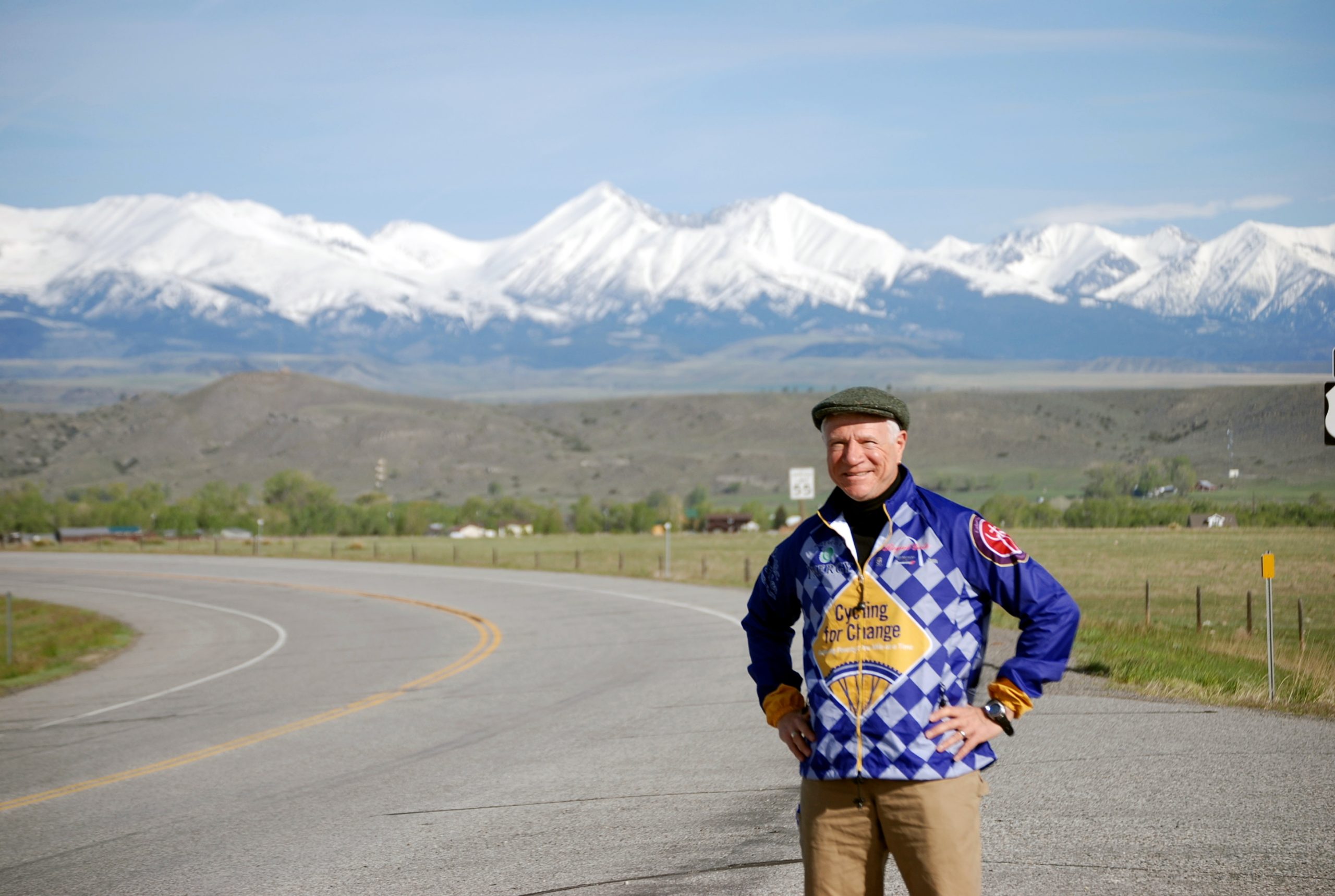
May 27, 2010. Read on a wall at the bus depot in Seattle:   “A man in the station, old or young, or maybe a woman, sitting on cold ground, scared, with hungry eyes, and worn shoes. Don’t worry, you are still loved. We wait together. You asked for change, I offered you my heart and my soul. You just wanted change.”

We only had the day of the 27th to take in a few of the sights of Seattle.

DSC_3418

DSC_3393

DSC03625

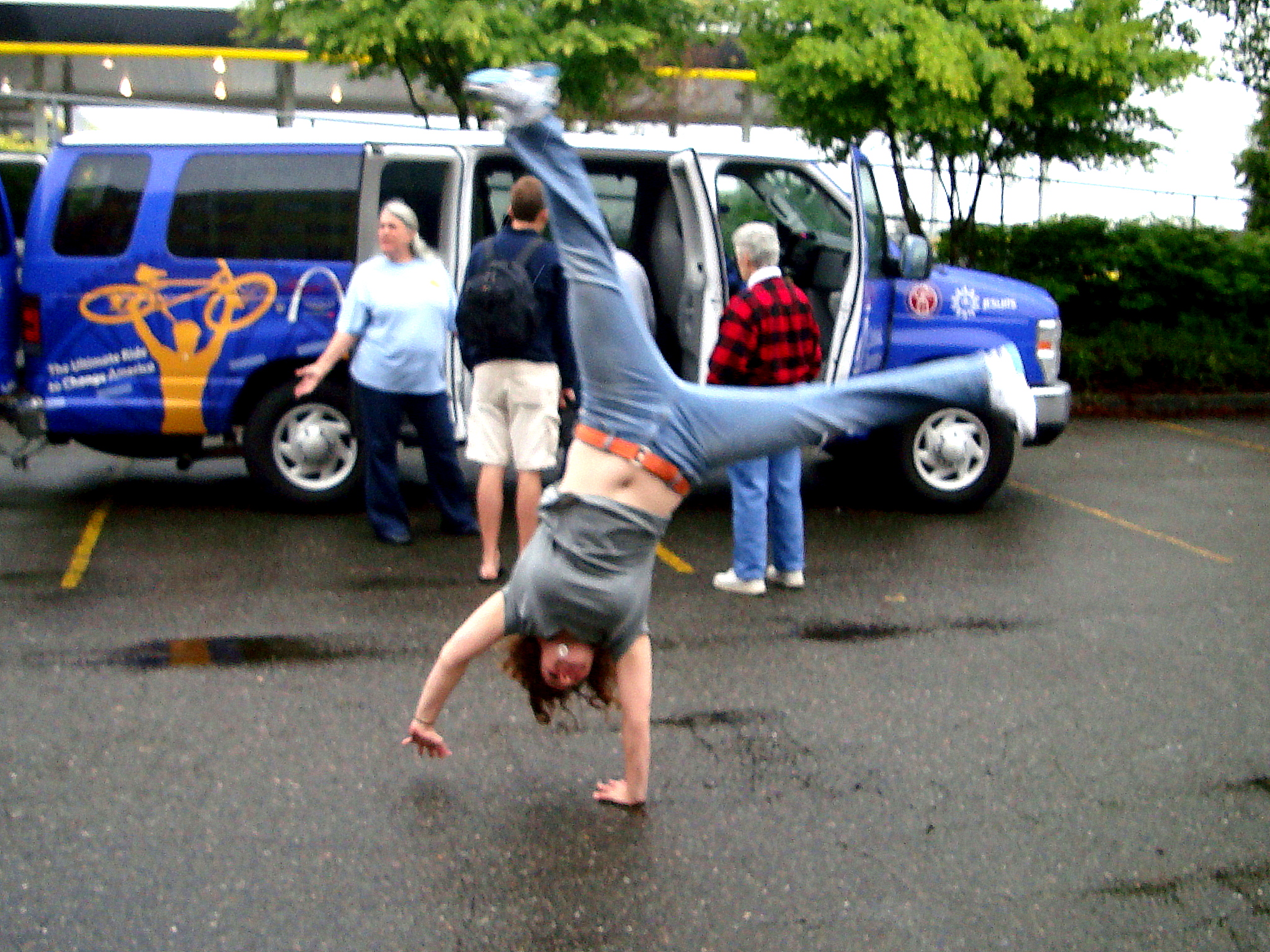
On the 28th we drove 135 miles northwest to Clallam Bay Washington, located about 26 miles from the C4C starting point of Cape Flattery, the farthest northwest point in the 48 contiguous States.

DSC03642

It was damp and bone chilling cold. The skies were foreboding. It seemed certain that our foul-weather riding gear would get immediate use on the 29th, the day of our “launch”.

DSC03648

As concerning as that might have been it paled in comparison to what we beheld as our first two night’s “accommodations”. We were to be lodged in a mostly vacant logging camp comprised of 60’s era mobile homes. Christine and I shared our “home” with 4 other C4C members.

DSC03667

Level? Like a carnival fun-house. Water? Cold but running. Bathroom? Well it did flush. Heat? None. Mattress? Lumpy and with the faint odor of blue cheese. Under the bed, I dared not look.

DSC03668

Suzanne and Kathy at Kansas City Catholic Charities were in charge of arranging accommodations. They did their best. Our route would take us to many places less-traveled, and Cape Flattery was one of them. To their credit we never had to camp. Their resourcefulness guaranteed us 3 meals and a bed. The variety of accommodations made every day a bit like opening the “surprise” in a box of Cracker Jacks.

Over the next 100 days we found ourselves lodged in:

Cabins…

DSC04947

Convents…

DSC04252

College Dorms…

DSC03784

A Retreat House…

DSC05571

DSC05572

Motels (some of which appeared more accustomed to charging by the hour than by the day)…

DSC04156

Home stays…

Our host "mother", Rose Anna, in her home with Christine at Walla Walla, WA

Resorts…

File0029

…and even an incredibly palatial hotel in Miami Florida.

DSC05926

We celebrated our arrival at Clallam Bay with the first of many group meals to come. Forget organic… forget vegan… just “comfort food” shared with friends. Tomorrow the real work would begin.

DSC03676

Next: Part 6. We Have Lift-Off!!!

Peace Everyone. Pete

On Sunday May 23 2010 the St. Francis Xavier parish came together to offer blessings to the C4C members.

DSC03506

It was a somber moment as we contemplated leaving our homes and families. We were mindful of the dangers that lay ahead for each of us.

01a76c9ee3a19327ec2bf46d4c05d27cd684b48082

DSC03499

After Mass Catholic Charities of Kansas City hosted a sendoff luncheon. This would be the last pre-departure event.

DSC03518

Most of the members flew to Seattle later that week. We were to assemble there prior to driving to Cape Flattery, our Memorial Day weekend departure point.

5 of us were tasked with driving the vehicles and equipment from Kansas City to Seattle, a journey of over 1,800 miles. Bethany Paul and Jeremy Ruzich drove one of the vans, while Stephen Belt and Carol Beckel drove the other van with trailer in tow. Christine and I drove the SUV which would be our “chase car” during the rides.

Christine and I passed through South Dakota where we made the obligatory stop at Wall Drugs.

DSC03619

We passed through Butte Montana where long deceased members of my family had been employed in the copper mines.

DSC_3313

Onward we drove through Idaho and into Washington where the majesty of the northwest was on full display.

DSC_3337

DSC_3331

DSC_3333

We arrived in Seattle on May 27th where we joined other members of the group.

DSC_3420

The day before leaving for Seattle I was given to contemplation and I began journaling my thoughts… tapped out over the course of the next 3 months one finger at a time on my early generation palm sized iPod:

May 23, 2010, Unanticipated Sacrifices

Tomorrow my wife and I drive to Seattle, Washington. We are transporting one of the three vehicles that will provide support for me and the other C4C bicyclists. My professional life will be “on hold” until September 13th. We will miss the near daily contact with our children and grandchildren. Our clothing and personal effects for nearly 4 months have been packed into two “carry-on” sized bags. Space is at such a premium that we have focused on carrying the minimum of such things as socks (4 pair), shoes (one pair), long pants (two), shorts (one), and enough “unmentionables” to get us from one wash day to the next. These items are separate from our bicycle specific clothing. Except for 3 nights in July when we pass through Kansas City, we will not enjoy the comfort of our own bed for nearly 110 days.

We have been mentally and emotionally prepared for the anticipated sacrifices. Sacrifices of comfort… sacrifices of family… sacrifices of finances… sacrifices of privacy…. But, as tomorrow has drawn near I have been troubled by an annoying disquiet. I have pondered this to the point of distraction because it has caused me to be more critical, a bit less adaptable, and according to my wife, a bit more annoying (than usual). I have come to the conclusion that my reactions are the product of some unanticipated sacrifice.

For most of us, childhood was punctuated by the litany of “When I grow up, I won’t have to …”, “When I grow up, I can … whenever I want to.” The light at the end of the tunnel of childhood was self-determination and control. As adults we continue to embrace the illusion of achieved mastery of the management of our personal kingdoms. Such “mastery” is an illusion, since most of us have schedules, employers, responsibilities, duties… but these are shrouded in the trappings of our “rights”, and our “command” over our homes, persons, and property. We are comfortable in the illusions of our personal security and control.

Tomorrow, I leave the camouflage of my “grown-up” security. I again must accept being told when to rise, when to sleep… when to eat, and even what to eat. I will be a nearly anonymous servant. In some respects I have accepted a vow of 110 days of poverty and obedience. Since I will travel with my wife I hope to avoid the vow of chastity. The loss of the illusion of control over my life is a sacrifice that I had not anticipated. It will take some getting used to, now that I am a “grown-up”.

Next: Part 5. Cape Flattery Washington.

Peace Everyone. Pete


This is the final post in my “Armchair Tour of Kansas City” series. For context you may click on this link to be redirected to the series Introduction: “Armchair Tour Intro”

Pleasant Day Outings:

Watkins Woolen Mill

25 miles to the north is the remarkably well preserved Watkins Estate and Woolen Mill. Waltus Watkins, a resourceful polymath, was born in 1806.

He moved to Liberty Missouri (north of Kansas City) in 1830. In 1839 he purchased his first 580 acres and by 1880 his holdings had grown to over 3,600 acres.

With rolling hills and forest this has become a well-managed Missouri State Park. The Watkins 1850 mansion and 1860 steam operated Woolen Mill are a treat for young and old visitors alike.

Bike and Hike Trails

0116115f967a280c38d327c265724ed5b2a7a6dd46

Kansas City has done much in the last few years to become more bike friendly. According to Trail Link, the metro area features nearly 500 miles of dedicated trails and bike lanes. Among the many are the “Trolley Trail” which follows the old central trolley line right-of-way from near the Plaza south 7 miles through the heart of Kansas City.

010786a4114a69def229dc5ecc681d2a289e2c0b8b

Another is Cliffside Drive, which serpentines along the south bluffs of the Missouri River east of downtown.

bf959f1e-0f7b-429e-af2a-adc4df5eccbd

0112b27a266672b920b0ceadbf6790d8e1db33f9f9

Swope Park has miles of wooded single-track mountain bike trails. For the truly adventurous, Missouri’s Katy Trail, a “Rails to Trails” State Park and the longest recreational rail trail in the United States, links Kansas City to St. Louis via 240 miles of groomed limestone chat. (An experience I enjoyed in 2010)

01114268c54e43a150159075f4734b5eee7b224766

Powell Gardens

0191cd4d8e5bfb60ceb4de1159dad26cb747e0fde1

This 970 acre botanical garden is located 30 miles east of Kansas City. It features nearly a quarter of a million plants from over 6,000 varieties.

Cemeteries

Kansas City has many cemeteries located throughout the metro area. A few are particularly noteworthy for a visit:

In nearby Fairway Kansas is the Shawnee Indian Mission Historical Site and Cemetery.

IMG_3150

The Mission’s 3 existing buildings sit upon 12 acres. The Mission buildings are open to the public as a museum.

IMG_3142

The Mission was founded in 1830 by Methodist minister Thomas Johnson who sought to educate and convert to Christianity the Kansa and Shawnee Indian tribes. The Shawnees, led by Chief Fish, had been forcefully relocated to the unorganized territory (that later became Kansas) from their traditional home in Ohio.

IMG_3153

A few blocks from the Mission is a small cemetery (1839-1930) that was the final resting place for Johnson and members of his family.

IMG_3156

About 5 miles west is another cemetery. This small, sad, nearly vacant patch of ground is all that remains of the Shawnee Indian Cemetery, once known as the Blue Jacket Cemetery, named after the family of Chief Bluejacket, whose members were buried here between 1837 and 1870.

012ec2c001a709912fc6f4eb93207a3a81bfa9e21b

01e34787efdd2f7c2e02f23e3cccda4f39b99139fe

The graves are mostly unmarked. A grouping of broken markers have been mounted in a single flat of concrete in an apparent effort to preserve them from further damage or theft. 01d1033c880ce95650f062c5f91b75f99a1c251c7f

Union Cemetery was founded of necessity in 1857.

01add7a1ff84fa8f358ca7fa879cbea34863bd41d1

The nearby towns of Westport and Kansas had suffered a devastating Cholera Epidemic and were in need of burial space. 49 acres located between the two towns were secured for that purpose (27 acres remaining today) and the cemetery, a “Union” of the two communities, was established.

01197d14b7a798544f16a88836a2fa618c0b93280a

It was believed that it would serve the needs of the communities forever. Although Civil War era graves are located within the cemetery, its name is not derived from that conflict. The cemetery is located on Union Hill, near downtown Kansas City.

A few miles east of Downtown Kansas City is 43-acre Elmwood Cemetery.

0112ea71b9cfe37cbe9207569eb6bf097d4c672327

Formally established in 1872 (although the earliest grave dates to 1840) this is the final resting place for many of Kansas City’s elite and powerful, including mayors, politicians, Civil War generals, business executives, and even Sarah Barret who was sweetheart to Abraham Lincoln.

0148dbd0991a3eedcace9a838e788d40c2a291169d

0135a562390ccbb76bab21ed1f6c4aeb4192734325

Over 36,000 people are buried here. Ella, an orphaned deer born in the cemetery in 2011, was a tame and popular “resident” until she was shot for fun by a 19 year old miscreant in 2013. She was known to follow mourners and stand watch at burials. Her remains were cremated and returned to the cemetery.

By the way, for those who have been looking… we found Waldo.

015181dbea5bf872d7e5c0b28b89f727256e85930f

Finally, Memorial Park Cemetery (also known as Park Lawn Cemetery) adjoins the southern perimeter of Kansas City’s Swope Park. It is the largest privately owned cemetery in the State of Missouri. I mention it only because it’s rolling wooded acres are quite beautiful and it will likely be our final “travel destination” at Fate’s calling.

01c43778d8d8e1174d6006ef9dc8a12ec17097bbb2

Wants, Needs, Purpose, and CPR for the Spirit:

Including the Introduction, the “Armchair Tour of Kansas City” consisted of 10 posts. The entire effort, from driving around the metro area, taking pictures, assembling information, and writing copy… through the publication of the last post on May 9th covered about a month. There is so much more to Kansas City than I can hope to have covered. Perhaps I have encouraged readers to better appreciate and someday explore this hidden gem.

I have been much the beneficiary of my own efforts; enjoying the outdoors, visiting the sites, learning, and connecting with readers who have followed along. Most of all, I enjoyed having a “purpose”. Loss of purpose is one of the underappreciated consequences of the pandemic shutdown. Confined to our homes and insulated from our friends and family, many of us have suffered the suspension of purpose.

The grocery story workers, health care professionals, first responders, postal workers, and others who continue the pursuit of their regular “purpose”, do so under a shadow of very real danger. Through their efforts the disruption of our lives has been reduced. We may find that we can not always satisfy our wants, but they are the reason that we can still satisfy most of our needs. To them we own gratitude and thanks.

The quality of life is not defined solely by our wants and needs. There are things that momentarily transport us from our anxieties… experiences that cause us to reflexively smile, to taste a minute of youthful joy: The carefree children riding their bicycles on a weekday afternoon… families walking and playing together… the fragrance of the first blossoms of spring… feeling the kiss of a rain-born breeze fresh upon the cheek. The peace that we derive from moments such as these is subtle, casual, and not the product of intention. There are exceptions…

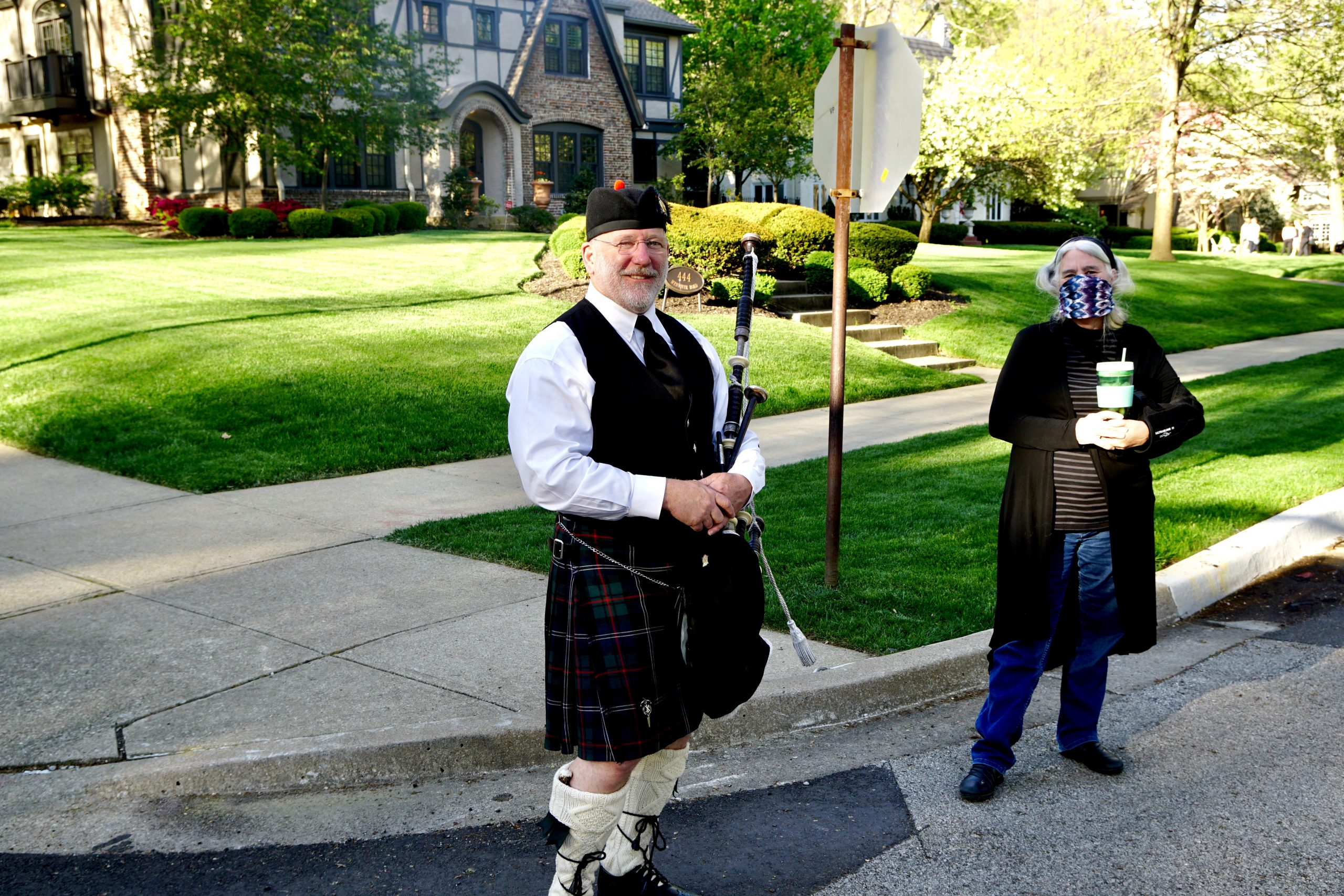
Recently, at random intersections in the surrounding neighborhoods one might observe an ordinary silver SUV draw to a stop and park at the curb. There is nothing to catch one’s eye until the driver emerges from the vehicle attired in full Scottish Highland regalia.

0107adc4ca3ea15902c8a50c5e97ae08a9bdd1983e

He reaches into the back seat of his car and tucks a dark bundle under his arm. Striding to the intersection he assumes a rigid posture and unfolds the bundle. Bagpipes. He begins to play.

010fb98f9acc73d55cfae846a59f45350fb9e9528f

Children cease their recreation. Families emerge from their homes. Cars stop and park. All face this man, their cares momentarily forgotten. Some in the audience record the performance with their phones, intent on sharing with others not fortunate enough to have been there in person.

01829bdd7da9d6d2c4866839af732e1148fc1e0b11

For 30 minutes the songs follow one upon the other, concluding with “Amazing Grace”. There is applause and then John Tootle, retired EMT and Kansas City firefighter, returns to his car quietly bound for the next random intersection where he will resuscitate the spirit of another neighborhood.

Peace Everyone. Pete

PS. Next week I begin a new series, “Across America by Bicycle”.
This post is one in a series from my “Armchair Tour of Kansas City”. For context you may click on this link to be redirected to the series Introduction: “Armchair Tour Intro”

Robert Long (1850-1934)

Robert Alexander Long was a lumber baron who established the Long- Bell Lumber Company which was the largest lumber company in the world in the early 20th Century. His holdings included 61 lumber mills and over 500,000 acres of forestland across the United States. He spent most of his life in Kansas City.

Scarritt Point

Named for Nathan Scarritt (1821-1890), a Methodist minister who taught the Native Americans for many years, this historic district is located high on the bluffs overlooking the Missouri River east of downtown. It is one of the oldest neighborhoods in the City, and in it’s day was the most affluent.

Today over 6,000 Kansas Citians reside in this neighborhood. The area includes hundreds of acres of parkland, wooded hiking trails, and stately mansions from the late 19th and early 20th Centuries.

Scarritt Point stands above and in stark contrast to the poor and industrial lower east bottoms.

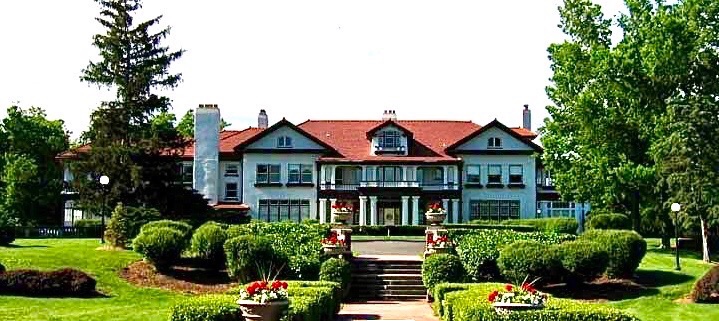
It was on 3 acres located upon Scarritt Point that Robert A. Long built his monumental “city mansion” in 1911.

It was named “Corinthian Hall” due to the mansion’s large Corinthian columns. Construction required the relocation of two other mansions that were on the site.

Those mansions remain in the vicinity as private homes. The acquisition of the grounds, relocation of the 2 pre-existing mansions, construction of the home, 2 story carriage house and stables (the largest within the city),

reportedly cost over 25 million dollars (2020 equivalent). The 35,000 square foot 72 room French Renaissance structure has been the home of the Kansas City Museum and its collection of over 100,000 artifacts of local and regional history since 1940.

The Museum is currently undergoing an extensive renovation but is scheduled to reopen later this year.

Here are a few historical photos of the mansion’s interior:

Longview Farm

In 1913 Robert Long established his Longview Farm and Mansion on the distant outskirts of Kansas City. The 2,000 acre farm had 50 buildings, 250 acres of manicured lawn, gardens, and 4 greenhouses. Construction of the farm took only 18 months but engaged over 2,000 laborers. Craftsmen included 200 Italian stonemasons. The farmstead mansion measured 22,000 square feet with 48 rooms. Long built the farm in part because the stables located at his Scarritt Point mansion (Corinthian Hall) were suitable only for a few dozen of his nearly 200 prized horses.

One feature of the farm that is dear to my heart is the 1915 Longview Chapel.

It was within that chapel that I married Christine in 1977.

At the end of this post are images from a number of information boards for those who wish to delve deeper. Hopefully the resolution will allow them to be read.

Next: Part 9, “Pleasant Day Outings and CPR for the Spirit”

Peace Everyone. Pete


This post is one in a series from my “Armchair Tour of Kansas City”. For context you may click on this link to be redirected to the series Introduction: “Armchair Tour Intro”

Ewing and Muriel Kauffman

011defe4d720694d9b5b7b8bfbc3aa08c0ab19c054

Ewing Kauffman (1916-1993) was the founder and driving force behind Marion Laboratories which later merged with Merrell Dow Pharmaceuticals. Kauffman founded the Major League Baseball franchise Kansas City Royals in 1969.

01092dc78a5cacd29891df20bb4473e9c44f752f93

He is credited with building the 41,000 seat Royals Stadium which opened in 1973. This single purpose baseball stadium is half of the Truman Sports Complex, the other half being Arrowhead Stadium, home of the Kansas City Chiefs.

015850bff71b440de87fb24f1ea91a6ce06179b3de

As philanthropists, Kauffman and his wife Muriel (1916-1995) established the Ewing Marion Kauffman Foundation in 1966. The Foundation has an endowment of over 2 billion dollars, with annual revenues of over 150 million dollars. Its mission remains focused on education, civic development and entrepreneurship. The Foundation has established college preparatory schools and programs for disadvantaged youth, including college scholarships. Near our home is the Kauffman Memorial Gardens.

011017c59dabd06da5aec8fb2087b25d2ad075a62b

01dba268cd2c8a7cd5b77c460a878acb09e1d60d34

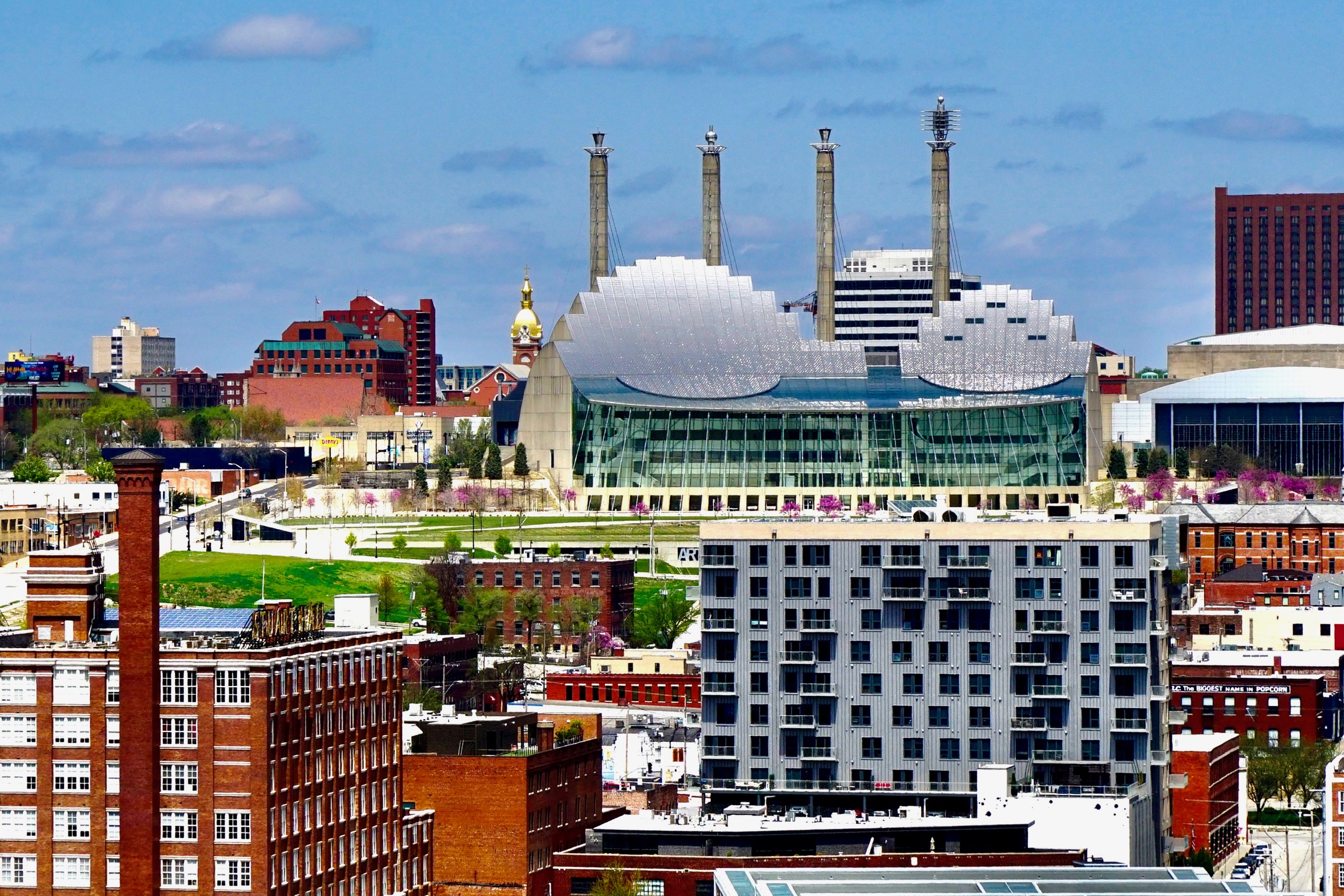
Muriel’s separate foundation is responsible for Kansas City’s stunning Kauffman Center for the Performing Arts.

0123ef87cff635521c511ad2490691293dd7d19bbe

The Center is one of the most complex building structures in the world with 40,000 square feet of glass.

010aec112595482683646a75c61456732d5fdb54d9

The Kauffman Center is 285,000 square feet enclosing 2 principal performance halls. There are dressing rooms for more than 250 performers and 11 rehearsal rooms. The Center is the performance home for both the Kansas City Symphony and Kansas City Ballet Company.

01261ab0b6f21a3c6a5a60113341eb95b3b2013d64

The organ that towers above the Helzberg Hall has over 5,500 pipes, the largest of which is 3 stories tall and weighs nearly a half-ton.

Harry S. Truman. Home and Library

In nearby Independence Missouri are the Truman Home and Presidential Library. Harry S. Truman (1884-1972) was the 33rd President of the United States, thrust into that role upon the death of Franklin D. Roosevelt in 1945. Truman served until 1953, during some of America’s most difficult times… the final days of World War 2, the dropping of the A-Bombs on Japan, the start of the Cold War, and the Korean War.

01af911704c7b733cfd19f1dd2493cf1e7a62e72b7

He was elected to a second term in 1948 in what was seen as an upset over Thomas Dewey. One of the most iconic political photographs is one in which the victor, Truman, holds up a copy of the Chicago Daily Tribune which erroneously announced his defeat.

01b07a4f63ab8d907ed8f718fb1d8f77d505ffb9d3

He most famously was quoted as saying, “The Buck Stops Here!”, accepting the ultimate responsibility for the good and bad of his administration.

“As President of the United States, I had the fateful responsibility of deciding whether or not to use this weapon for the first time. It was the hardest decision I ever had to make. But the President cannot duck hard problems—he cannot pass the buck. I made the decision after discussions with the ablest men in our Government, and after long and prayerful consideration. I decided that the bomb should be used in order to end the war quickly and save countless lives—Japanese as well as American.” – Harry S. Truman

He was an “ordinary person”, seen by his neighbors in Independence in his later days taking daily strolls from his home to the downtown square.

018fee3e19ff79ff0cfd5085a0f19831d468179b65

He attended Law School at the University of Missouri at Kansas City (my alma mater), then known as the Kansas City Law School. His home, built in 1867, is available for tours administered by the National Park Service.

01f334418da7f5690ec7439c2951122b69ef692ead

His Presidential Library and museum, where Truman maintained an office in his later years, is located a few short blocks away and is currently undergoing a significant renovation. A number of years ago I was involved in a case that took me to the Library to conduct interviews. In the course of my meetings “nature called”. I was offered the rare opportunity to use the “presidential bathroom and toilet”. Naturally, I accepted.

013b9fc7bcb4f05c1fb39dcdd2b15271e82971ccdd

Dominating the Independence skyline and a short distance from the Truman Home is the world headquarters and Temple of the Community of Christ Church (formerly known as the Reorganized Church of Jesus Christ of Latter Day Saints).

0156af70aff4fd4f609924710599047c42f22c89ac

The Temple is open to the public.

Next: Part 8, “Old Money”

Peace Everyone. Pete

PS: A Truman quote from the year of my birth:

013951adc68c6098096ddc6c0f7b80666308b2ebfe