Today began a solo camping trip that will extend through the end of July. Day one was a hot 400 mile slog west down the non-inspiring lanes of I-70. My first real destination is Denver, 600+ miles from home. An overnight in Goodland is a prudent alternative to a 12+ hour marathon drive while towing a trailer.

These days most folks only see a hint of Goodland as they zoom past the outskirts on the Interstate. Not much there except that a sharp eye might catch a glimpse of a very curious piece of art that towers in the distance.

I am camped at the Goodland KOA, located on the east side of Goodland, along less traveled US-24.

One might say that this is the backyard of Goodland. One might also incorrectly assume that there is not much to see here. Back to that piece of art…

In 2000, Canadian artist Cameron Cross approached the trade group, Sunflowers USA, with the idea of recreating VanGogh’s painting, “3 Sunflowers in a Vase” in Goodland. The proportions would be breathtaking; the painting would be 24 feet by 32 feet (VanGogh’s original was not even 2’ x 3’), and it would sit upon an 80 foot tall easel, the largest in the world. $150,000.00 was raised and the completed work was dedicated in 2001.

Continuing my 2+ hour sojourn I came upon a number of other notable finds:

In the 1950’s and early 1960’s Studebaker Motors of South Bend Indiana produced the “Hawk” in a number of variant forms. It was a design ahead of its time and from a styling and engineering standpoint it rivaled Chevrolet’s Corvette and Ford’s Thunderbird of that era. This lonely (1956?) model sits waiting for a tender heart and deep pocket to restore it’s former glory. Price unknown.

A few blocks later I encountered the equally forlorn (1951?) Hudson Hornet.

This was a low slung beast of a car weighing in at nearly 2 tons, and featuring what was then the largest 6 cylinder engine in the world. Capable of speeds in excess of 100 mph and featuring excellent handling, the Hornet was perhaps America’s first muscle car.

Known for it’s sturdy strength, if not its speed, was the depression era McCormick-Deering 10-20. This example likely dates to around 1928.

There was more…

How about a 28hp 1948-53 Allis-Chalmers WD in tricycle configuration parked next to a 1955 Ford Sedan Delivery Wagon…

Finally, central Kansas is known for its ability to produce food. Signs along the highway tout that each Kansas farmer feeds over 155 people.

Walking down a dusty road I found evidence that production (in this case corn) far exceeds the ability to market or deliver that commodity.

Literal mountains of grain lay near concrete silos already filled to capacity. Some of the grain was covered against the elements, but some was not.

Tariffs? Over-production? Distribution problems? I do not claim to know, but over 40 million Americans live in poverty… 1 in 8 Americans are deemed “food insecure”. There is something wrong with this picture.

Peace everyone. Pete

This last week Christine and I celebrated 42 years of marriage. I still recall the gathering for my parents’ 40th anniversary in 1989, marveling “Damn that’s a long time”! Now I can only wonder at the speed with which my years with Christine have passed. We have known each other 45 years, sharing both the exciting and the difficult.

IMG_0000

When we returned from England in late May there seemed a vacuum. We lacked for future travel plans, a rarity in our life. That quickly changed. First on the calendar is a wedding in South Carolina. This promises a pleasant September week with friends in Charleston. More planning fell into place…
We discussed taking an extended camping trip to Canada’s Labrador and Newfoundland later in the year but having just returned from 6 weeks abroad Christine wasn’t fully engaged in the idea. Her father, who lives a few miles from us in an assisted living community, turns 101 in August. He continues to do very well and is energized by Christine’s near daily visits, but at his age a bad cold could spell a precipitous decline.

dscn9970

We think that north eastern Canada will be on the agenda for next year. In the meantime Christine encouraged me to undertake a 30 day solo camping trip. I leave around July 1st for Colorado, to be followed by Wyoming, Montana, Idaho, and then perhaps Utah before winding back home through Colorado. In our earlier post retirement travels I took mental notes of some places that I would like to revisit. High on that list is the 70 mile long Beartooth Highway (US 212) that links Red Lodge Montana to the north east entrance of Yellowstone National park.

DSC_0556

The highway is appropriately named since bear sightings are commonplace, and the way is indeed “high”. Most of the roadway is located above 8,000 feet, its summit climbing over Beartooth pass at 10,947 feet. The Beartooth was constructed in 1936 and retains much of its Depression Era ruggedness. The late CBS correspondent Charles Kuralt once declared it to be the most beautiful drive in America. Rustic National Forest campsites abound, many with warnings posted for tent campers to beware of bear activity.

DSC_0607

I hope to continue on from Montana to Coeur d’Alene, Idaho in the north panhandle of that state. What awaits are two adjoining “rails to trail” routes; the 72 paved miles of the “Trail of the Coeur d’Alenes” and a 15 mile gravel portion of the “Route of the Hiawatha”. These trails wind through the Bitterroot Mountains and are a part of the former route of The Milwaukee Railroad “Hiawatha” Line. I hope to bicycle through 8 train tunnels, including the 8,771 foot long (1.6 mile) Taft Tunnel, and cross 7 high train trestles.

Trestle

Hiawatha

But that’s not all…
Twice in the last 2 weeks I have been asked if I have a “bucket list”. I have typically resisted the idea of a “list”, favoring instead my notion of always having a “Next Thing” in the works. I was pressed by the questioners on each occasion and confessed that I have all but abandoned a long held dream of sailing around Cape Horn, the southernmost tip of South America.

MapCapeHorn

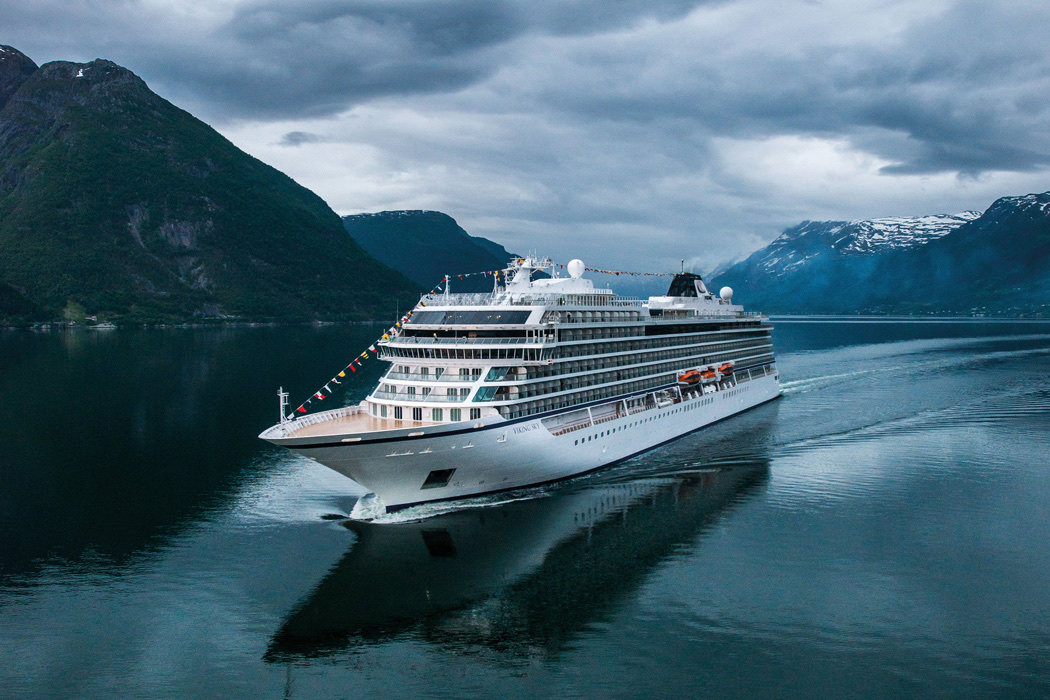
Attention then turned to Christine. She would love to visit South America but holds no fascination for sailing a small boat in those treacherous southern waters. A few days later we received an ad from Viking Ocean Cruises. As travelers who had crossed the Atlantic with Viking in 2018, we were offered a special rate, airfare included, on a 22 day November sailing from Buenos Aires Argentina, around Cape Horn to Santiago Chile.

It seemed that a “Next Thing” had chosen us! It’s not exactly the experience either of us imagined, but it is a compromise that we will share and remember.

Viking Sun

The Viking ships are considered small cruise ships, 900 passengers instead of 5,000. They approach travel by highlighting that less is more and proudly feature:
· No Photographers
· No art auctions
· No charge for beer and wine at meals
· Complimentary in-suite mini-bar, stocked daily
· No charge for the upscale dining
· Free unlimited Wi-Fi
· Free laundry
· Free Spa admission
· All cabins are exterior with balcony
· No formal nights
· No smoking
· No casino
· No children under 18
· Included room service, 24/7
We pulled the trigger and booked a Penthouse Veranda.

LRG__DSC0667

penthouse_veranda

The 2019 travel calendar has now been filled. I look forward to sharing.
Peace Everyone! Pete

LRG__DSC1138


We landed back in Kansas City the evening of May 21st. Our daughter and her children were at the airport to greet us and drag our weary bones home. The flight home began with our arrival at Manchester England’s airport at 4:00 a.m. with a 6 a.m. international departure for Brussels Belgium, a layover, an 8 hour cross-Atlantic flight to Washington Dulles, another layover, and finally a flight of nearly 3 hours to Kansas City. The marvel of it all is that we arrived home by 8:30 p.m. on the same day that we departed. However, the effect of crossing 7 time zones meant that our bodies had been without any meaningful sleep for over 24 hours.

The cross-Atlantic segment was made a bit more pleasant as we secured a class upgrade. Bigger seats, two meals and a snack (with real plates and cutlery!), an “open bar”, and expanded entertainment options. I binged two movies, “Glass”, and “Arctic”, both of which I recommend. I started to watch “Aquaman” but soon found the premise and the acting to be all wet.

It didn’t take long for me to fall into the old routine. Up early the next day and mowed the lawn. Sifted through the pile of mail, sorting the “junk” from the important… I find it remarkable that even after 6 weeks the stack of “real” mail is pretty small, yet a few days of junk mail probably required the killing of a tree.
Our first priority was to glory in time with the grandchildren. Over the next few day we unpacked, did laundry, stocked the refrigerator, visited the barber, did some landscaping, enjoyed time with friends, took in a movie, and took our grandson to a Kansas City Royals baseball game which was his birthday present that had been delayed by our travels.

On the road my possessions are contained within a backpack. It takes a house to contain them when we are not traveling. On the road the scope of our experience expands to cross states, countries, and continents.

Here in Kansas City most of what matters occurs within a few miles of our home. We miss our family and friends when we travel yet find and embrace new friendships as we wander. Paradoxically, I tend to be silent and a bit introverted here at home yet compelled to reach out with my “Thoughts” on a near daily basis during our journeys.

We were gone six weeks. Our 2018 Europe trip took 13 weeks, and our 2017 trip to Alaska and the Yukon was 12 weeks long. We have come to the conclusion that 6 weeks is long enough for any single journey. On the road I don’t eat or exercise as well as I should. The scale tells the disappointing tale upon my return. The grandchildren miss us, and we miss them. Nevertheless, before we landed my thoughts had already turned to considerations of our “Next Thing”.

Late last year I found a company in the Netherlands that provides on-line tools for converting a blog into a book. I spent about a week rearranging and modifying content from the posts I had written during our 13 week journey. The result was a 202 page full color coffee-table book that reads like a personal diary. We bought 6 copies, one for each of our children’s homes, one for my Mother, one for Christine’s Dad, and one for our home. I was very pleased with the results and will likely do the same thing with content from this most recent journey. The cost is not insignificant, but in the case of our children and grandchildren I consider the books to be an investment. I hold a special hope that our pursuits in retirement may become a model for our children as they journey through life, and a spark to ignite the imaginations of our grandchildren.


Since childhood I have embraced the notion of a “Next Thing”. Initially this was a product of daydreaming and an active imagination, but as I matured, the pursuit of the “Next Thing” became conscious and directed. “Next Things” excite the imagination and engage the spirit.

My life has been a series of these “Next Things”, some relatively minor and lost to a memory that fades with the passage of time. Others have been monumental. It has been my good fortune that fate gifted me a partner who embraces these things. Christine’s encouragement and participation have been a priceless part of the planning and execution of our “Next Things”.

We retired in the Spring of 2015. Retirement came easier for Christine as she naturally fell into the cadence of being the matriarch and grandmother extraordinaire to our family in Kansas City. For me, finding a new purpose was a bit more challenging. “Next Things” became central to my new purpose. “On the road” I find joy in sharing the sights, experiences, and my thoughts with others.

Don’t put off until tomorrow the things you may find you are then unable to do, and whatever you do in life may you always Have Fun, Do Good, and for the sake of those who love you, Be Safe!

-Peace Everyone. Pete

PS. We gratefully acknowledge the following: The many people who provided for our needs in the restaurants, hotels, and Bed & Breakfasts that hosted us. The brief encounters that became friendships were like the blossom of a flower, enjoyed in the beauty of the moment but soon to be a memory when the paths of life took us in different directions.

Our thanks to the staff of Andersen Boats and the many volunteers of the Canal and River Trust who as a labor of love maintain the remarkable canal system of the United Kingdom.

Our special thanks to Kris Ashton, Tom Shillington, Nanci Burns, and Huw and Nina Thomas who were each a treasured part of this adventure.

Thank you to those who follow us. You continue to give me a venue for expression that I would not otherwise have.

Lastly, we thank the ancient hands that created the towns, churches, castles, and monuments that are found throughout the United Kingdom and the Channel Islands. What they raised for either war or the glory of God has become a treasured heritage.

We have left Oxford England, our last “touring destination”, and are train-bound for Manchester. In deference to our early morning “red-eye” flight we have booked a room near the airport far from the city-center. Neither of us are looking forward to the upcoming 18 hours of travel. However our house, family, and friends beckon so the end certainly justifies the means.

My last series of posts were from our tour of 3 remarkable sailing warships on May 16th. I felt that each ship deserved detailed discussion and I did not want to load up all three on the same day. We have not been idle since the 16th, so here is a summary of our wandering since then.

On the 17th we took a day trip by train to Winchester. The Cathedral dates to the 11th Century and is one of the largest in Europe. A discerning eye reveals that there are architectural features from both the English Gothic (high peaked arches) and earlier Norman periods (lower round arches).

Jane Austin is buried here, but curiously there is no mention of her fame as an author. Perhaps the culture of the time considered such undertaking by women “unseemly”.

Issac Walton’s grave is also found within the Cathedral. His 1653 “best selling” treatise on fishing, The Compleat Angler, is still in print. Among quotes attributed to him are, “I have laid aside business, and gone a-fishing.” and, “Angling may be said to be so like the mathematics that it can never be fully learned.”

Six decorative funerary chests are found within the Cathedral, three on each side of the presbytery before the high alter.

There were originally at least 8 of these chests, containing the remains of an 8 ancient kings, 2 bishops, and 11th Century Queen Emma of Normandy. In 1642 during England’s Civil War Oliver Cromwell’s troops sacked the Cathedral smashing all but 6 of the chests, scattering the contents of all the chests.

It was impossible for church officials to determine who’s bones belonged in which chest so the six chests have held a mixture of remains for nearly 400 years. This year anthropologists and geneticists have undertaken the task of identifying the remains and properly sorting them.

Almost immediately after its construction the Cathedral began to slowly sink. It’s foundations had been laid in a peat bog instead upon stone located another 8-10 feet below. Conventional efforts to underpin the piers proved impossible. As soon as workers excavated along any part of the foundation the hole would fill with water. The entire structure was in serious peril of collapse. In places the waviness of the floor and bowing of the walls are obvious to the eye.

In desperation, deep sea diver William Walker was employed. Between 1906 and 1911 he worked entirely alone under 30 feet of water, and solely by touch. He hand laid over 25,000 bags of concrete under the Cathedral’s foundations. He is credited with being the single handed savior of Winchester Cathedral.

Winchester is also the home of the Great Hall of Winchester Castle. It is all that remains of the castle and was constructed in 1067 shortly after William the Conqueror’s victory at the Battle of Hastings.

High upon a wall is mounted a huge round table that was reputed to be that of King Arthur. It measures 18 feet across and weighs nearly 3,000 pounds. While it certainly is not the table of Arthurian legend, carbon and dendrochronological dating place its creation at approximately the year 1250. Originally plain, King Henry VIII ordered it painted in the early 1500’s as it currently appears.

We spent the 18th and 19th strolling the streets of Oxford. We attended a moving Evensong in Christ Church Cathedral (sorry, no pictures), and took in the somewhat cheesy tour of Oxford Castle and jail.

We also visited the Ashmolean Museum of History, and the Oxford History of Science Museum where there is a blackboard upon which Albert Einstein’s hand written equations are preserved.

Our visual highlight of Oxford was Christ Church’s Tom Tower, Tom Quad, and the Cathedral.

I confess that we could have better seen and enjoyed Oxford. However, travel fatigue has taken its toll. I intend to pen some personal reflections on our 6 week journey at another time. Until then…

Peace Everyone. Pete

Paraphrasing Charles Dickens, “She was the first of such battleships, she was the last of such battleships…” Indeed this is a fitting statement for HMS Warrior.

She was conceived in 1859 and launched in 1861 at the virtual direction of Queen Victoria who had questioned the readiness of her admirals to meet the challenge posed by France’s new armored battleship “Gloire”. The Admiralty responded with the creation of “Warrior” and her sister ship, “Black Prince”.

When launched Warrior was the world’s largest, fastest, and most powerful warship. For comparison, at 420 feet long and displacing 9,200 tons she was 200 feet longer and 3 times the displacement of HMS Victory which had been Lord Nelson’s flagship at the Battle of Trafalgar just 45 years earlier.

Warrior was capable of 12 knots under sail, 15 knots under steam power, and 17.5 knots (over 20mph) under the combination of sail and steam. To reduce drag and enhance her speed under sail her smoke stacks retracted into the deck and her massive propeller was hoisted into a hull recess. The hoisting of the prop, as well as the anchors (the largest manually raised in history) required the effort of 500 of her crew.

Some of Warrior’s innovations of the first order were her armored iron-plate hull, the largest (26 ton) hoistable propeller ever made, and her compliment of rifled breech loading guns.

She was essentially invulnerable to attack by any other ship of that day. Yet she was still a sailing ship. In ten years Great Britain would launch its first mastless warship, HMS Devastation, which featured larger guns mounted in swiveling turrets. Warrior’s sail rigging meant that she was limited to smaller conventional gun placements down her sides.

Whereas Victory served as a ship-of-the-line in active duty for nearly 50 years, Warrior became obsolete in 10!

Warrior never fired her guns in anger. She was retired from first line duty in 1871 thereafter serving in secondary capacities until her masts were found to be rotten and were removed in 1883. She became a storage hulk in 1900, and for 50 years after 1927 she was a floating oil storage platform. Her salvage and restoration began in 1979, a decade long project intended to return her to 1862 trim… including the “brig”.

Her masts, many of her guns, rigging, fittings, her engines and boilers are very convincing reproductions. The excellent tour allowed access to most of the ship and questions could be addressed to knowledgeable volunteers dressed in Victorian attire. In response to my questions one such lady dressed in hooped skirts directed me in the operation of the breech loading mechanism of one of the cannons. Warrior is visited by over 250,000 people each year.

This concludes my three day posting cycle on the vessels of Historic Portsmouth Harbour. I am typing this in Oxford England on the evening of May 19th. Tomorrow morning we train to Manchester where we will spend the night of the 20th, departing the morning of the 21st for home.

Peace Everyone. Pete